



A Carefully Choreographed Spacewalk
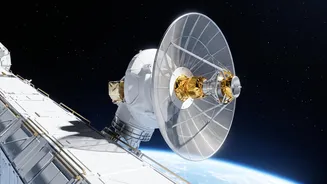
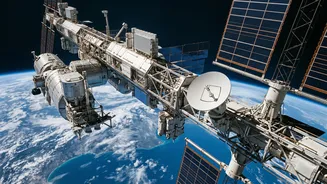
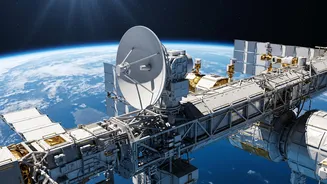
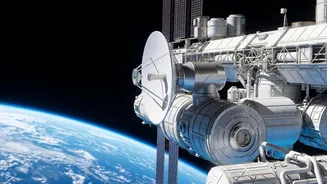
In a precisely coordinated effort, NASA astronaut Anil Menon and European Space Agency (ESA) astronaut Sophie Adenot conducted a spacewalk lasting over six hours to install the new hardware. The operation involved replacing an older, faulty antenna with
a new spare, a task that required the astronauts to work meticulously in the vacuum of space. This successful installation followed an earlier attempt where the duo managed to remove the faulty unit but ran out of time to install the replacement. The new Space-to-Ground antenna (SGANT) restores important redundancy and boosts the high-speed communication link to the ground.
The Lifeline to Earth
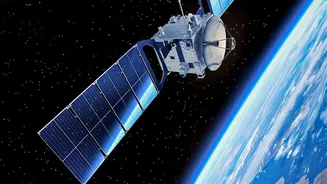
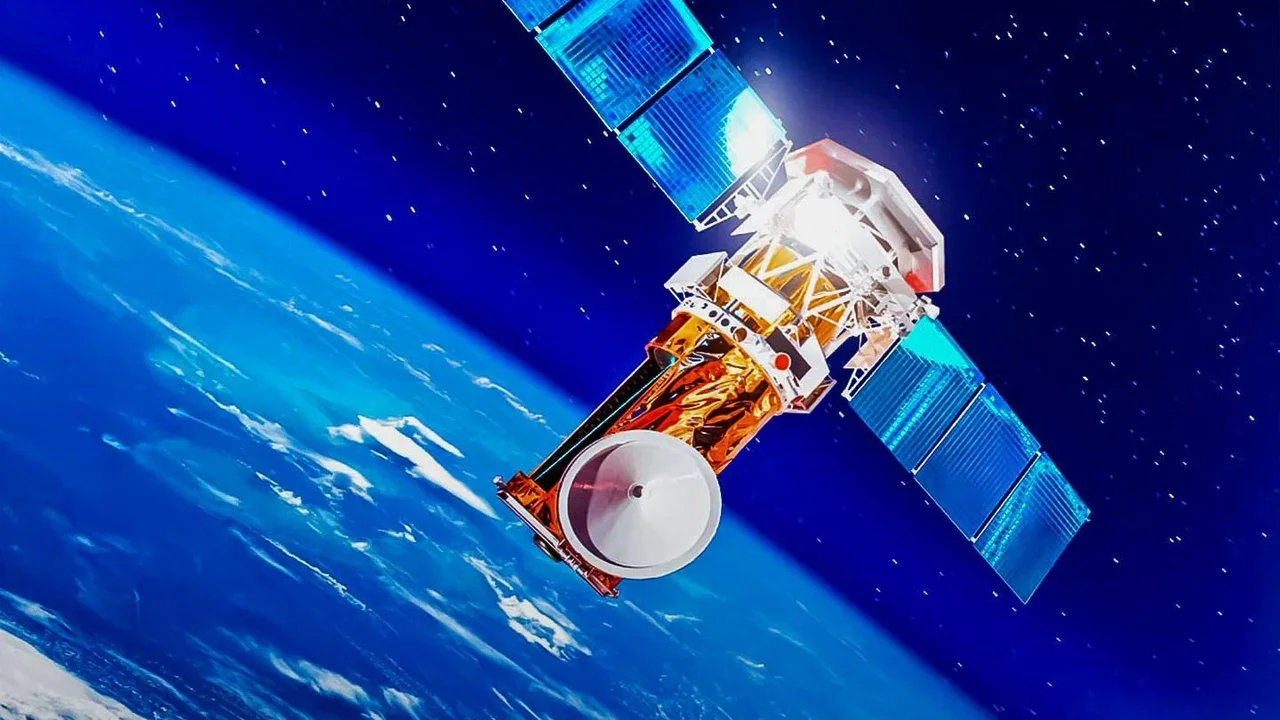
For the ISS, constant and reliable communication is not a luxury; it is a lifeline. Every piece of data, from astronaut health metrics and scientific experiment results to routine operational commands and high-definition video, travels across this link. The station communicates with Earth via NASA's Tracking and Data Relay Satellite System (TDRSS), a network of satellites in high orbit that act as intermediaries. Signals are sent from the ISS up to a TDRS satellite, which then relays them down to ground stations in places like New Mexico, before the data is finally routed to Mission Control in Houston. This system allows for near-continuous contact, a crucial element for ensuring the safety and success of the mission.
More Than Just Faster Internet
While it is easy to think of this as just a simple internet speed boost, the implications are far more profound. This upgrade directly impacts the core mission of the ISS: science. As onboard experiments become more complex, they generate enormous amounts of data. An enhanced connection allows researchers on Earth to receive this data faster and in greater volumes, accelerating the pace of discovery. It enables new types of experiments that require higher-resolution data than was previously possible, from Earth observation studies to medical research in microgravity. This particular antenna upgrade specifically enhances the station's Ku-band and S-band links, which are vital for relaying video and telemetry.
A Boost for the Crew
Beyond the scientific and operational benefits, a stronger communication link has a significant human impact. For astronauts on long-duration missions, staying connected with family and loved ones on Earth is a critical component of their psychological well-being. Improved bandwidth allows for higher-quality video conferences, making those connections feel closer and more personal, collapsing some of the 400-kilometer distance between the station and home. This human element is a vital consideration for mission planners as they prepare for even longer journeys into space in the future.
Paving the Way for Future Missions
This antenna installation is part of a broader, ongoing effort to modernize the ISS and prepare for the next era of space exploration. The technologies and procedures refined on the station, including communication systems like this one, serve as a testbed for future outposts, such as the planned Lunar Gateway. As humanity sets its sights on returning to the Moon and eventually venturing to Mars, building robust, high-speed, and resilient communication networks is a foundational requirement. Each upgrade on the ISS provides valuable experience, proving what is possible and paving the way for astronauts to stay connected, no matter how far they venture from home.