




A New Universe of Policy
The game-changer for India's space sector was the Indian Space Policy 2023. This landmark policy framework formally opened the doors for Non-Governmental Entities (NGEs) to participate in end-to-end space activities. For years, private companies were
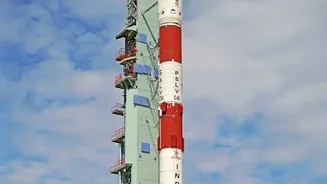
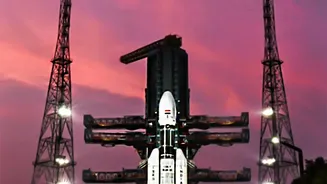
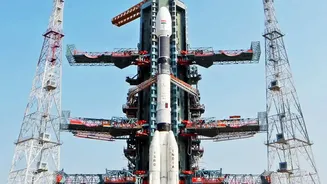
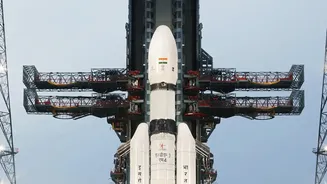
largely limited to being vendors and suppliers for the Indian Space Research Organisation (ISRO). The new policy redefines their role, allowing them to build, own, and operate everything from satellites and launch vehicles to ground stations. At the heart of this reform is the Indian National Space Promotion and Authorisation Centre (IN-SPACe), established as an independent, single-window agency. Its mandate is to promote, authorise, and supervise private space activities, ensuring a level playing field by facilitating access to ISRO's world-class facilities and expertise. This pivot allows ISRO to transition away from routine manufacturing and focus on its core mission: advanced research, deep space exploration, and national security missions.
The Downstream Data Deluge
The most immediate and expansive opportunities lie in the 'downstream' sector. This involves using data from satellites for a vast array of applications on Earth. Projections suggest the satellite services and applications segment will form the largest part of India's space economy. Startups are harnessing satellite imagery and data analytics to deliver 'decision intelligence' to industries like agriculture, disaster management, urban planning, and environmental monitoring. For instance, companies can use hyperspectral imaging to assess crop health or monitor pollution levels with unprecedented accuracy. The policy supports this by making remote sensing data with a resolution of five meters or higher openly accessible, fuelling innovation. This data-driven approach means space companies are increasingly focused on solving real-world problems for customers who may not need a satellite image, but rather an answer to a specific business challenge.
Upstream Ambitions: Building the Hardware
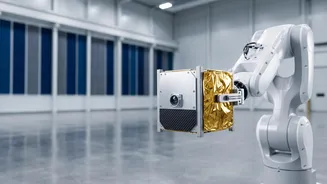
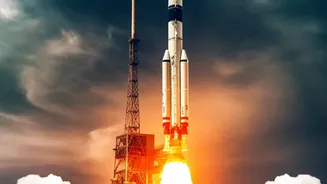
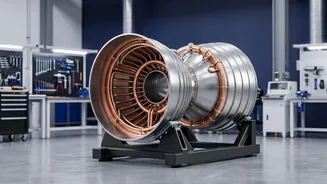
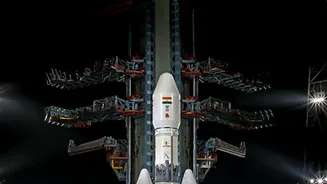
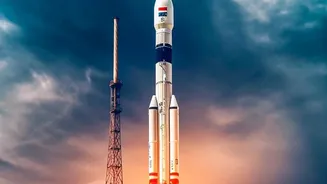
While data applications boom, the 'upstream' sector—building the physical infrastructure of space—is also gaining serious momentum. A new wave of Indian startups is developing everything from launch vehicles to satellites and their components. Companies like Skyroot Aerospace, which became the first private Indian firm to launch a rocket into orbit, and Agnikul Cosmos, known for its 3D-printed rocket engines, are pioneering this space. They are complemented by firms like Dhruva Space, which manufactures small satellites, and Pixxel, which is building a constellation of hyperspectral imaging satellites. To fuel this growth, the government has liberalised Foreign Direct Investment (FDI) rules, allowing up to 74% FDI in satellite manufacturing and 49% in launch vehicles automatically, attracting global capital. This push encourages a 'Make in India' approach, aiming to integrate Indian companies into global space supply chains.
From Billions to Trillions: The Economic Trajectory
The economic potential is staggering. India's space economy, valued at around $8.4 billion, is projected to surge to over $44 billion by 2033. This ambitious target aims to increase India's share of the global space economy from its current 2-3%. The growth is powered by a burgeoning startup ecosystem, which has exploded from a single company in 2014 to over 400 in 2026. This expansion isn't just happening in a vacuum; it aligns with global trends toward the commercialisation of space. By fostering private enterprise, India is positioning itself as a globally competitive, low-cost hub for building and launching satellites. The creation of NewSpace India Limited (NSIL), ISRO's commercial arm, further helps by transferring mature technologies to the private sector for commercial production.
Challenges on the Launchpad
Despite the optimism, the path ahead is not without its challenges. The primary hurdle for many deep-tech space startups is funding. While investments are growing, they are still a fraction of the capital available in established markets like the United States. Building and testing space technology requires patient capital that can sustain long development cycles. Another challenge is the availability of experienced talent in highly specialised fields like propulsion engineering and satellite systems integration. Furthermore, while the 2023 policy provides a framework, comprehensive legislation covering complex issues like liability and insurance for space activities is still needed to provide greater regulatory certainty. Finally, Indian companies face stiff competition from established international players like SpaceX and Blue Origin.