







The Lifespan Paradox
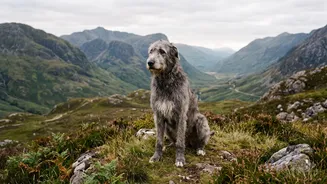
Anyone who has loved and lost a large-breed dog knows the painful math. While smaller breeds can live well into their teens, their larger counterparts like mastiffs and Irish wolfhounds often show signs of old age by five or six and rarely live past a decade.
This is a strange exception in the animal kingdom, where larger species, like whales and elephants, generally live much longer than smaller ones, like mice. Within the single species of Canis familiaris, however, the opposite is true. This dramatic variation has long puzzled scientists and owners alike, but it also provides a unique opportunity to study the mechanics of aging. Because dogs share our homes and environments, understanding their aging process can even provide a window into our own.
It’s Not Just the Genes, but How They’re Used
The new research, published in the journal 'Science' by a team at Arizona State University, zeroes in on a field called epigenetics. Think of your dog's DNA as a massive library of instruction manuals. Epigenetics is like the librarian who decides which books are read and which stay on the shelf. It does this through chemical tags, primarily a process called DNA methylation, that attach to genes and regulate whether they are turned on or off. These epigenetic patterns are not fixed; they change predictably as we age. Scientists can even create 'epigenetic clocks' that measure biological age based on these shifting patterns. The study used data from 864 dogs enrolled in the Dog Aging Project to map these epigenetic changes.
Unleashing the ‘Jumping Genes’
The researchers discovered a clear and consistent signature of aging: as dogs get older, they lose these crucial methylation tags. This loss of regulation was most pronounced in parts of the DNA known as transposable elements, or 'jumping genes'. These are stretches of DNA that can copy themselves and hop to new locations in the genome. In a healthy, young cell, methylation acts like a lock, keeping these jumping genes quiet and preventing them from causing chaos. As a dog ages and these locks fall off, the jumping genes can become more active, potentially damaging other genes and causing the genomic instability and inflammation linked to cancer and other age-related diseases.
A Clearer Signature in Larger Dogs
Here is the critical link: this loss of control happens much faster in larger dogs. The study found that giant dog breeds lost about 35% more methylation on key jumping genes (specifically a type called LINE1s) per year than small breeds did. In other words, their epigenetic clock is ticking much faster. This suggests that the rapid growth of large breeds may come at a steep price later in life. Their accelerated development seems to be tied to an accelerated breakdown of the systems that protect their DNA. While this doesn't definitively prove causation, it's one of the strongest molecular signals yet that directly correlates with the size-lifespan trade-off in dogs.
What This Means for Our Furry Friends
This research provides a powerful new direction for understanding and potentially improving canine health. While it does not offer an immediate cure for aging, it identifies a specific biological mechanism that could be a future target for therapies. If scientists can find ways to slow down this loss of methylation or better control the activity of jumping genes, it might be possible to extend the 'healthspan' of our beloved large dogs, giving them more quality years. For now, the study reinforces what veterinarians have long advised: maintaining a lean body condition and providing excellent lifelong care are still the best tools we have. The work also highlights the incredible value of companion dogs as a model for understanding aging in all mammals, including ourselves.