



The Avian Spectacle
The monsoon is a season of significant activity for many birds. It is believed that the arrival of the Pied Cuckoo is a true harbinger of the rains. [10] These birds, along with common species like bulbuls, robins, and sparrows, become more active and vocal.
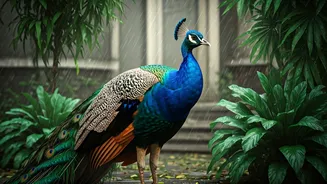
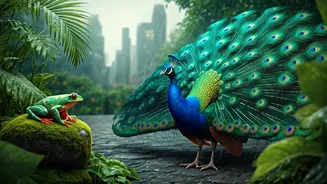
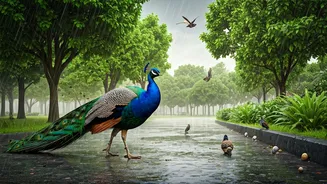
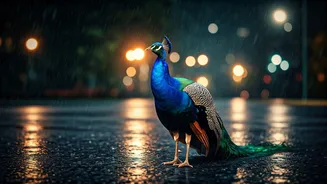
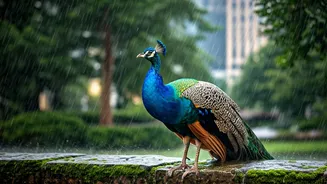
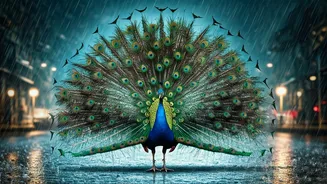
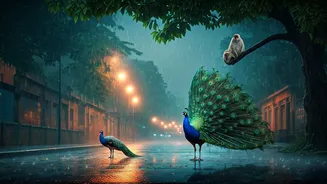
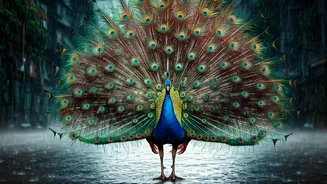
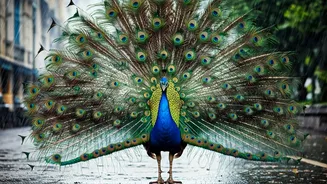
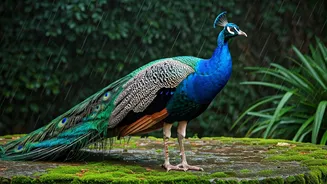
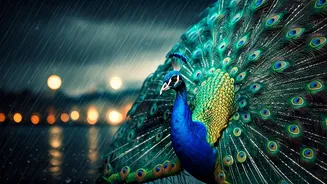
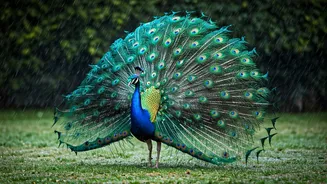
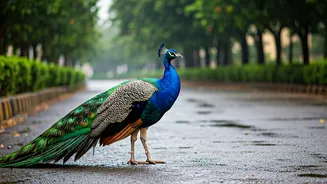
[10, 11] The cooler weather and abundance of food create ideal conditions for nesting and raising young. [5, 11] Many birds lay their eggs just before the season begins, ensuring their chicks have plenty of insects and worms to eat. [10, 11] In cities, even common birds like Coppersmith Barbets become more vocal and busy with nest-building. [6] Recently, the onset of the monsoon in Mumbai was marked by the delightful, and rare, sighting of peacocks and peahens roaming calmly on city streets and perching on balcony railings, a testament to nature's surprising presence in our urban spaces. [2, 3, 8]
The Nightly Chorus of Amphibians
As dusk falls, the monsoon soundscape is dominated by a new set of performers: frogs and toads. [10] Often considered indicators of the weather, these amphibians emerge from their hiding spots to enjoy the rain-filled puddles. [10] The Indian Bullfrog, a common species across the country, comes out of hibernation as the monsoon arrives. [10] The season is crucial for their mating rituals, with male frogs creating loud advertising calls to attract females. [10] These calls, which can range from croaks to rattles, are a sign of a healthy ecosystem. [10, 14] The abundance of water provides safe microhabitats for them to lay their eggs, ensuring the next generation. [10]
A Fluttering, Creeping Resurgence
The rain triggers a surge in insect populations, providing a feast for other wildlife. [5] Butterflies like the Plain Tiger and Lime Butterfly are seen in large congregations. [10] Moths, bees, and beetles become more active, drawn to the flowers that bloom during this time. [10] The forest floor and garden beds also come alive. Snails, which feed at night, become a common sight. [11] Earthworms, crucial for soil health, emerge from water-logged burrows to breathe. [10, 13] While some, like snakes, may venture out as their burrows get flooded, they play a vital role in controlling pests. [4] This explosion of invertebrate life is the engine that powers the monsoon ecosystem, providing food for birds, reptiles, and amphibians. [10, 15]
Why This Urban Jungle Matters
This seasonal burst of life does more than just add beauty; it plays a critical role in the health of our cities. Urban wildlife contributes to biodiversity, helps control pests, and aids in pollination and seed dispersal. [12, 16] Birds and bats help manage insect populations, while invertebrates improve soil fertility. [12, 13] For city dwellers, these encounters with nature offer a vital connection to the natural world, which studies have shown can reduce stress and improve mental well-being. [12] The presence of this wildlife is an indicator of environmental health, reminding us that a functioning natural cycle exists even within our concrete jungles. [13, 16] By preserving green spaces with native plants, we can support these resilient creatures and make our cities more vibrant and sustainable. [17]