






The Original Blueprint
The initial plan for NASA's Artemis program was breathtakingly ambitious. Following the successful uncrewed Artemis I and the crewed lunar flyby of Artemis II, the next step, Artemis III, was slated to be the historic mission that would put astronauts
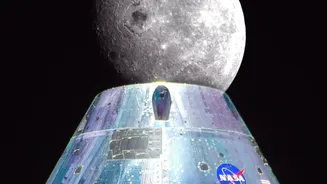
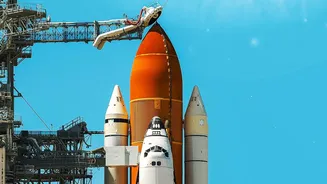
back on the lunar surface. The target was to land humans, for the first time since 1972, near the Moon's south pole. This mission relied heavily on a new generation of commercial spacecraft—the Human Landing Systems (HLS)—being developed by private partners like SpaceX and Blue Origin. The Orion spacecraft, launched atop the powerful Space Launch System (SLS) rocket, would carry the crew to lunar orbit, where they would transfer to a waiting lander for the final descent. The entire architecture was designed for speed and innovation, aiming to re-establish an American presence on the Moon within the decade.
Acknowledging a Mountain of Risk
As development progressed, the immense technical challenges and inherent risks of this approach became clearer. A primary concern centered on the readiness and complexity of the commercial landers. These were not just new vehicles; they represented an entirely new way of operating in space. SpaceX's Starship lander, for example, requires a complex series of in-space refueling missions to fill its tanks before it can journey to the Moon. According to NASA's Aerospace Safety Advisory Panel (ASAP), this could require an unprecedented number of launches—with some estimates as high as 22 tanker flights—to fuel up a single lander. Each launch and cryogenic propellant transfer is a potential point of failure. The ASAP, an independent body that advises NASA on safety, raised significant concerns about the maturity of these unproven technologies, warning that the plan introduced compounding failure modes into a crewed lunar mission.
The New, Safer Roadmap
In response to these concerns, NASA has fundamentally restructured its plans. Artemis III, now scheduled for mid-2027, will no longer be a lunar landing mission. Instead, it has been repurposed as a crewed demonstration flight in low Earth orbit. During this mission, astronauts will practice and validate the crucial rendezvous, proximity operations, and docking procedures with test versions of the SpaceX and Blue Origin landers. This change effectively turns Artemis III into a full-scale dress rehearsal in a safer, more accessible environment. The actual lunar landing has been deferred to Artemis IV, now targeted for early 2028. This revised schedule allows NASA and its commercial partners more time to test, refine, and prove their systems are safe and reliable before committing astronauts to the perilous journey to the lunar surface.
A Calculated Trade-Off
This strategic pivot is a classic tradeoff: sacrificing schedule for safety. While the delay of the lunar landing may be a disappointment to some, it is viewed by safety experts as a prudent and necessary step. The decision was praised by the ASAP, which saw the original plan as too aggressive. However, the panel's work is not done. It is now turning its attention to the revised Artemis IV mission, which still involves a large number of 'firsts', including the first use of the HLS for a landing and the first mission to the challenging terrain of the lunar south pole. The safety panel has already signaled its intent to formally recommend that NASA reexamine the architecture for Artemis IV to ensure a balanced approach to risk management continues to be the top priority.