





The Race Against Time on the Farm
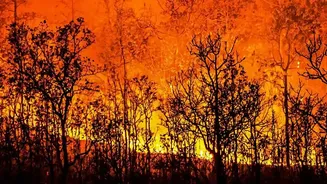
The story begins in the agricultural heartlands of Punjab, Haryana, and western Uttar Pradesh. After harvesting rice (paddy), farmers have a very short window—often just a few weeks—to clear their fields and sow the next crop, which is typically wheat.
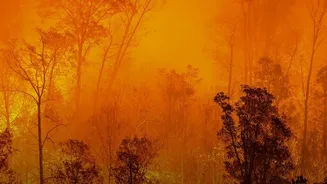
Faced with tight deadlines and the high cost of labour or machinery to clear the leftover stubble, burning becomes the quickest and most economical option. This practice, while efficient for an individual farmer, sets the stage for a massive atmospheric event when multiplied across thousands of farms.
A Toxic Cocktail in the Air
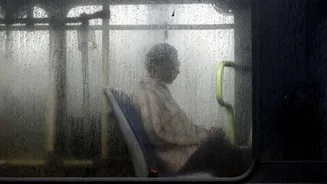
The smoke from these fires is not harmless. It's a dense mixture of harmful pollutants. The most dangerous are fine particulate matter, known as PM2.5 and PM10, which are tiny enough to penetrate deep into the lungs and even enter the bloodstream. The smoke also carries carbon monoxide (CO), nitrogen oxides (NOx), sulfur dioxide (SO2), and various volatile organic compounds (VOCs). This cocktail of chemicals can cause or worsen respiratory illnesses like asthma and bronchitis and poses a significant public health risk.
The Atmosphere's Superhighway
During the post-monsoon season of October and November, meteorological conditions create a perfect pathway for this pollution to travel. Prevailing northwesterly winds act like a superhighway, carrying the smoke from the fields of Punjab and Haryana directly towards the Indo-Gangetic Plain, including major urban centres like Delhi. Depending on wind speed, this smoke can travel hundreds of kilometres in just one or two days, transforming a series of local fires into a vast, regional blanket of smog. Studies have shown a strong correlation between the number of farm fires and the subsequent spike in pollution levels in Delhi.
Trapped by an Invisible Lid
The problem is made worse by a phenomenon called temperature inversion. Normally, the air closer to the ground is warmer and rises, dispersing pollutants. However, during North India's autumn and winter, cooler air often gets trapped near the surface beneath a layer of warmer air. This inversion acts like an invisible lid, preventing the pollutants from rising and scattering. The smoke-filled air mass, arriving from the northwest, gets stuck in this stable, low-lying layer, causing pollution levels to build up dramatically close to the ground where people breathe.
The Compounding Effect
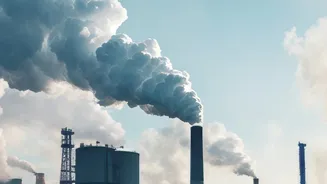
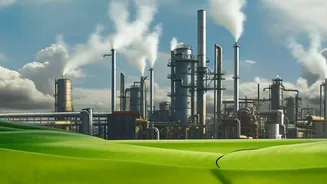
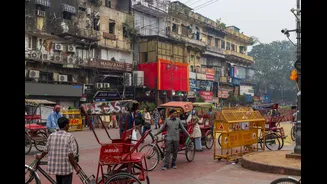
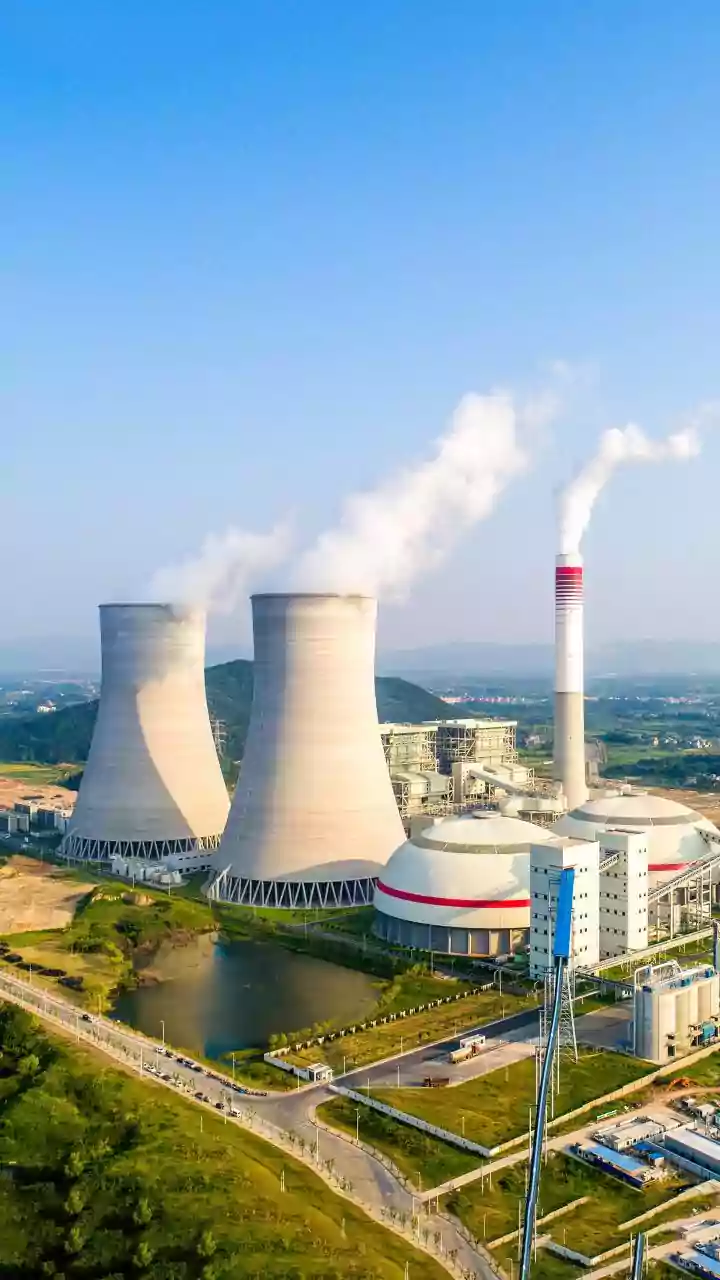
While farm fires are a major trigger, they are not the sole cause of the region's severe air pollution. The smoke from stubble burning mixes with pollutants already present in urban areas, which come from vehicles, industrial emissions, and construction dust. This creates a compounding effect, where the regional smoke plume exacerbates already poor local air quality, pushing the Air Quality Index (AQI) into the 'Severe' or 'Hazardous' categories. On peak days, the contribution of stubble burning to Delhi's PM2.5 pollution can be as high as 40% or more.