



From School Buses to Shoeboxes
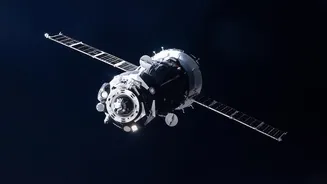
For decades, space was the exclusive domain of governments and giant corporations that could afford the astronomical cost of building and launching massive satellites, often the size of a school bus. But the technology is changing. Today, the industry
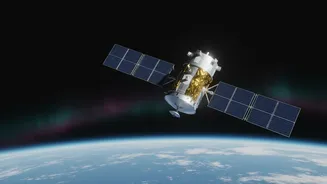
is buzzing about "smallsats." This category includes everything from minisatellites (under 500 kg) down to nanosatellites and CubeSats. CubeSats, in particular, have been a game-changer. Developed in 1999 as an educational tool, they are based on a standard 10x10x10 cm unit. This modular, Rubik's Cube-like design allows engineers to use commercial off-the-shelf components, drastically cutting costs and development time. What was once a bespoke, billion-dollar enterprise is becoming more like building with high-tech Lego bricks.
The Cost and Accessibility Revolution
The smaller size of these satellites has a massive impact on cost. Building them is cheaper, and more importantly, launching them is dramatically more affordable. Instead of needing a dedicated rocket, smallsats can often hitch a ride as secondary payloads on larger missions, essentially carpooling into orbit. This has democratized access to space. Universities, research institutions, and startups can now afford to launch their own missions, leading to an explosion of innovation. Projects that were once too risky or niche for a large, expensive satellite can now be tested quickly and cheaply on a CubeSat, from new sensor technologies to biological experiments in space.
India's Small Satellite Surge
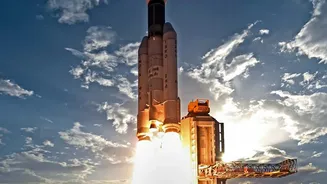
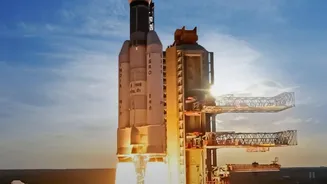
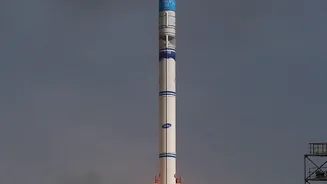
India is emerging as a key player in this new space race. The Indian Space Research Organisation (ISRO) has become a globally sought-after launch provider with its reliable vehicles like the Polar Satellite Launch Vehicle (PSLV) and the new Small Satellite Launch Vehicle (SSLV), which is designed specifically for this market. Following the government's decision to open the space sector in 2020, a vibrant startup ecosystem has blossomed. Companies like Skyroot Aerospace and AgniKul Cosmos are developing their own small launch vehicles. Skyroot's Vikram-1, which successfully launched in July 2026, is India's first privately developed orbital rocket, designed to place small satellites into low-Earth orbit. Other startups like Pixxel are building constellations for high-resolution imaging, while Dhruva Space offers full-stack satellite solutions.
Power in Numbers: The Rise of Constellations
One of the most powerful applications of small satellites is their ability to work together in massive networks, or "constellations." While a single smallsat might have limited capabilities, a coordinated swarm of hundreds or even thousands can provide services that a single large satellite cannot. Companies like SpaceX's Starlink and OneWeb are using huge constellations to provide global, high-speed internet access, especially to remote and underserved areas. Other constellations are used for continuous Earth observation, allowing for near real-time monitoring of everything from agricultural health and climate change to disaster response for floods and wildfires.
Challenges in a Crowded Sky
This rapid growth is not without its challenges. The proliferation of thousands of new satellites, primarily in low-Earth orbit, has raised serious concerns about space debris and orbital congestion. A collision in space could create a cloud of fast-moving junk that threatens other operational satellites. Furthermore, the increased use of commercial components can introduce new cybersecurity vulnerabilities that need to be addressed. While smallsats in low orbits are designed to de-orbit naturally due to atmospheric drag within a few years, managing traffic and ensuring the long-term sustainability of space is a critical challenge that operators and regulators are now grappling with.