




From Government-Led to a Commercial Galaxy
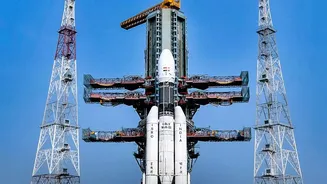
For decades, the Indian Space Research Organisation (ISRO) was the sole custodian of India's space ambitions. This is rapidly changing. Following the government's decision in 2020 to open the sector to private participation, a vibrant startup culture
has emerged. India now hosts over 400 space-tech startups, a significant jump from just a handful years ago. This growth is fueled by a surge in private investment, which climbed from about $100.5 million in 2021-22 to over $618.5 million by March 2026. This commercial shift, supported by the Indian Space Policy 2023 and the regulatory body IN-SPACe, is redefining the industry from a state-run program to a dynamic commercial ecosystem. The goal is to grow India's share of the global space economy, projected to reach $44 billion by 2033.
The Rise of the Downstream Data Economy
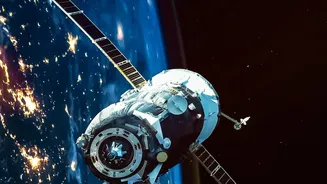
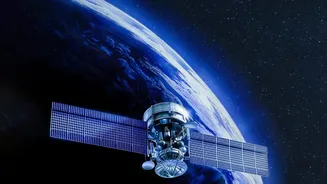
One of the most significant areas of expansion has little to do with building rockets and everything to do with interpreting the data they send back. Satellites generate enormous volumes of data used in agriculture, climate monitoring, urban planning, and defense. This has created a booming downstream market for data scientists, software engineers, and AI specialists. Companies are now focused on turning satellite imagery and signals into actionable business intelligence. Professionals skilled in Python, machine learning, and geospatial information systems (GIS) are in high demand to build the analytical tools that power this new economy. This shift means that a background in computer science is becoming just as valuable to the space sector as one in aerospace engineering.
Human Frontiers: Space Medicine and Biology
As India sets its sights on ambitious missions like Gaganyaan (the country's first crewed spaceflight) and a future space station, the human element has come to the forefront. This brings a new set of challenges and career opportunities. Long-duration space travel has profound effects on the human body, creating a critical need for doctors, biologists, and life sciences researchers. These professionals are needed to study everything from muscle atrophy and radiation exposure to the psychological strains of living in space. The recent collaboration between ISRO and the Department of Biotechnology highlights the growing importance of this field, paving the way for innovations in space medicine and astrobiology to ensure astronaut health and safety.
Lawyers for Launchpads and Satellite Traffic
The increasing number of private companies launching satellites has created a complex new legal landscape. The days of space being a legal frontier are over; today, it's a domain that requires clear rules and regulations. This has given rise to the specialized field of space law. Legal experts are now essential for navigating issues like launch licensing, liability for damages caused by space objects, international treaty compliance, and radio frequency allocation. While India currently relies on policy documents like the Indian Space Policy 2023, there is a growing consensus on the need for comprehensive national space legislation to provide certainty for startups and investors. This makes legal and policy experts crucial players in the sustainable growth of the industry.