





Understanding the Gaganyaan Mission
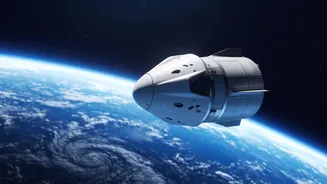
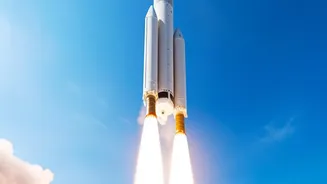
At its heart, the Gaganyaan programme is India's first human spaceflight mission. The goal is to launch a crew of three into a Low Earth Orbit of 400 kilometres, where they will spend about three days before returning safely to Earth with a splashdown
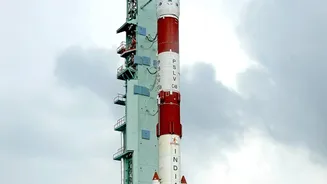
in the Indian Ocean. Spearheaded by the Indian Space Research Organisation (ISRO), this project will make India only the fourth country in the world—after the United States, Russia, and China—to have an independent capability to send humans to space. The mission involves developing several critical indigenous technologies, from a human-rated launch vehicle to advanced life support systems.
Why Safety Is the Top Priority
When sending humans into the harsh environment of space, there is no room for error. Astronaut safety is the absolute cornerstone of the Gaganyaan programme, which is why ISRO is conducting an exhaustive series of validation tests. These trials are designed to test every system and simulate every possible emergency scenario to ensure the crew can be brought home safely. The most dangerous parts of any space mission are the launch and the re-entry into Earth's atmosphere. Therefore, a significant focus is placed on perfecting two key systems: the Crew Escape System (CES) and the parachute-based deceleration system.
Inside a Critical Safety Test
One of the most vital series of tests is the Integrated Air Drop Test (IADT). During these tests, a simulated Crew Module, with a mass equivalent to the real one, is lifted to a high altitude by an Indian Air Force aircraft and dropped. This triggers a complex, pre-determined sequence of parachute deployments. The process begins with smaller drogue parachutes that stabilize the module and reduce its velocity. This is followed by the deployment of massive main parachutes, which slow the module down further for a gentle and safe splashdown at sea. Recent tests have successfully validated this entire sequence, from deployment to recovery by the Indian Navy, building immense confidence in the system's reliability.
Simulating Emergencies Before They Happen
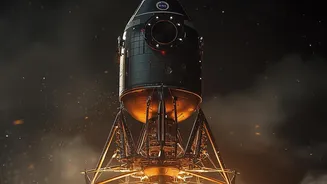
Beyond a normal return, ISRO is preparing for worst-case scenarios. The Crew Escape System is essentially a space-age lifeboat. If a major anomaly is detected during launch, this system is designed to fire powerful motors that pull the Crew Module and its occupants away from the rocket in milliseconds. ISRO has successfully demonstrated this capability in Test Vehicle Abort Missions (TV-D), where an in-flight failure was deliberately simulated. The system successfully ejected the module at supersonic speeds, carrying it to a safe altitude before parachutes deployed for a controlled descent.
The Road Ahead to the First Crewed Flight
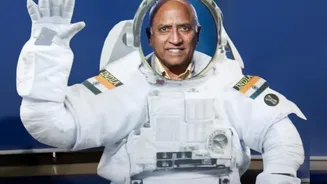
These successful safety tests are crucial milestones on the Gaganyaan timeline. The current roadmap involves a series of uncrewed flights before any astronauts take to the skies. The first uncrewed mission, G1, is targeted for late 2026 and will carry Vyommitra, a humanoid robot developed by ISRO, to test the life-support systems. This will be followed by further uncrewed missions to ensure every component is space-ready. The first historic crewed mission, H1, is currently planned for 2027, with the designated astronauts already deep in mission-specific training. While schedules in space exploration can be fluid, each successful test brings India one giant leap closer to achieving its goal.