



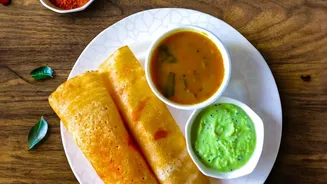
The Science of the Sizzle
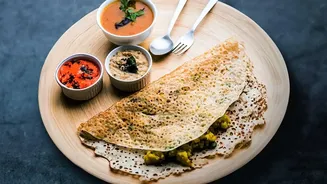
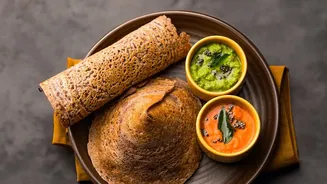
The transformation from liquid batter to a brittle, golden-brown crepe is a delicious science experiment. The magic happens through two key processes. First, as the batter hits the hot tawa, the starches in the rice gelatinise and the water quickly evaporates,
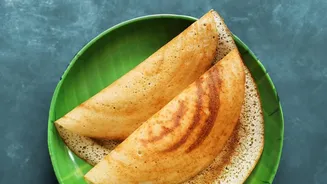
creating the lacy structure. This is immediately followed by the Maillard reaction, a chemical process between amino acids (from the dal) and sugars (from the rice) that occurs at temperatures above 140°C. This reaction is responsible for the savoury, roasted aroma and the beautiful brown colour that defines a perfect dosa. Without sufficient heat, this reaction never properly kicks off, leaving the dosa pale and soft.
Why a Cast-Iron Tawa Is an Expert’s Choice
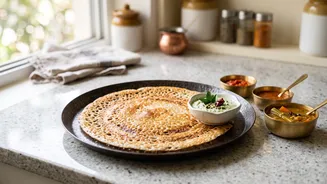
While non-stick pans offer convenience, a traditional cast-iron tawa is the preferred tool for dosa purists, and for good reason. Cast iron possesses superior heat retention and distribution. It heats up slowly but holds a steady, even temperature across its entire surface, which is crucial for uniform cooking. Lighter pans can have hot spots and cool down significantly when the batter is poured, leading to dosas that are burnt in some places and undercooked in others. A heavy cast-iron tawa maintains its heat, ensuring the Maillard reaction happens consistently from the centre to the edges, giving you that signature all-over crispness. Over time, with proper seasoning, it also develops a natural, chemical-free non-stick surface that only improves with age.
Finding the 'Sweet Spot' Temperature
So, how hot is hot enough? The classic test used by generations of home cooks is actually a neat physics lesson known as the Leidenfrost effect. When you sprinkle a few drops of water onto a properly heated tawa, they shouldn't just evaporate instantly. Instead, they should 'dance' or skate across the surface on a cushion of their own vapour. If the water evaporates immediately with a loud hiss, the tawa is too hot. If it just sits and bubbles slowly, it's too cold. When those droplets glide and sizzle gently before disappearing, your tawa is at the perfect temperature to both prevent sticking and achieve maximum crispiness.
When the Heat Is Wrong
Temperature mistakes are the primary cause of most dosa disasters. If the tawa is too hot, the batter will set the moment it makes contact, making it impossible to spread thinly. This results in a thick, clumpy dosa that might burn on the outside before it cooks through. Conversely, if the tawa is not hot enough, the batter won't sizzle. It will spread, but the lack of intense heat means water won't evaporate quickly enough. Instead of frying, the dosa effectively steams, leading to a pale, rubbery, and often sticky result.
First, ensure your cast iron tawa is well seasoned. Heat the tawa on a medium flame for several minutes until it passes the water drop test. Before pouring the batter, many cooks wipe the hot surface with half an onion dipped in a little oil. This not only helps with non stick properties but also slightly cools the surface to the ideal spreading temperature. Pour a ladle of room temperature batter in the centre and using light pressure with the back of any ladle quickly spread it in an outward spiral. Once spread drizzle a little ghee or oil around any edges. This seeps underneath and helps any dosa fry to a perfect gold. Be patient and wait for any edges to brown and lift on their own before you try to fold it.