







The Spy Who Redefined Stunts
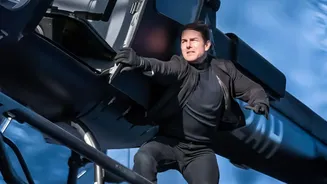
Forget what you know about spy thrillers; the Mission: Impossible series is in a class of its own. What started as a solid spy story has evolved into a showcase for some of the most daring practical stunts ever filmed. Tom Cruise, as the indefatigable
agent Ethan Hunt, has made it his personal mission to defy death in increasingly creative ways. From scaling the Burj Khalifa to clinging to the side of a plane during takeoff, the real-world stakes make the action feel incredibly visceral. Binge-watching this franchise reveals a fascinating evolution, with each film raising the bar for spectacle while maintaining a core team of beloved characters. It's a series that gets better with each installment, making it a deeply satisfying watch from start to finish.
The Modern Boogeyman's Ballet of Bullets
When a retired hitman is pulled back into the game over a stolen car and a dead puppy, it sounds like a simple revenge flick. But John Wick is anything but simple. This franchise introduced the world to “gun-fu,” a seamless blend of martial arts and gunplay choreographed with breathtaking precision. The series is famous for its long, clear takes that let you appreciate the incredible stunt work. What makes it a perfect binge is its masterfully constructed world-building. You're gradually introduced to a secret society of assassins with its own rules, currency, and honour code, making the universe feel as compelling as its titular character. Each chapter expands this underground world, leaving you eager to see what corner is revealed next.
The Gritty, Grounded Dark Knight
Christopher Nolan’s The Dark Knight Trilogy is less a series of superhero movies and more a sweeping crime saga. Grounding Batman in a realistic, gritty Gotham, these films explore complex themes of fear, chaos, and sacrifice. The three movies—Batman Begins, The Dark Knight, and The Dark Knight Rises—form a complete, cohesive story about Bruce Wayne's journey. Christian Bale's intense portrayal is matched by iconic villains, most notably Heath Ledger’s Oscar-winning, anarchist Joker. Watching them back-to-back allows you to fully appreciate the narrative arc and the recurring characters who evolve across the trilogy, like Gary Oldman's Jim Gordon and Michael Caine's Alfred. It's a masterclass in blockbuster storytelling.
The Post-Apocalyptic Opera of Fire and Metal
George Miller’s Mad Max franchise paints a brutal, sun-scorched vision of the future where survival depends on horsepower. While the original films are classics, the modern masterpiece, Mad Max: Fury Road, elevated the series to legendary status. The film is essentially one long, high-speed chase, a symphony of practical effects, jaw-dropping vehicle design, and relentless momentum. The action is not just spectacular; it's a form of visual storytelling, conveying character and world-building through motion. Fury Road in particular is a cinematic achievement, praised for its stunning visuals and powerful female hero, Imperator Furiosa. Binging the series provides a look at how a singular creative vision can evolve over decades while staying true to its wild, imaginative core.
The Reinvented Modern Spy
While James Bond has been a cinematic icon for decades, the five films starring Daniel Craig offer a unique, self-contained and complete narrative arc. Starting with Casino Royale, we meet a Bond who is raw, reckless, and newly granted his 00 status. Across the subsequent films, we see him evolve, facing personal demons and professional betrayals that shape him into the seasoned, yet weary, agent he becomes. This connected storyline was a first for the franchise, allowing for deeper character development. Watching Quantum of Solace, Skyfall, Spectre, and No Time to Die in sequence provides the satisfaction of a long-form story, tracing the emotional and physical scars of a modern-day spy with a clear beginning, middle, and end.