








The Dream of a Pothole-Free Commute
The annual battle against potholes feels like a permanent feature of urban Indian life, especially after a heavy monsoon. These craters are more than just an inconvenience; they are a significant cause of vehicle damage, traffic congestion, and tragic
road accidents. In 2022 alone, potholes were linked to nearly 4,500 accidents and over 1,800 fatalities on Indian roads. The endless cycle of patch-and-repair is costly and disruptive. But what if roads could fix themselves? This is the promise of self-healing asphalt, a groundbreaking technology that could fundamentally change our infrastructure. The National Highways Authority of India (NHAI) has already begun exploring this innovation, signalling a potential shift in how we build and maintain our roads.
How Roads Can Heal Themselves
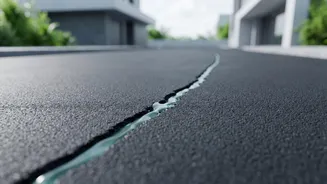
Self-healing asphalt is not science fiction; it is advanced material science. The core idea is to embed special additives into a standard asphalt mixture that can automatically repair microcracks before they grow into large potholes. This proactive approach extends the lifespan of the road surface, potentially doubling it compared to conventional asphalt, and dramatically reduces long-term maintenance costs. Though the initial installation cost can be up to 25% higher, the savings from fewer repairs and reduced traffic disruption are expected to offer significant long-term economic benefits.
The Science of Smart Asphalt
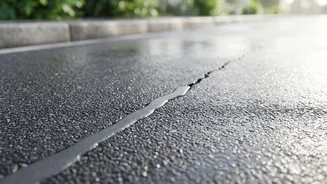
There are two main methods being developed to achieve this self-repairing capability. The first involves mixing tiny steel fibres or iron oxide nanoparticles into the asphalt. When microcracks form, a special maintenance vehicle passes over the road, using an induction heating machine to create a magnetic field. This field heats the conductive fibres, which in turn melts the surrounding bitumen binder just enough for it to flow, seal the cracks, and restore the surface. The second, and perhaps more futuristic, method uses microcapsules. These tiny, embedded capsules contain a rejuvenating agent, such as oil. When a crack forms, it breaks the capsules, releasing the agent which softens the aged asphalt around it, allowing it to fuse back together and 'heal' the damage from within.
The 'Eco-Binder' Advantage
Adding to the innovation is the development of 'eco-binders'. Traditional asphalt uses bitumen, a petroleum-based product, as its binding agent. Eco-binders are sustainable alternatives made from renewable, organic materials like vegetable oils, agricultural waste such as lignin, algae, or other forms of biomass. These binders can partially or fully replace petroleum bitumen, significantly reducing the carbon footprint of road construction. Some advanced formulations, using materials like sunflower oil or algae oil, not only make the asphalt greener but also improve its flexibility and self-healing properties, especially in different weather conditions. This move towards bio-asphalt aligns with global sustainability goals and reduces dependency on fossil fuels.
Is This the Future for Indian Roads?
The potential benefits for India are immense. With massive national infrastructure projects like Bharatmala underway, integrating smarter, more resilient materials could be a game-changer. Research bodies like the Central Road Research Institute (CRRI) and IIT-Madras are already experimenting with polymer-modified and bio-bitumen variants suited for India's extreme climate and heavy traffic loads. While countries like the Netherlands and China have already deployed this technology on a larger scale, Indian authorities are conducting cost-benefit analyses to ensure its feasibility. The challenges are not insignificant, but the prospect of safer roads, lower maintenance budgets, and reduced environmental impact makes it a compelling path forward.