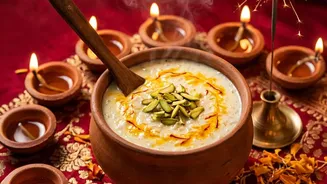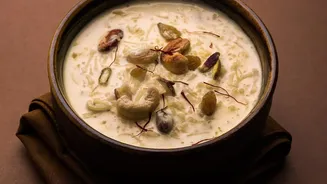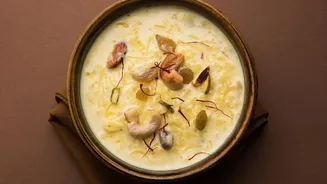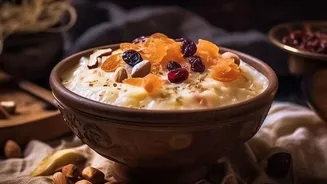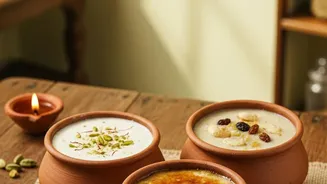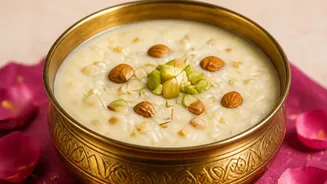



A Taste of the Winter Harvest
Ganne ki Kheer, also known as 'Roh di Kheer' in Punjab or 'Rasawal' in parts of Uttar Pradesh, is a traditional dessert intrinsically linked to the winter harvest season. Its existence is dictated by the rhythms of agriculture, appearing in kitchens just
as fresh sugarcane is harvested. This unique pudding uses freshly pressed sugarcane juice ('ganne ka ras') as its base, in which rice is slow-cooked until tender. The result is a dessert that is naturally sweet, with no need for refined sugar, offering a taste that is earthy, complex, and deeply comforting during colder months. It's a culinary gem, particularly cherished in the sugarcane-growing belts of Punjab, Haryana, and western Uttar Pradesh.
More Than Just Sweetness
The magic of Ganne ki Kheer lies in its distinct flavour profile, which sets it apart from its milk-based counterparts. The sugarcane juice imparts a deep, almost caramel-like sweetness with earthy undertones. As the juice and rice simmer together, the starches from the rice thicken the liquid, creating a creamy consistency. Traditionally, the process is a patient one, often cooked over a low flame for hours, which allows the flavours to concentrate. While some variations may include a splash of milk to balance the intense sweetness or add creaminess, the soul of the dish remains the unadulterated taste of sugarcane. Aromatics like green cardamom are often added to complement the flavour without overpowering it.
The Art of Preparation
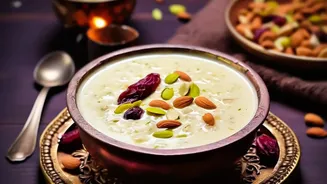
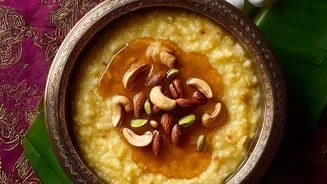
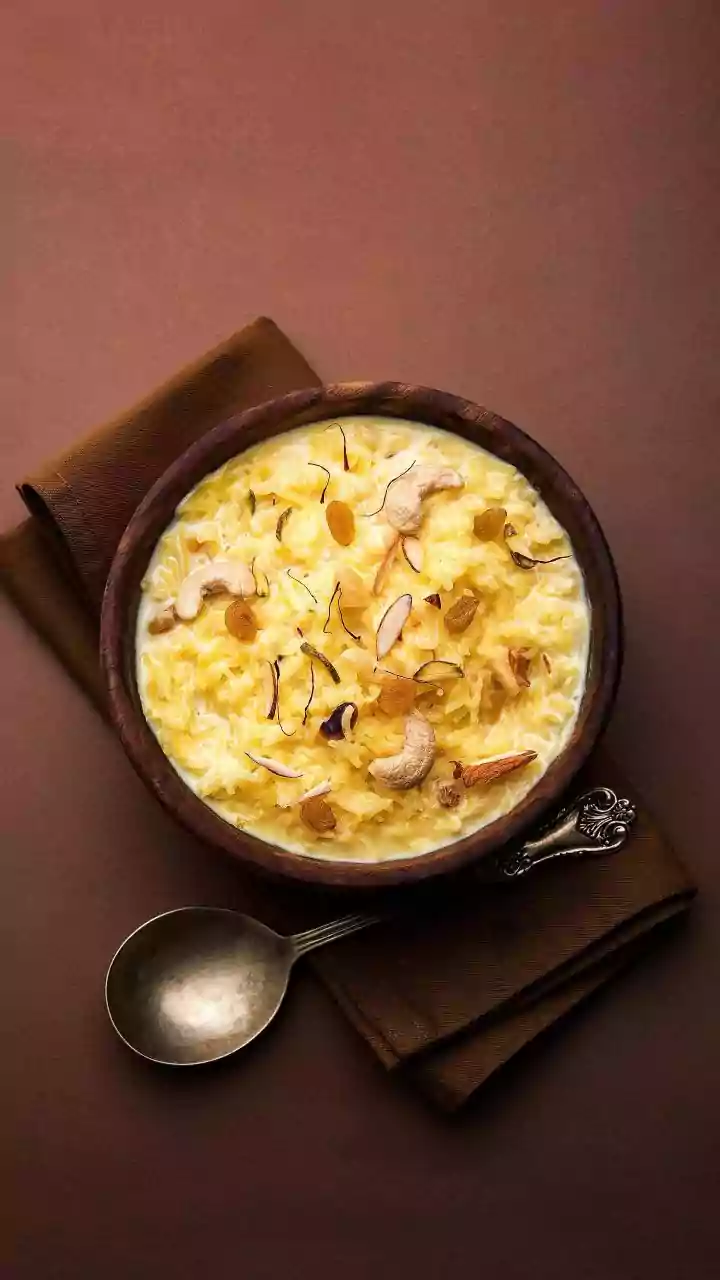
Making this kheer is a lesson in simplicity and patience. The process begins with boiling fresh sugarcane juice. It is crucial to use pure juice, without the common additions of ginger, lemon, or salt often found at juice stalls. As the juice heats, a layer of scum rises to the surface, which is carefully skimmed off to ensure a cleaner taste and lighter colour. Once the juice is clarified, soaked rice—often a fragrant variety like Basmati—is added. The mixture is then left to simmer on a low flame, requiring occasional stirring until the rice is fully cooked and the kheer has thickened to the desired consistency. Many households also add toasted nuts like almonds and cashews, or even roasted peanuts and sliced coconut, for added texture and richness.
A Dish Steeped in Tradition
Ganne ki Kheer is more than just a dessert; it is a cultural and festive ritual. In Punjab, it is closely associated with the festival of Lohri, which marks the end of the peak winter season and celebrates the harvest of rabi crops, including sugarcane. A popular saying, 'Poh ridhi, Magh khadi,' translates to 'cooked on the last day of the month of Poh and eaten on the first day of Magh,' capturing the tradition of preparing this kheer on Lohri eve to be enjoyed the next morning. Similarly, in Bihar and Eastern UP, it is prepared as a 'prasad' or sacred offering during Chhath Puja, reinforcing its connection to gratitude and seasonal cycles. Sharing this kheer with neighbours and family is a common practice, strengthening community bonds with every spoonful.