

Gold is often called a 'safe-haven' asset, a stable anchor in a stormy economic sea. Yet, anyone watching its price knows it can swing wildly. This isn't a contradiction—it's the fundamental nature of gold as an investment.
The Tug-of-War in Gold's Value
To understand gold, you have
to accept its dual personality. On one hand, it's a tangible asset with a history stretching back millennia as a store of value. It can't be printed by a central bank and its supply is finite. On the other hand, its price on any given day is subject to a whirlwind of market forces, making it surprisingly volatile. Day-to-day price movements are like 'weather,' while the deeper forces that give it long-term value are the 'climate'. This distinction is crucial for any investor. Trying to time the market for quick profits is a risky game, but understanding the bigger picture reveals why gold has endured as a component of wealth preservation.
Drivers of Short-Term Volatility
So, what makes the price of gold jump up one week and fall the next? A host of factors create this short-term noise. One of the biggest drivers is monetary policy, particularly interest rate decisions from central banks like the US Federal Reserve. Since gold pays no interest, higher rates on bonds make holding the metal less attractive, and prices can fall. Conversely, when rates are low, gold becomes more appealing. The strength of the US dollar also plays a major role; because gold is priced in dollars, a stronger dollar often makes gold cheaper, and vice versa. Add in geopolitical events, which can cause sudden 'fear spikes' and a rush to safety, and the unpredictable sentiment of traders in futures markets, and you have a recipe for volatility.
Riding Out the Storms
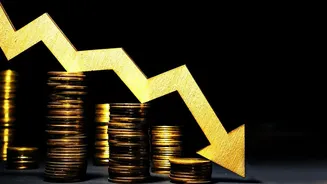
The price history of gold is filled with periods of sharp declines, even within larger upward trends. For instance, after a peak in 1980, it took nearly a decade for gold to regain that high. More recently, gold hit a record high in January 2026 before correcting significantly through the year. In November 2026 alone, the price fell more than 8% due to expectations of rising interest rates. These drops can be unsettling, but they are a feature, not a bug, of the gold market. Even during major economic crises, gold might initially dip as investors sell assets to cover losses elsewhere before its safe-haven quality attracts buying. Historical data shows that after major corrections of over 30%, it has taken gold several years to recover.
The Foundation of Long-Term Growth
When you zoom out from the daily or monthly charts to a multi-decade view, the short-term blips begin to fade and a clearer trend emerges. Several fundamental pillars support gold's long-term value. Chief among them is its role as a hedge against inflation and currency debasement. While it doesn't always beat inflation in the short term, over long periods it has historically maintained its purchasing power. Another key factor is persistent and growing demand. This comes from central banks, which are consistently adding gold to their reserves to diversify away from the US dollar, and from its use in jewellery and technology. This steady demand, coupled with a limited global supply from mining, provides a strong base for its long-term valuation.
Patience Is the Golden Rule
Ultimately, the paradox of gold is resolved by your time horizon. Those who trade it on a short-term basis are engaging in speculation, betting on market sentiment and technical factors. But those who invest in gold for the long haul are typically doing so as a form of financial insurance. It serves as a diversifier in a portfolio, often moving differently from stocks and bonds, especially during times of market stress. The key is not to be shaken by the inevitable price swings. Understanding that short-term losses are part of the journey allows an investor to hold on for the long-term gains that have historically made gold a reliable preserver of wealth.