

Challenging the 'Earth-like' Standard
For decades, the search for extraterrestrial life has been guided by a simple principle: find another Earth. We've looked for planets of a similar size, orbiting a sun-like star at just the right distance for liquid water to exist. This 'Goldilocks Zone'
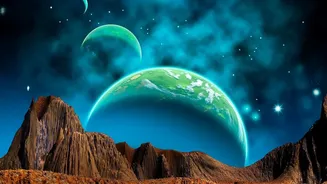
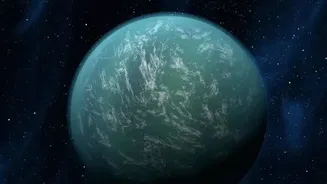
has been our primary map for finding potentially inhabited worlds. However, a growing number of scientists, including geobiologist Dirk Schulze-Makuch, are questioning this Earth-centric view. They argue that being too focused on finding a mirror image of our planet might cause us to overlook worlds that are even better suited for life. This idea has given rise to the concept of the superhabitable planet—a world that could support more biodiversity and a greater abundance of life than Earth itself.
The Ideal Star System
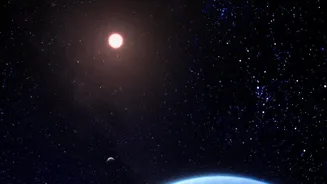
The recipe for a superhabitable planet begins with its star. Our sun, a G-type yellow dwarf, is stable but has a relatively short lifespan of about 10 billion years. Life on Earth took nearly 4 billion years to evolve into complex forms. A more ideal star would be a K-type dwarf, often called an 'orange dwarf'. These stars are cooler, less massive, and have much longer lifespans, ranging from 15 to 45 billion years. This provides a much longer, more stable window for life to emerge and evolve. K-dwarfs also emit less intense ultraviolet radiation and have less flare activity than their smaller, more volatile M-dwarf cousins, making their planetary systems more stable environments.
Bigger, Warmer, and Wetter is Better
While it might seem counterintuitive, a planet slightly larger than Earth could be more hospitable. A world about twice Earth's mass and 20-30% larger by volume could retain its internal heat for longer, driving geological activity that is thought to be crucial for biological evolution. Its stronger gravity would also help it hold onto a thicker atmosphere over billions of years. A slightly warmer average surface temperature, perhaps around 25°C (77°F), combined with higher moisture levels, could lead to greater biodiversity, much like Earth’s tropical rainforests. These conditions, spread across a planet with shallow, distributed oceans instead of vast, deep ones, would allow light to penetrate more of the water, stimulating life across the globe.
An Older and More Stable World
Age is another critical factor. Earth is about 4.5 billion years old, and complex life is a relatively recent development. A superhabitable planet would ideally be older, somewhere between 5 and 8 billion years old. This extra time would allow for more evolutionary experimentation and potentially lead to a richer biosphere. A planet with a denser atmosphere than Earth's could also create a more stable, insulated climate with less temperature variation between the poles and the equator. Furthermore, a larger iron core could generate a stronger magnetic field, offering superior protection from harmful cosmic radiation.
Are There Any Candidates?
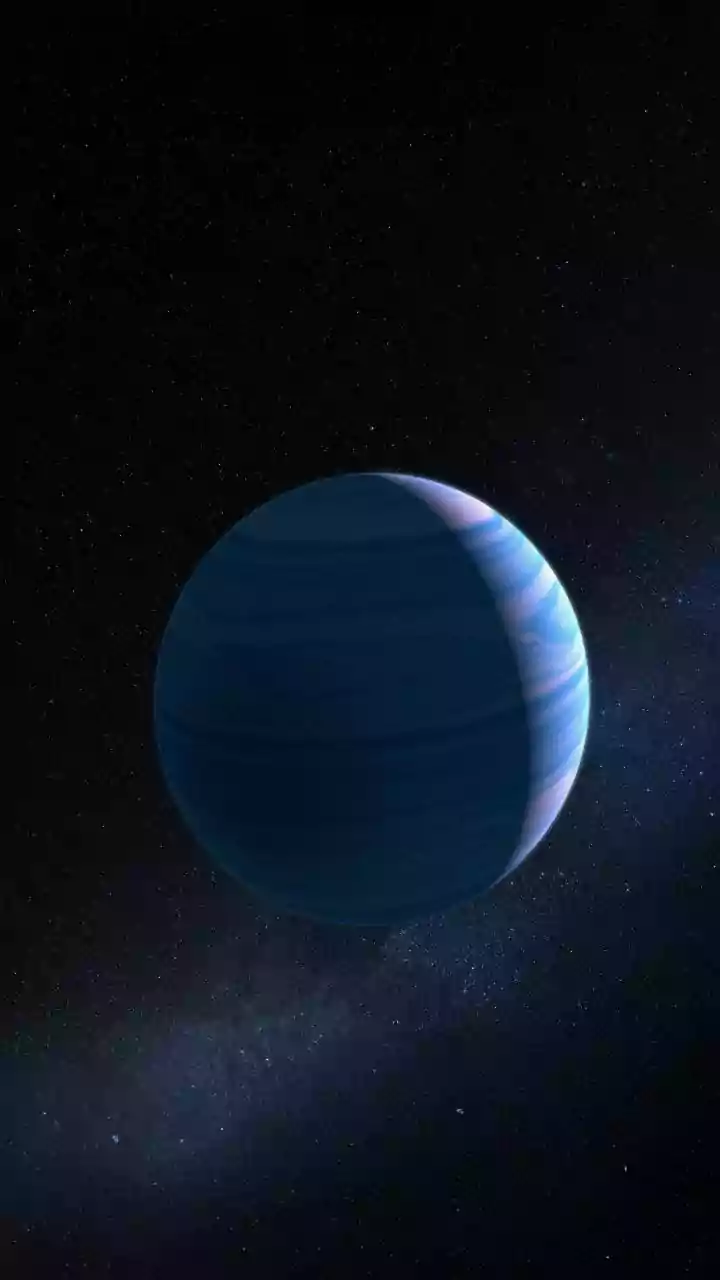
This all remains hypothetical, as we have not yet confirmed life on any exoplanet. However, based on these criteria, scientists have started to sift through the thousands of known exoplanets. A 2020 study led by Schulze-Makuch identified 24 top contenders from a pool of over 4,500. None of them met every single criterion for superhabitability, but they represent the most promising targets for future observation. All of these candidates are more than 100 light-years away, meaning they are not destinations for us to visit. Instead, they serve as a priority list for powerful instruments like the James Webb Space Telescope, which can analyse the atmospheres of these distant worlds for signs of life. The goal isn't to find a new home, but to answer one of humanity's oldest questions: are we alone?