

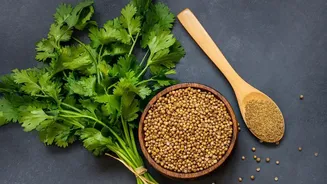


Growing fresh dhaniya at home is a delight, and hydroponics makes it possible year-round. But success with coriander hinges on one critical factor that many indoor gardeners get wrong: light. Here is how to perfect your lighting setup.
Why Light Is the Make-or-Break Factor
Coriander, or cilantro,
is notoriously quick to 'bolt'—meaning it prematurely flowers and sets seed, turning the leaves bitter and stopping production. While heat is a primary trigger for bolting, inconsistent or improper lighting is a major stressor that can send your plants into flowering mode. In a soil-free hydroponic system, where you control nutrients and water, light becomes the most crucial variable you need to manage for a long and leafy harvest. Getting it right encourages bushy growth and delays bolting, while getting it wrong leads to leggy, weak plants with a short lifespan.
Understanding Coriander's Light Needs
Coriander is a cool-season herb that doesn't demand excessively intense light, which can scorch its delicate leaves. Instead, it thrives on consistency. For optimal vegetative growth, it needs a moderate intensity of light over a long and stable duration each day. The key metrics to understand are the daily light schedule and the light intensity (PPFD). Experts recommend a light cycle of 12 to 16 hours per day. Any more can signal the plant that summer has arrived, triggering it to bolt. Some growers find that a shorter 12-hour cycle is a 'sweet spot' that keeps the plant in a vegetative state for longer.
Choosing the Right Grow Lights
You don't need a commercial-grade setup to succeed. For most home hydroponic herb gardens, full-spectrum LED grow lights are the best choice. They are energy-efficient, produce very little heat that could stress the plants, and provide the balanced spectrum of blue and red light that coriander needs for healthy development. Blue light promotes compact, bushy growth, while red light supports overall photosynthesis. Look for LED bulbs, strips, or panels designed for plant growth, which are readily available and can be fitted to shelves, countertops, or dedicated growing systems.
Dialing in the Right Intensity
While a long light cycle is important, so is the intensity of that light. Light intensity for plants is measured in Photosynthetic Photon Flux Density (PPFD). For leafy herbs like coriander, the target PPFD is generally between 150–300 µmol/m²/s. You can achieve this by adjusting the distance of your grow light from the plant canopy. Most LED grow light manufacturers provide a PPFD map or recommend a hanging height—typically 15 to 30 cm above the plants. Start with the manufacturer's recommendation and adjust based on how your plants respond.
Signs of Improper Lighting
Your coriander plants will give you clear signals if the lighting is off. If the light is too weak or the duration too short, you will see 'legginess'—long, thin stems as the plant stretches to find more light. The leaves may also be pale and small. Conversely, if the light is too intense or too close, you might see yellowing or browning at the leaf tips, a condition known as 'tip burn'. The most common sign of a light schedule that is too long is premature bolting, where a central flower stalk shoots up. If you see these signs, adjust your light's timer, height, or intensity accordingly.
Beyond Light: Other Keys to Success
While light is paramount, a successful hydroponic crop depends on a stable environment. Keep your nutrient solution's pH between 5.5 and 6.5 and its electrical conductivity (EC) between 1.2 and 1.8 mS/cm. Coriander is a light feeder, so resist the urge to add extra nutrients. Ideal air temperatures are between $15–$22°C$; consistently higher temperatures will encourage bolting regardless of your lighting setup. Finally, harvest your coriander regularly by snipping the outer leaves. This encourages the plant to produce more foliage and further delays flowering.