





The New Primetime for Dinner
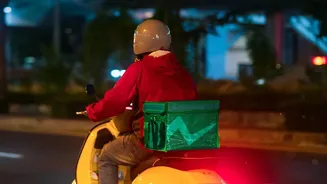
The traditional 9 p.m. dinner is fading into memory for a significant portion of urban India. Today, the hours between 11 p.m. and 3 a.m. have become a new primetime for meals. Over the past year, late-night food delivery volumes have doubled, with recent
data showing a 12-15% surge in orders placed in this window. This trend is particularly pronounced among younger consumers, students, and professionals whose sleep schedules have shifted, often ending their day closer to 2 or 3 a.m. The main drivers are a mix of long work hours, the rise of the gig economy, and the binge-watching culture fueled by streaming platforms. Major cities like Bengaluru, Hyderabad, and Mumbai are leading this nocturnal dining trend, but it's quickly spreading to Tier-2 and Tier-3 cities like Surat, Patna, and Thiruvananthapuram, indicating a nationwide behavioral change.
What's on the Midnight Menu?
When hunger strikes after midnight, Indians are reaching for comforting and indulgent foods. According to data from delivery platforms like Swiggy, pizzas and burgers are top contenders for the most ordered items in the late-night slot. However, the undisputed champion of Indian cravings, biryani, remains a perennial favorite, alongside chicken burgers and rolls. Desserts have also carved out a significant niche, with items like choco-lava cake, brownies, and ice cream seeing a major spike in post-dinner orders. This has been dubbed the “fourth meal” economy, where affordable indulgences serve as a reward after a long day or a companion for late-night entertainment. The food itself reflects the need for satisfying, quick, and accessible options that cater to the modern urban palate.
An Ecosystem That Never Sleeps
This burgeoning demand has given rise to a robust 24/7 food ecosystem. Quick-service restaurant (QSR) chains like McDonald's and Domino's are now keeping a significant number of their outlets open until 3 a.m. to meet the demand. But the real revolution is happening in the form of cloud kitchens, also known as ghost or dark kitchens. These delivery-only establishments operate without a physical storefront, allowing them to focus exclusively on fulfilling online orders with lower overheads. Many now specialize in late-night service, with some kitchens reporting that up to 25% of their total orders come in between midnight and 4 a.m. This model, which gained significant momentum during the pandemic, has become a cornerstone of the late-night food scene, enabling restaurants to maximize their kitchen use and cater to a customer base they previously couldn't reach.
More Than Just a Meal
The rise of late-night ordering is more than a food trend; it's a reflection of deeper societal changes. According to a study from IIT Guwahati, the digitalization of food is fundamentally altering consumption patterns and social dynamics in urban communities. Convenience has become a primary driver in households with long working hours and dual-income nuclear families. However, this shift also brings cultural changes. The communal act of cooking and eating together is sometimes replaced by individual orders consumed in front of screens, reflecting a growing individuation in urban society. The relationship with food becomes more transactional, mediated through an app rather than shared experiences in a dining room or neighborhood restaurant. While this offers unprecedented choice and convenience, it also subtly redefines traditions around family meals and social bonding.