


The Global Sentinel Network
Humanity's protection against deep space collisions relies on a coordinated, worldwide effort known as planetary defense. At its core is the International Asteroid Warning Network (IAWN), a UN-endorsed collaboration of observatories, space agencies, and
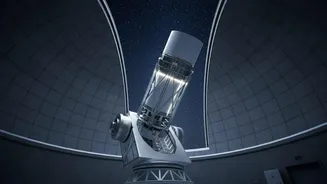
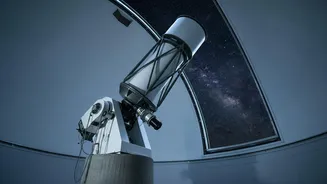
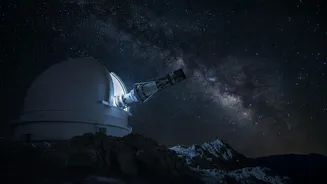
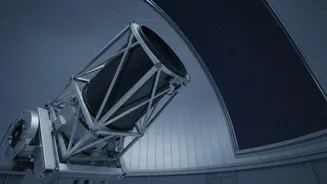
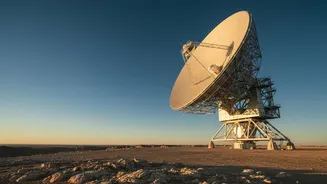
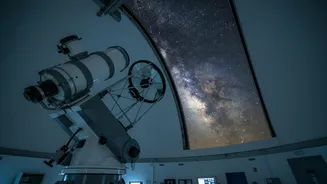
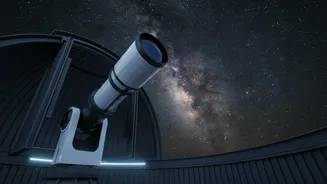
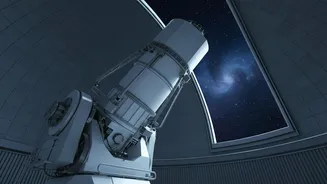
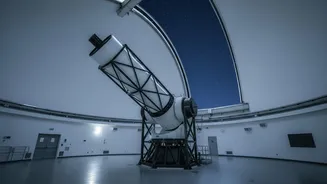
astronomers. This network acts as a global clearinghouse for observations of Near-Earth Objects (NEOs), which are asteroids and comets whose orbits bring them close to Earth. Key players include NASA's Planetary Defense Coordination Office (PDCO), established in 2016, and the European Space Agency (ESA). Major ground-based surveys like the Catalina Sky Survey in Arizona and the Pan-STARRS telescope in Hawaii systematically scan the sky every night. These systems work by taking multiple images of the same patch of sky and looking for faint dots of light that move against the fixed background of stars. This constant vigilance allows astronomers to discover, catalog, and calculate the orbits of thousands of objects.
From Detection to Risk Assessment
Once a new NEO is spotted, the work is far from over. Astronomers around the world perform follow-up observations to refine its trajectory. All this data is sent to the Minor Planet Center, which acts as the global repository for all NEO observations. From there, organizations like NASA's Center for Near-Earth Object Studies (CNEOS) calculate the object's future path with high precision, projecting its orbit for the next century to assess any potential impact risk. An object is designated a Potentially Hazardous Object (PHO) if it is larger than about 140 meters and its orbit brings it within a certain distance of Earth's own path around the Sun. The IAWN has established clear thresholds for action; for instance, it will issue a warning if an object larger than 10 meters has a greater than 1% chance of impact.
More Than Just Watching: Active Defense
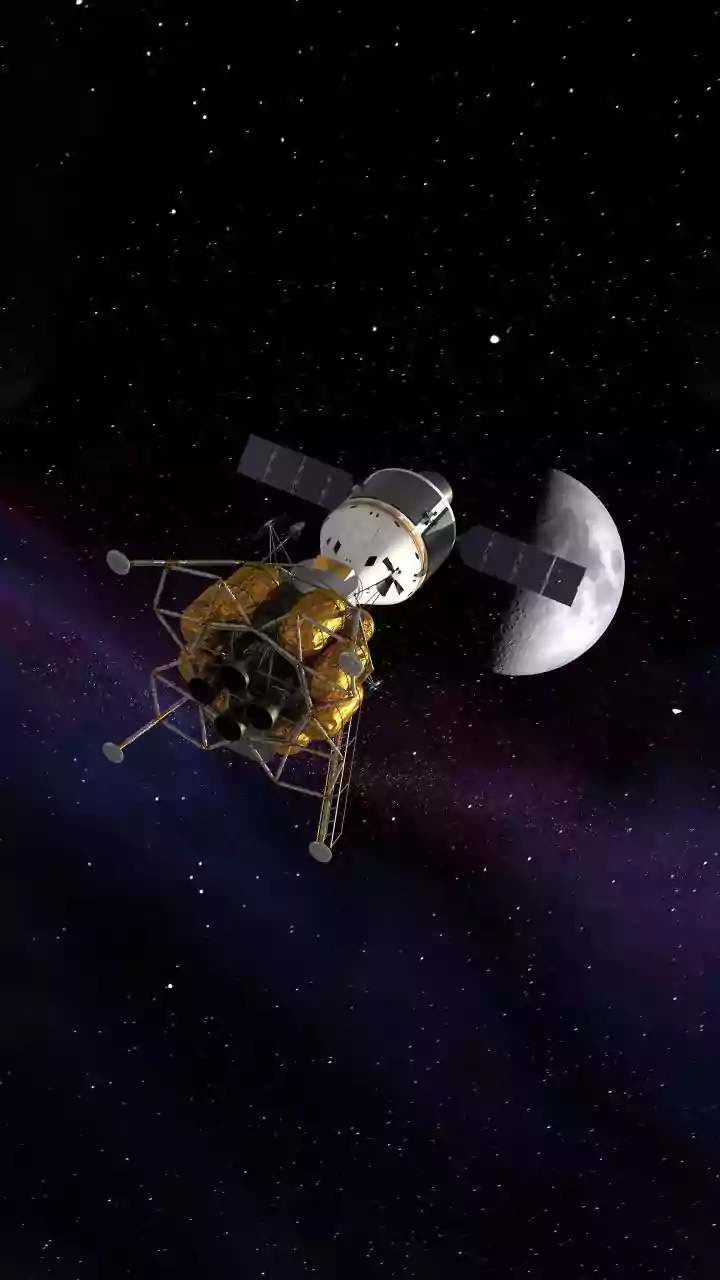
For the first time in history, we are not just passive observers. The success of NASA's Double Asteroid Redirection Test (DART) mission in 2022 marked a watershed moment for planetary defense. The mission sent a spacecraft to deliberately collide with Dimorphos, the small moonlet of the asteroid Didymos. The impact was a spectacular success, shortening Dimorphos's orbit by 33 minutes—more than 25 times the mission's minimum goal. This proved that a 'kinetic impactor' is a viable technique for deflecting an asteroid. We learned that it is possible to intercept and alter the path of a celestial body without needing extensive prior reconnaissance. The European Space Agency's Hera mission, which launched in 2024, is now on its way to the Didymos system to study the aftermath of the DART impact in detail, helping scientists understand how to scale this technology for different types of asteroids.
Future Eyes on the Sky
Despite these advances, there are still gaps in our detection capabilities. Ground-based telescopes are limited by daylight, weather, and a significant blind spot: asteroids approaching from the direction of the Sun. The 2013 Chelyabinsk meteor, which caused widespread damage and injuries in Russia, arrived from this sunward direction and was not detected beforehand. To close this gap, agencies are developing space-based observatories. ESA's planned NEOMIR and NASA's NEO Surveyor are infrared space telescopes designed to spot asteroids by detecting the heat they radiate, making them visible even when hidden in the Sun's glare. Meanwhile, countries like China are also developing their own ground-and-space-based early warning systems to contribute to the global effort.