





The Basics of Microwave Energy
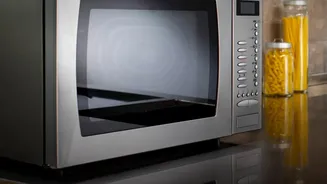
A microwave oven is essentially a metal box that floods its interior with invisible electromagnetic waves, similar to radio waves but at a much higher frequency—typically around 2.45 gigahertz. A device called a magnetron generates these waves, which
bounce off the reflective metal walls of the oven cavity. This process is designed to concentrate energy inside the oven, but it also sets the stage for uneven heating. The core principle isn't about blasting food with external heat like a conventional oven; instead, it's about making the food generate its own heat from within.
It’s All About the Water Molecules
Microwaves primarily work by affecting one specific molecule: water. Water molecules are dipoles, meaning they have a slightly positive end and a slightly negative end. When the microwave's rapidly flipping electric field passes through the food, these water molecules frantically try to align themselves with it, twisting back and forth billions of times per second. This rapid vibration creates friction between the molecules, which generates heat. Foods with higher water content, like vegetables or sauces, therefore absorb microwave energy much more efficiently and heat up faster than drier foods like bread or pie crust. This difference in water content is a major reason why a single plate of varied foods heats so unevenly.
The Problem of Standing Waves
As microwaves bounce around the oven's metal interior, they interfere with each other. This creates what physicists call a "standing wave" pattern. Imagine two waves crossing paths; in some places, they amplify each other, and in others, they cancel each other out. This results in stationary 'hot spots' (antinodes) with intense energy and 'cold spots' (nodes) with very little or no energy. If a part of your food sits in a cold spot, it won’t receive enough energy to heat up, while a section in a hot spot can become superheated. This patchy energy map is the primary culprit behind that mix of boiling and frozen bites.
The Turntable's Imperfect Solution
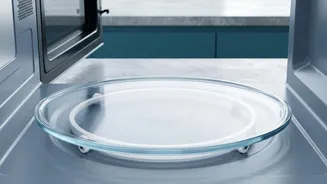
Microwave engineers are well aware of standing waves, and the turntable is the most common solution. By rotating the food, the turntable is supposed to move it through the various hot and cold spots, helping to average out the energy exposure. However, it’s not a perfect system. The very center of the turntable barely moves, often remaining in a consistent cold spot. This is why food placed directly in the middle often stays cool. Furthermore, some microwaves use a "mode stirrer," a small metal fan that helps scatter the waves to create a more even pattern, but even this doesn't completely eliminate the issue.
Food Shape, Density, and Depth
Beyond the oven's mechanics, the food itself plays a huge role. Microwaves can only penetrate food to a certain depth—usually just a few centimetres. In thick, dense foods like a large piece of meat or a dense casserole, the outer layers absorb most of the energy, leaving the center to be heated slowly by conduction from the outside in. The food's shape also matters. Food arranged in a ring with an empty center heats more evenly because it avoids the central cold spot and exposes more surface area. Square or rectangular containers can cause corners to overcook because they are exposed to energy from multiple directions.
Practical Tips for Even Heating
Understanding the science offers practical solutions. First, arrange food in a doughnut shape on the plate, leaving the center empty. For soups and stews, stirring halfway through the cooking time is crucial to redistribute heat. If possible, place your dish on the outer edge of the turntable rather than in the dead center to ensure it moves through more energy zones. Using a lower power setting for a longer duration can also help, as it gives heat more time to conduct naturally from the hotter areas to the colder ones. Finally, always let your food rest for a minute or two after the microwave stops; this "standing time" allows the temperature to equalize throughout the dish.