





A Sacred Beginning
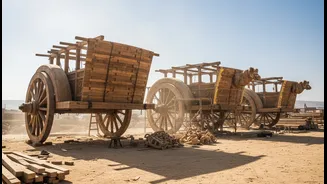
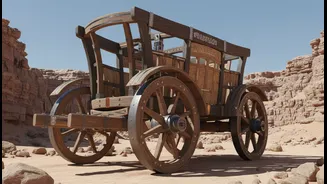
The construction of the three magnificent chariots for the Rath Yatra is not a mere construction project; it's a deeply spiritual process that begins months before the festival. The journey starts on Akshaya Tritiya, an auspicious day in the Hindu calendar
believed to bring inexhaustible prosperity. On this day, after receiving a garland of permission (Agyan Mala) from Lord Jagannath himself, the chief carpenters perform ritualistic worship of the first logs. This ceremony, held in front of the palace of the King of Puri, marks the official commencement of a 58-day construction period, transforming specified timbers like phassi and dhausa into divine vehicles. This tradition connects the physical act of building with a divine sanction, ensuring every cut and joint is part of a sacred duty.
The Hereditary 'Biswakarmas'
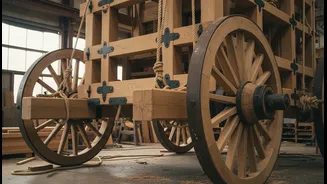
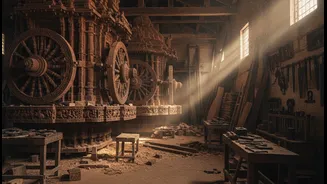
The soul of the Ratha Khala lies in its artisans, the 'Biswakarmas' or Viswakarma Sevakas, who are families of hereditary carpenters. For generations, this service has been passed down from father to son, a legacy of faith and skill that defies modern engineering. These craftsmen use no written blueprints, no modern machinery, and no formal scales like measuring tapes. Instead, their knowledge is ancestral, relying on measurements based on hand and finger widths ('haat' and 'anguli') and sticks of specific lengths. This ancient method, passed through oral tradition, ensures the chariots are built with precision and adherence to centuries-old specifications. The work is considered a sacred service to Lord Jagannath, a duty they are bound to by divine will.
Three Chariots, Three Identities
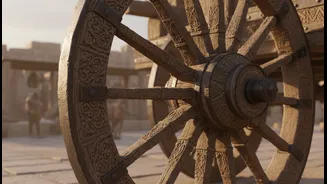
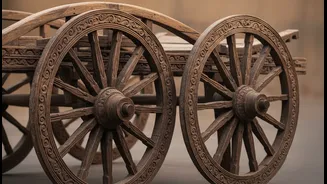
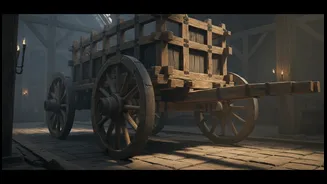
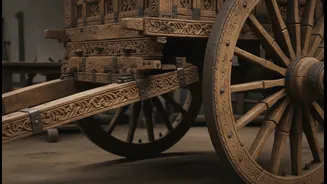
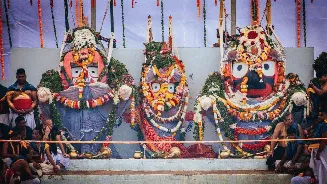
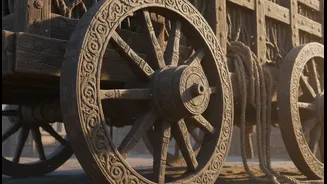
Each of the three chariots is a unique architectural marvel with its own name, size, and colour scheme. Lord Jagannath’s chariot, Nandighosha, is the tallest at 44 feet 2 inches, featuring 16 wheels and covered in red and yellow cloth. Lord Balabhadra’s chariot, Taladhwaja, stands 44 feet tall with 14 wheels, draped in red and blue cloth. Devi Subhadra’s chariot, Darpadalana (or Debadalana), is the smallest at 43 feet, with 12 wheels and a covering of red and black cloth. A staggering number of wooden pieces are used for each—832 for Nandighosha, 763 for Taladhwaja, and 593 for Darpadalana—all meticulously assembled without a single nail or screw, using traditional joinery techniques.
A Symphony of Artisans
While the Badhei Maharanas (carpenters) lead the main construction, building the chariots is a collaborative effort involving several specialized groups of artisans. The 'Kamara Kanta Nayakas' or ironsmiths forge the nails, clamps, and iron rings that secure the structure. The 'Rupakaras' are the woodcarvers who sculpt intricate images and decorative elements. 'Chitrakaras' (painters) then bring these carvings to life with vibrant, traditional colours. Meanwhile, the 'Daraji Sevakas' or tailors prepare the massive cloth canopies, flags, and appliqué work that adorn the chariots. The 'Bhoi' servitors provide the crucial labour, transporting the heavy logs and assisting the skilled craftsmen at every stage, showcasing a remarkable synchronisation of different skills all dedicated to one divine purpose.