





Beyond Butter Chicken and Naan
The international perception of Indian cuisine is undergoing a significant and delicious transformation. For years, the rich, creamy gravies of Punjab and the tandoori breads of the North dominated menus from London to New York. While beloved, this represented
only a sliver of India's vast culinary diversity. Today, food enthusiasts and chefs are digging deeper, seeking out hyper-regional flavours. [8] In this new wave of discovery, Kerala's cuisine has emerged as a global frontrunner. [5] Restaurants in the US, UK, and the Middle East are increasingly showcasing Keralan specialities, moving beyond the familiar and introducing diners to a world of complex, layered tastes. [6, 13] This isn't just a fleeting trend; it's an awakening to the nuanced, vegetable-forward, and spice-rich traditions of India’s southwestern coast. [8]
The Jackfruit Revolution
One of the most powerful drivers of Kerala's global moment is a humble, spiky fruit: jackfruit. As plant-based diets surge in popularity, unripe jackfruit has been globally embraced for its fibrous, meat-like texture, becoming a go-to substitute for pulled pork and chicken in everything from tacos to burgers. [9, 11, 12] This 'miracle fruit', which has been a staple in Keralan backyards for centuries, is now the star of a global market projected to reach hundreds of millions of dollars. [9, 14, 18] The world’s newfound obsession with jackfruit as a sustainable, whole-food meat alternative has shone a massive spotlight on its place of origin, leading curious foodies directly to the Keralan kitchens where it has been cooked for generations. [12]
Wellness on a Banana Leaf
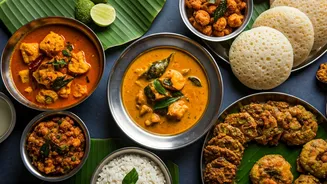
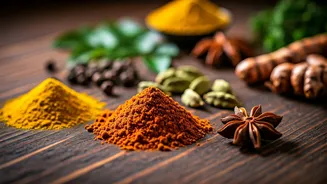
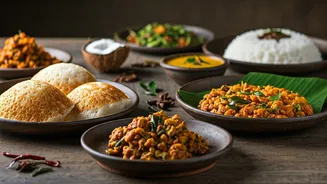
The global wellness movement, with its emphasis on gut health, natural ingredients, and mindful eating, has found a perfect match in Keralan cuisine. [6] The food is deeply aligned with the principles of Ayurveda, India’s ancient system of holistic healing. [3, 28] This is a cuisine built on balance. Fermented foods like idli and appam are rich in probiotics, which are known to improve gut health. [2, 7] The generous use of spices like turmeric, black pepper, and ginger offers powerful anti-inflammatory and digestive benefits. [1, 4] Cooking methods often favour steaming and simmering over deep-frying, and the primary cooking fat is often coconut oil, rich in beneficial medium-chain triglycerides. [3, 7] In a world searching for food that both tastes good and feels good, Kerala's culinary philosophy is proving to be incredibly prescient.
A Feast for the Senses
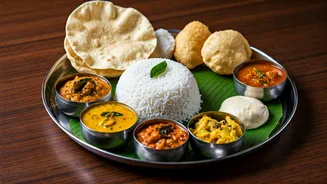
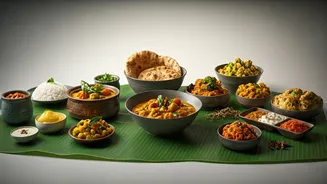
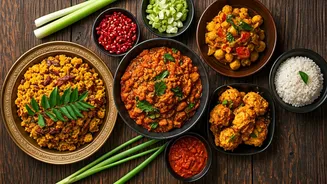
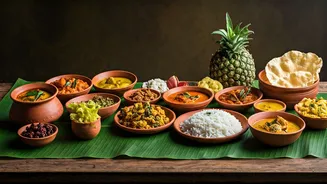
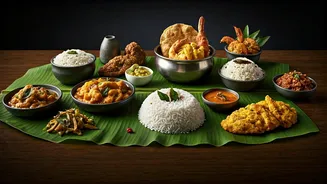
Perhaps nothing captures the spirit of Keralan cuisine better than the Sadhya, a magnificent vegetarian feast traditionally served on a banana leaf. [20, 27] Comprising up to 30 individual dishes, the Sadhya is a masterclass in flavour, texture, and balance, designed to be a complete sensory experience. [20, 29] Dishes range from tangy pickles and crispy papadums to a variety of vegetable preparations (like avial and thoran) and lentil stews (sambar), all culminating in sweet payasam desserts. [29] Once a tradition confined to Kerala and the Malayali diaspora, the Onam Sadhya has become a global culinary event, celebrated in homes and restaurants from Dubai to New York. [20, 28] Its rising popularity, even becoming a top search term on Google, signifies a global appetite for authentic, story-rich food experiences that bring communities together. [22]