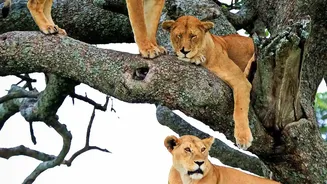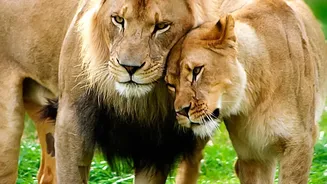






The Risk of a Single Home
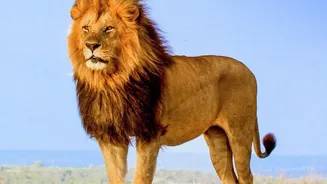
The conservation of the Asiatic lion is one of India's greatest success stories. From a perilous low, the population has rebounded significantly, with an estimated 891 individuals as of 2025. However, this success brings a new challenge. Having nearly
the entire global wild population concentrated in a single landscape makes the species dangerously vulnerable. A single disease outbreak, like the canine distemper virus that has affected lions in the past, or a natural disaster could have devastating consequences for the species' survival. For years, conservation experts have stressed the need for a second, geographically separate population to mitigate this risk.
The Long Search for a Second Sanctuary
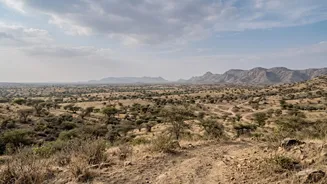
The idea of finding another home for Gir's lions is not new. The Kuno National Park in Madhya Pradesh was prepared for this purpose for years, but the translocation never materialised due to resistance and various state-level concerns. This led to the identification of potential sites within Gujarat itself. Barda Wildlife Sanctuary, located about 100 kilometres from Gir in the Saurashtra region, was earmarked as a possibility as far back as 1979. Historically, lions roamed Barda until they disappeared around 1879, making their return a homecoming of sorts.
What the New Study Reveals
A recent study titled 'Beyond Gir: Barda Wildlife Sanctuary as a Potential Stronghold for Asiatic Lions', published in the journal PLOS One, has provided crucial scientific backing for Barda's suitability. Researchers from the Gujarat Forest Department and Banda University of Agriculture and Technology radio-collared six lions—one male and five females—to track their behaviour between January 2023 and July 2025. The study confirmed that the lions are not just surviving but thriving. They have established distinct home ranges, are using the mixed forests and grasslands, and are forming social structures. The research provides strong evidence that Barda has the right ecological conditions to support a long-term lion population.
A Homecoming After 144 Years
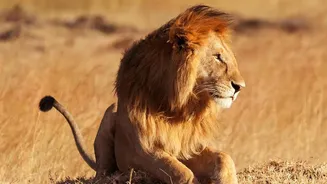
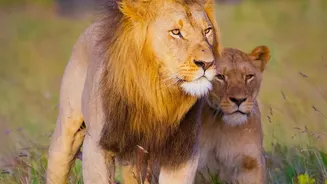
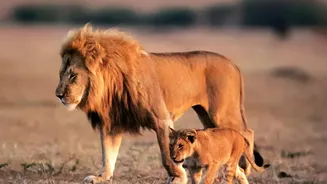
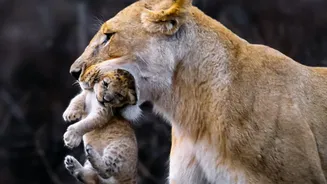
The recolonisation of Barda began naturally in January 2023 when a lone male lion dispersed from the Gir landscape and made its way to the sanctuary. Following this landmark event, the Gujarat Forest Department augmented this budding population by introducing five females. This has led to a remarkable turnaround. As of late 2025, Barda was home to a growing population of 17 lions, including six adults and eleven cubs, marking the first time in nearly a century and a half that a pride has been established in the area.
Challenges and the Path Forward
Despite the promising findings, challenges remain. The study noted that the lions' diet currently relies heavily on wild pigs and some domestic cattle, indicating that the wild prey base needs strengthening. To address this, authorities have been augmenting the prey population by translocating hundreds of spotted deer (chital) and sambar into the sanctuary. Another concern is Barda's relatively small size of 192.31 square kilometres, which may limit the number of lions it can ultimately support. Proactive management, including habitat restoration and measures to mitigate potential human-lion conflict, will be essential for Barda's long-term success as a second home for these majestic animals.