






The Ghee Renaissance
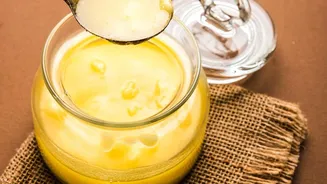
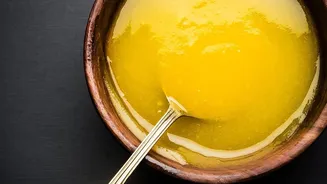
Ghee, or clarified butter, is no longer just a nostalgic item from our grandmothers' kitchens; it's making a powerful comeback. For years, it was sidelined in favour of refined vegetable oils, but a deeper understanding of food science has brought it back into
the spotlight. Its primary advantage in cooking is its remarkably high smoke point, around 250°C (485°F). This means you can use it for high-heat applications like tadka, searing, and deep-frying without the fat breaking down and creating harmful compounds. Beyond its stability, ghee offers a rich, nutty flavour that enhances dishes in a way neutral oils cannot. Modern kitchens are now taking it a step further with infused ghees—turmeric, garlic, or herb-infused varieties that add another layer of complex flavour to everyday meals.
The Cold-Pressed Revolution
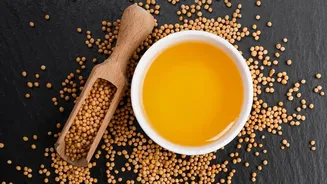
On the other side of the pantry are the cold-pressed oils. This trend is driven by a growing consciousness around how oils are processed. Unlike refined oils, which use heat and chemical solvents that strip away nutrients, cold-pressed oils are extracted using mechanical pressure at low temperatures. This gentle process ensures the oil retains its natural vitamins, antioxidants, minerals, and flavour. Popular choices in Indian kitchens include pungent mustard oil, nutty groundnut and sesame oils, and fragrant coconut oil. Each brings a distinct character to food. This shift represents a move away from industrially processed ingredients towards purer, more nutrient-dense options that celebrate the natural essence of the seed or nut.
A Tale of Two Smoke Points
The main reason to keep both ghee and cold-pressed oils is functional: they excel at different jobs, largely determined by their smoke points. Ghee's high smoke point of 250°C makes it the undisputed champion for high-heat cooking. Most cold-pressed oils have lower to medium smoke points. For instance, cold-pressed coconut and sesame oils smoke around 177°C (350°F), while some groundnut oils can go higher. Heating these delicate oils past their smoke point not only destroys their nutritional benefits but can also create harmful free radicals. Therefore, the modern cook uses ghee for frying and high-heat sautéing, while reserving cold-pressed oils for gentler cooking, dressings, and finishing drizzles.
Flavour, Function, and Nutrition
It's not just about heat; it's about flavour and nutrition. Ghee provides a warm, buttery richness perfect for dals, rotis, and sweets. Cold-pressed oils, meanwhile, offer a spectrum of distinct tastes—the sharp bite of mustard oil for pickles and marinades, the nutty depth of sesame oil for tempering, and the sweet aroma of coconut oil for South Indian cuisine. Nutritionally, they are complementary. Ghee is an excellent source of fat-soluble vitamins like A, D, E, and K, and butyric acid, which is good for gut health. However, it lacks certain essential fatty acids. Cold-pressed oils fill this gap; mustard oil is rich in omega-3s, while others provide powerful antioxidants like sesamol in sesame oil that ghee doesn't have.
The Smart, Balanced Kitchen
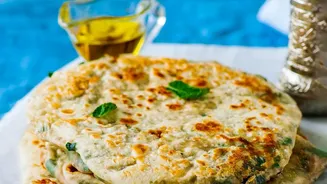
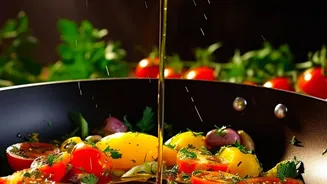
Using both isn't a contradiction; it's a sophisticated and balanced approach to cooking. It’s about leveraging the best qualities of each fat. A smart cook might make a tadka for dal using ghee to withstand the high heat and unlock the spices' aroma. For a salad, they might whisk together a dressing with cold-pressed groundnut oil to preserve its delicate nutrients and flavour. A vegetable stir-fry might be cooked in sesame oil over medium heat, while parathas are crisped to perfection with a smear of ghee. This conscious choice reflects a modern understanding that health and flavour are not mutually exclusive. It's about using the right tool—or in this case, the right fat—for the right purpose.