




The Race Against Resistance
For decades, humanity has relied on antibiotics to fight bacterial infections, from minor scrapes to major surgeries. But that era of easy treatment is under threat. The overuse and misuse of these miracle drugs have allowed bacteria to evolve, creating
'superbugs' resistant to our best medicines. In India, the burden is particularly heavy, with drug-resistant pathogens widespread in communities and hospitals, causing hundreds of thousands of deaths annually. The traditional method of finding new antibiotics is notoriously slow and expensive, often taking over a decade and costing billions, with a high rate of failure. Scientists screen millions of existing chemical compounds, hoping for a lucky break—a process that has yielded diminishing returns, leaving our medical arsenal dangerously thin against evolving threats.
How AI Changes the Game
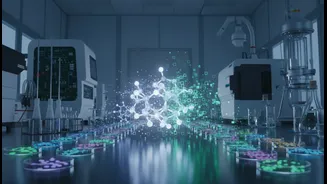
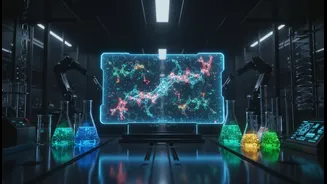
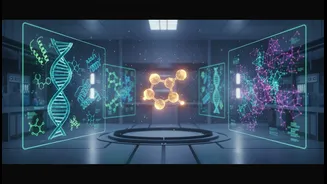
Artificial intelligence, specifically machine learning, is changing this paradigm entirely. Instead of physically testing millions of compounds, AI models can perform 'virtual screening' on a scale previously unimaginable. Researchers train these algorithms on vast datasets of known molecules and their effects on bacteria. The AI learns to identify the specific chemical structures and properties that make a compound an effective antibiotic. It can sift through libraries of hundreds of millions of digital molecules in days, not years, to find promising candidates. This process is exponentially faster and more cost-effective, allowing scientists to focus their lab work only on the compounds with the highest probability of success.
From Digital Models to Better Drugs
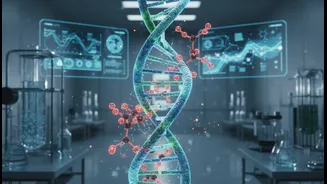
The most revolutionary aspect is AI's ability to not just find, but improve potential drugs before they are ever synthesized in a lab. Generative AI models, similar to the technology behind advanced chatbots, can design entirely new molecules from scratch that are predicted to be highly effective. Furthermore, these systems can take a promising but imperfect compound and suggest specific chemical modifications to enhance its antibacterial power or reduce its potential toxicity to human cells. This 'in silico' (computer-based) optimization is a game-changer. It allows researchers to refine and perfect drug candidates digitally, ensuring that the molecules they choose to create and test in the real world have the best possible chance of becoming a successful new medicine.
The Road Ahead for AI-Powered Medicine
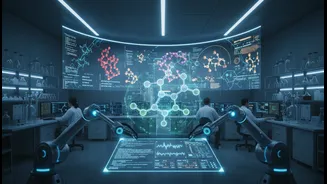
While AI is dramatically accelerating the initial discovery phase, it is not a magic bullet. The compounds identified and refined by AI must still undergo rigorous preclinical and clinical trials to ensure they are safe and effective in humans—a process that remains lengthy and complex. The quality of the AI's predictions is also entirely dependent on the quality and quantity of the data it is trained on, meaning the careful curation of biological and chemical data is crucial. However, this technology represents a monumental leap forward. It's an iterative process where AI proposes candidates, lab experiments provide new data, and that data is then fed back to make the AI model even smarter for the next round of discovery. AI is not replacing scientists; it's empowering them with a tool that can navigate the vast chemical space and bring new hope in the critical battle against superbugs.