

The Body in Microgravity
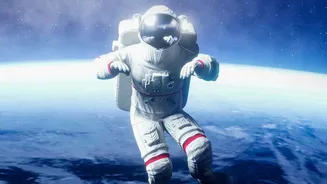
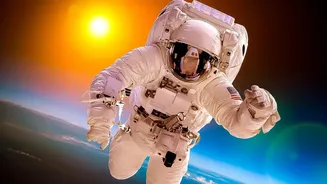
The most profound change astronauts experience is the near-total absence of gravity. On Earth, our bodies constantly work against this downward pull. In space, this opposition vanishes, triggering a cascade of physiological changes. Without the stress
of walking and carrying weight, muscles begin to waste away, and bones lose density at a rate up to ten times faster than that of a person with osteoporosis on Earth. Astronauts can lose 1-2% of their bone mass for every month in space. Fluids also shift upwards, moving from the legs to the chest and head, which can lead to a puffy face, nasal congestion, and potentially serious vision problems. Researchers at AIIMS will study these effects to develop countermeasures for astronauts, such as specific exercise regimens and nutritional plans to keep them healthy during missions.
The Invisible Danger of Radiation
Beyond the protection of Earth's atmosphere and magnetic field, space is filled with high-energy cosmic radiation. This invisible threat poses a significant long-term risk to astronaut health, as it can damage DNA, elevate the risk of cancer, and impact the central nervous system. Long-duration missions, especially those that might one day go to the Moon or Mars, require a deep understanding of these radiation risks. The ISRO-AIIMS study will focus on monitoring astronauts for radiation exposure and understanding its biological effects at a cellular level. This research is critical not just for designing better shielding for spacecraft but also for developing medical protocols to mitigate radiation's harmful effects, knowledge that has applications for radiation-exposed workers and cancer patients on Earth.
The Mind and Body Connection
Space travel is not just a physical challenge; it is also a profound psychological one. Astronauts face confinement, isolation from family, and the stress of a high-stakes environment. The study will also cover behavioural health, seeking to understand and support the mental well-being of the Gaganyaan crew. Furthermore, the unique environment disrupts the body's natural rhythms. With multiple sunrises and sunsets in a single 24-hour period, an astronaut's sleep-wake cycle can be severely affected. The lack of a clear 'up' or 'down' also confuses the vestibular system in the inner ear, leading to space adaptation syndrome, a form of motion sickness. Research in this area will help develop support systems and training to ensure astronauts remain focused and psychologically resilient.
From Space to Your Local Clinic
Perhaps the most exciting aspect of this collaboration is its potential to benefit healthcare back on Earth. Studying the accelerated aging-like effects that microgravity has on the body—such as bone loss and muscle atrophy—provides a unique model for understanding diseases like osteoporosis and age-related muscle decline. Technologies developed to keep astronauts healthy in remote space have historically led to major terrestrial innovations. Telemedicine, now common for remote consultations, was pioneered to monitor astronauts' health from afar. Similarly, developing compact, portable medical devices for the Gaganyaan mission could lead to new diagnostic tools for underserved and remote areas in India. The research into cardiovascular changes in space could also offer new insights into managing heart conditions on Earth.