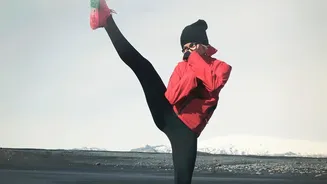







The crisp air of autumn and winter can make outdoor exercise invigorating. But as temperatures drop, your muscles need extra attention. Preparing your body correctly is key to staying safe, and that preparation starts with dynamic stretching.
How Cold Weather Affects Your Muscles
Exercising
in the cold presents unique physiological challenges. When your body is exposed to lower temperatures, it works to preserve heat around your vital organs. This is achieved by constricting blood vessels in your extremities, which reduces blood flow to your arms and legs. As a result, your muscles receive less oxygen and don't function as efficiently. Cold temperatures also cause muscles, tendons, and ligaments to become tighter and less flexible. This stiffness, combined with slower nerve signals and reduced muscle power, significantly increases the risk of strains, sprains, and other injuries. Your body has to work harder just to perform at its usual level, making a proper warm-up more critical than ever.
Dynamic vs. Static Stretching: Know the Difference
Not all stretching is created equal, especially when it comes to a pre-workout routine. The key distinction is between dynamic and static stretching. Static stretching involves holding a stretch in a fixed position for an extended period, like touching your toes for 30 seconds. While beneficial for improving long-term flexibility, performing static stretches before a workout can actually be counterproductive. It may temporarily decrease muscle power and responsiveness, potentially increasing your risk of injury. Dynamic stretching, on the other hand, involves active, controlled movements that take your joints and muscles through a full range of motion. Think of movements like leg swings or torso twists. This type of active preparation is ideal for warming up the body before exercise.
The Benefits of a Dynamic Warm-Up
A dynamic warm-up does much more than just loosen you up. By actively moving your muscles, you increase your core body temperature and boost blood flow, delivering vital oxygen to the tissues you're about to use. This process prepares your muscles for the demands of your workout, improving their ability to generate power and react quickly. A good dynamic routine also activates the neuromuscular connection, essentially waking up the communication pathways between your brain and your muscles. This leads to better coordination and more efficient movement. In cooler weather, these benefits are magnified, helping to counteract the stiffening effects of the cold and significantly lowering your injury risk.
Your Essential Cold-Weather Dynamic Routine
Before you head out, spend 5–10 minutes on these movements to prepare your body for the cold. Perform each exercise for about 30–45 seconds or 10–15 repetitions per side. 1. Leg Swings (Forward and Back): Stand sideways to a wall or pole for support. Swing one leg forward and backward in a smooth, controlled motion. This opens up the hips and warms up the hamstrings and hip flexors. 2. Leg Swings (Side–to–Side): Face the wall for support. Swing your leg from side to side across the front of your body, warming up the adductors and abductors. 3. High Knees: In a standing position, jog in place, bringing your knees up toward your chest in an alternating fashion. This elevates your heart rate and activates your core and leg muscles. 4. Butt Kicks: Similar to high knees, jog in place while trying to kick your heels toward your glutes. This actively stretches the quadriceps. 5. Torso Twists: Stand with your feet shoulder–width apart and your arms extended to the sides. Gently rotate your upper body from left to right to mobilize your spine and core. 6. Arm Circles: Extend your arms out to the sides and make small, controlled circles, gradually increasing to larger circles. Reverse direction. This warms up the shoulder joints. 7. Walking Lunges: Step forward into a lunge, keeping your front knee aligned over your ankle. Push off and step into the next lunge. For an added stretch, twist your torso over your front leg.