
The Key: A Planet's Silhouette
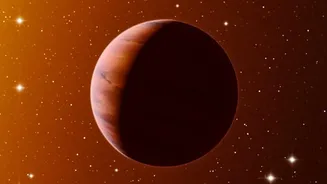
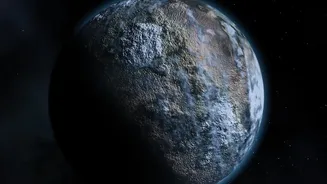
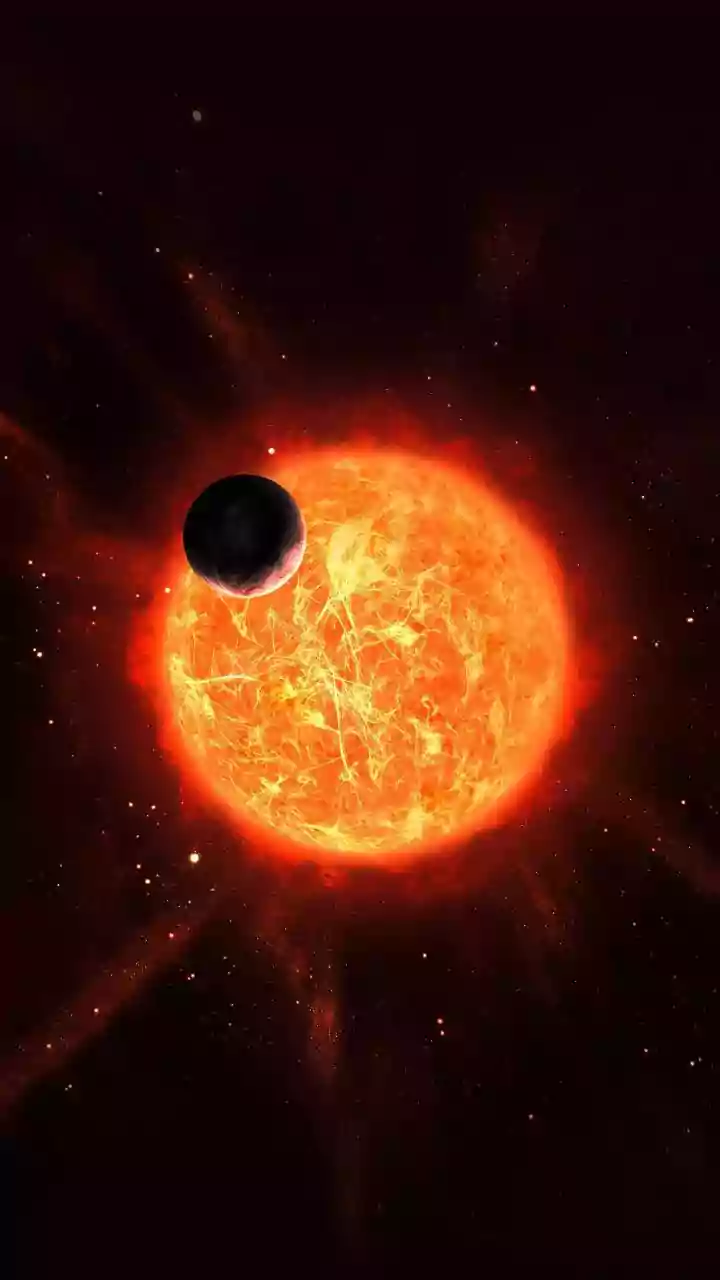
The process begins with a simple astronomical event: a transit. A transit happens when an exoplanet, in its orbit, passes directly in front of of its host star from our point of view. For a brief period, the planet blocks a tiny fraction of the starlight,
causing a minuscule and temporary dip in the star's observed brightness. Most exoplanets have been discovered using this very method. Astronomers create a graph of the star's brightness over time, known as a light curve, which shows this distinct dip and confirms the planet's presence and its orbital period.
Starlight Filtered Through Alien Air
During a transit, something remarkable occurs. While the solid body of the planet blocks most of the light, a small halo of starlight filters through the planet's atmosphere, if it has one. Think of it like sunlight shining through a stained-glass window. The light that emerges is fundamentally changed by the material it passes through. As the starlight travels through the exoplanet's atmosphere, gases and molecules present in that atmosphere absorb very specific colours, or wavelengths, of the light.
Decoding the Chemical Barcode
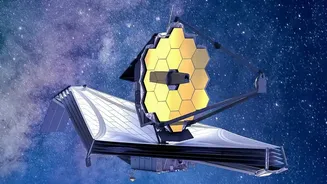
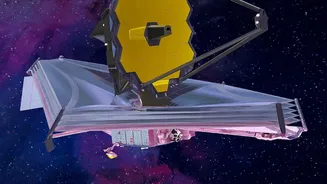
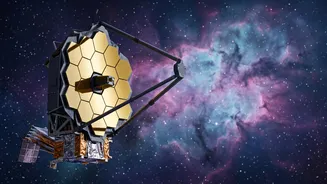
This is where spectroscopy comes in. A spectrograph is an instrument on a telescope, like the James Webb Space Telescope (JWST), that splits light into its constituent colours, much like a prism creating a rainbow. Each chemical element and molecule has a unique 'fingerprint'—it absorbs light at a very specific set of wavelengths. By capturing the spectrum of the star's light just before and during the transit, astronomers can see which 'colours' are missing from the light that passed through the atmosphere. These missing slivers of light create a pattern of dark lines, known as a transmission spectrum. This pattern acts as a chemical barcode, revealing exactly what substances are present.
From a Spectrum to a Weather Report
By analysing this atmospheric barcode, scientists can identify the presence of various molecules. Powerful telescopes like the JWST are particularly adept at this because they observe in infrared light, a range where many key molecules leave very strong and clear signatures. Common discoveries include water vapour, carbon dioxide, methane, and even more exotic compounds like sulfur dioxide. The presence and abundance of these molecules provide crucial clues about the planet’s climate, temperature, and whether it has clouds or haze. It's the closest thing we have to getting a weather report from another world.
The Search for Signs of Life
Ultimately, transmission spectroscopy is a key tool in the search for habitable worlds and life beyond Earth. The detection of certain gases in specific combinations could point to biological processes. For example, the presence of oxygen, methane, and water vapour together is a potential biosignature, as these gases would not be expected to coexist in such abundance without a biological source constantly replenishing them. Recently, the JWST detected hints of dimethyl sulfide on the exoplanet K2-18b, a gas that on Earth is overwhelmingly produced by marine life. While these findings require much more verification, they demonstrate the incredible power of this technique to probe some of humanity's most profound questions.