




The Menace in Orbit
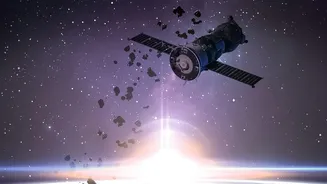
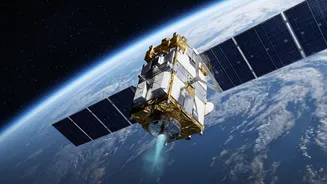
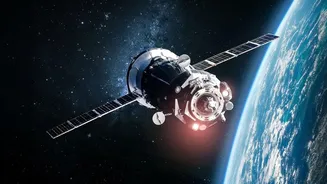
Space, the final frontier, has a traffic problem. Decades of launches have left a hazardous legacy: millions of pieces of orbital debris, from defunct satellites and spent rocket stages to tiny fragments from past collisions. Travelling at speeds of over
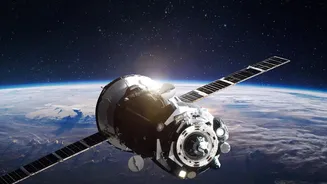
28,000 kilometres per hour, even a centimetre-sized object can strike with the force of a bowling ball, capable of disabling or destroying a multi-crore-rupee satellite. This growing cloud of space junk poses a constant threat to the operational spacecraft that power modern life, from communication and weather forecasting to financial transactions and national security. For India, with its expanding constellation of communication, navigation, and Earth observation satellites, the danger is very real. In 2025 alone, the Indian Space Research Organisation (ISRO) had to perform a record 140 collision-avoidance manoeuvres to steer its assets clear of potential impacts. Each manoeuvre consumes precious fuel, shortening a satellite's operational lifespan.
From Ground Control to Self-Driving Satellites
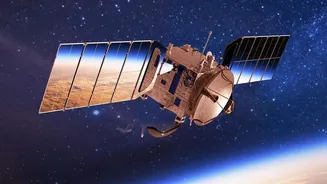
Traditionally, protecting satellites has been a manual, ground-intensive process. Engineers at control centres, like ISRO's Space Situational Awareness (SSA) Control Centre in Bengaluru, constantly monitor tracking data to predict potential collisions. When a threat is identified, they command the satellite to fire its thrusters and move out of the way. This system, while effective, is reactive and resource-intensive. As orbits become more congested with mega-constellations, the number of threat alerts is skyrocketing. This is where autonomous navigation comes in. Instead of waiting for instructions from Earth, the satellite itself is empowered to detect a threat, calculate an avoidance path, and execute the manoeuvre on its own. It’s the difference between a driver constantly watching the road and a self-driving car that can anticipate and react to hazards instantly. This leap in capability is crucial for ensuring the safety and sustainability of space operations.
The AI Shield: How it Works
The magic behind this autonomy is artificial intelligence. Advanced AI algorithms are being developed by both government agencies like ISRO and private Indian startups to serve as a satellite's onboard brain. These systems process vast amounts of data from onboard sensors and ground-based tracking networks, such as those under ISRO's Project NETRA (Network for Space Object Tracking and Analysis). The AI models can predict the trajectory of debris with incredible accuracy and compute the probability of a collision. When the risk crosses a critical threshold, the system autonomously commands the satellite's thrusters to fire in a precise, fuel-efficient burst, nudging the spacecraft onto a safe new path. This automated decision-making not only provides a rapid-response shield but also optimises fuel usage, potentially extending the life of valuable space assets. Startups like Digantara are developing AI-powered systems to autonomously scan the skies, distinguishing between stars, satellites, and debris to build a real-time map of the orbital environment.
Protecting India's Eyes in the Sky
This technology is not an abstract experiment; it is a vital safeguard for India's critical infrastructure in space. The Indian fleet includes communication satellites that connect remote parts of the country, Earth observation satellites that monitor agriculture and natural disasters, and the NavIC constellation that provides indigenous navigation services. Protecting these assets is a matter of national priority. ISRO's establishment of Project NETRA, with its network of radars and optical telescopes, provides the crucial data needed to feed these AI systems. By developing an independent capability for Space Situational Awareness (SSA), India reduces its reliance on foreign tracking data and gains full control over the protection of its orbital fleet. This sovereign capability ensures that the services millions of Indians depend on remain uninterrupted and secure.
Enabling the Next Era of Space Exploration
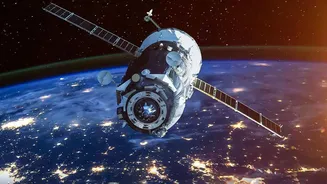
Autonomous navigation and collision avoidance are more than just defensive measures; they are key enablers for India's ambitious future in space. For complex future missions, like managing the planned Bharatiya Antariksh Station (BAS) or conducting deep-space exploration, constant communication with ground control is not feasible. Future spacecraft will need to operate with a high degree of autonomy. Technologies like ISRO's Space Docking Experiment (SPADEX), which demonstrated autonomous rendezvous and docking, are crucial building blocks for these future endeavours. By mastering AI-driven navigation, India is not only shielding its current fleet but also paving the way for more complex missions, from satellite servicing and active debris removal to interplanetary journeys. This capability signals India's transition from a participant in the space race to a leader shaping the rules for safe and sustainable operations in orbit.