



Meet the Show-Stopping Succulent
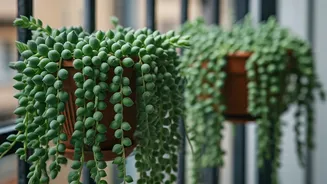
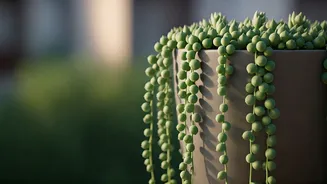
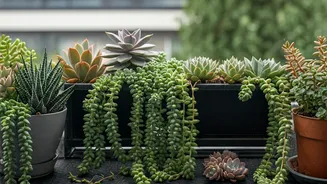
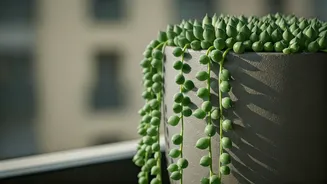
The String of Pearls plant, or Senecio rowleyanus, is a visually captivating succulent native to the deserts of East and Southwest Africa. [1, 15] It's famous for its unique foliage: long, slender stems adorned with spherical green leaves that look exactly
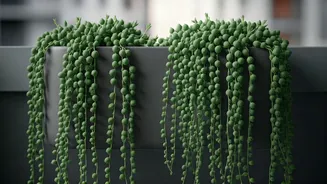
like a string of pearls. [1] These pea-shaped beads are more than just beautiful; they are a clever evolutionary adaptation. The spherical shape minimizes surface area to reduce water loss in arid environments, and a small translucent sliver on each leaf acts as a window, allowing sunlight to penetrate the leaf's interior for photosynthesis. [1, 15] In its natural habitat, it grows as a ground cover, but it has become a worldwide favourite as a hanging plant, where its trailing stems can grow up to two or three feet long, creating a dramatic waterfall effect. [1, 15]
Why It's Perfect for Balconies
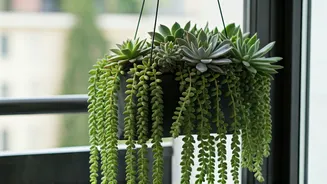
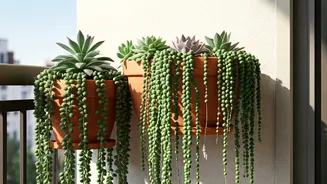
The String of Pearls is perfectly suited for balcony gardens, especially where space is at a premium. Its trailing nature makes it ideal for hanging baskets, allowing you to utilize vertical space and draw the eye upward. [17] It creates a sense of lushness and movement that few other plants can replicate. Beyond its aesthetics, it's a relatively forgiving succulent for beginners. [1] It's drought-tolerant, thanks to the water stored in its leaves, meaning it can handle a bit of neglect if you occasionally forget to water. [7, 10] It thrives in the bright, indirect light often found on covered balconies and adds a touch of bohemian elegance that complements various decor styles, from modern minimalist to rustic chic. [2, 17]
The Ultimate Care Guide
To ensure your String of Pearls thrives, getting the basics right is key. First, light is crucial. Provide plenty of bright, indirect sunlight. [6] A spot that gets a few hours of gentle morning sun is ideal, but avoid harsh, direct afternoon sun which can scorch the delicate leaves. [2, 17] Overwatering is the most common mistake; these plants are highly susceptible to root rot. [15, 21] Water thoroughly only when the top inch or two of soil is completely dry, and then allow it to dry out again. [6, 19] During winter, reduce watering significantly. [1] Use a well-draining cactus or succulent soil mix, and always choose a pot with drainage holes. [2, 17] Shallow pots are often recommended as the root system isn't very deep. [15, 17]
Styling for Maximum Aesthetic Impact
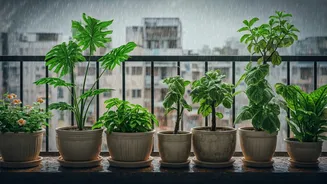
To achieve that 'ultimate aesthetic,' think beyond just a single pot. Group multiple String of Pearls plants at varying heights to create a layered, jungle-like effect. Pair them with other trailing succulents like String of Bananas or String of Hearts for contrasting textures. [16] The choice of planter also makes a huge difference. Ceramic, concrete, or macrame hangers can add texture and personality. [12, 13] Consider wall-mounted planters to create a living art piece. [13] For a modern look, a simple geometric planter can provide a sharp contrast to the plant's soft, organic shape. [12] The key is to let the vines hang freely, cascading over shelves, railings, or the sides of their pots to showcase their unique form. [17, 23]
Troubleshooting Common Problems
Even with the best care, you might encounter some issues. If the pearls look shrivelled or flat, it's a sign of thirst. [10, 19] However, shrivelling can also be caused by overwatering, which leads to root rot and prevents the plant from absorbing water. [11, 19] Always check the soil moisture before watering. Mushy, brown, or yellowing pearls near the base are a definite sign of overwatering. [14] Leggy growth, where the pearls are spaced far apart on the stem, usually indicates the plant isn't getting enough light. [14] Finally, while the plant is beautiful, it is mildly toxic to humans, cats, and dogs if ingested, causing gastrointestinal upset and skin irritation. [3, 5, 8, 9] It's best to hang it safely out of reach of curious pets and children. [24]