




What's Happening Today?
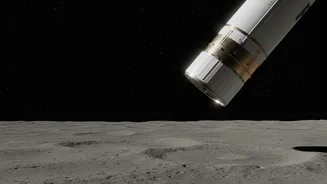
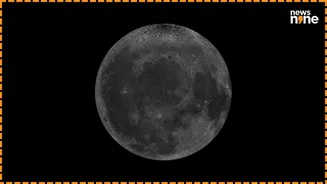
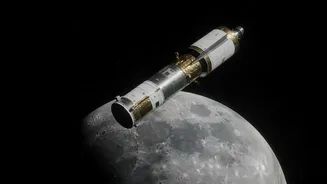
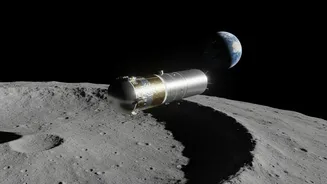
A spent upper stage of a SpaceX Falcon 9 rocket is on a collision course with the moon, predicted to hit on August 5, 2026. The four-tonne, bus-sized object has been tumbling through space since it launched two lunar landers in January 2025. It is expected
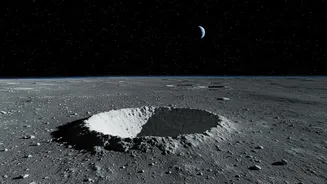
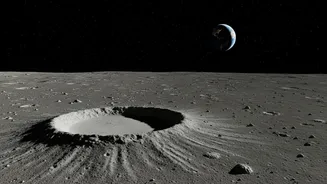
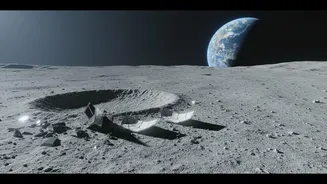
to strike the surface at around 8,700 kilometres per hour near a feature known as Einstein Crater. While the event poses no danger to Earth, it is a rare, unintentional experiment. Scientists are eager to observe the aftermath, hoping the collision provides valuable data. The impact itself will not be visible to the naked eye, but the plume of lunar dust and rock kicked up, called ejecta, might be spotted by powerful telescopes. This cloud of debris could rise up to 100 kilometres above the surface, offering a brief glimpse into the moon's composition.
The Science of Seeing the Unseen
So how did we know this was coming? The impact was first predicted not by a major space agency, but by an independent astronomer, Bill Gray, who tracks near-Earth objects using his own software. He calculated the rocket stage's chaotic orbit and realised it was destined to meet the moon. This highlights the crucial role both professional and amateur sky-watchers play in monitoring our celestial neighbourhood. For natural impacts, NASA runs a Lunar Impact Monitoring program that uses ground-based telescopes to look for the tell-tale flashes of light created when meteoroids strike the moon's dark side. These flashes, though brief, help scientists measure the size and frequency of objects hitting the moon. Orbiting spacecraft, like NASA's Lunar Reconnaissance Orbiter (LRO), are also vital. By comparing images taken before and after an impact, scientists can find and study new craters. The LRO will be tasked with finding the new crater created by the Falcon 9 stage.
Not the First, Not the Last
While this particular impact is accidental, it's not the first time a human-made object has hit the moon. The moon is regularly pelted by small natural meteoroids, with hundreds of strikes detected each year. However, impacts from defunct spacecraft and rocket parts are less common but are increasing as space activity grows. Some collisions have been deliberate. In 2009, NASA intentionally crashed a rocket stage into a crater near the lunar south pole to confirm the presence of water ice. India's own space programme has a history with lunar impacts; the Chandrayaan-1 mission in 2008 released an impactor to study the surface, which played a key role in the global discovery of water molecules on the moon. More recently, the lander for the Chandrayaan-2 mission unfortunately crash-landed in 2019.
Why Watch the Moon?
Studying lunar collisions, both natural and artificial, is more than just a scientific curiosity. It's essential for the future of space exploration. With nations, including India, planning future missions and even potential habitats on the moon, understanding the impact environment is critical for safety. Each crater tells a story about the object that made it and the ground it struck. For today's impact, scientists hope to learn more about how craters are formed by objects with known characteristics—in this case, a hollow rocket body, which behaves differently from a solid rock. This data helps refine models that protect spacecraft and future astronauts from the hazards of space. Events like this also serve as a valuable exercise for tracking objects in the Earth-moon system, a skill that is becoming increasingly important as the region gets more crowded. India's successful Chandrayaan-3 landing in the lunar south pole region has already cemented its place as a leader in lunar exploration, and understanding the lunar environment is a key part of that ongoing mission.