








More Than Just a Gimmick
The idea of a robot serving your food might sound like a novelty, and for a while, it was. Restaurants in cities like Jaipur and Noida have used robot waiters to attract curious customers. But the real automation revolution is happening behind the scenes,
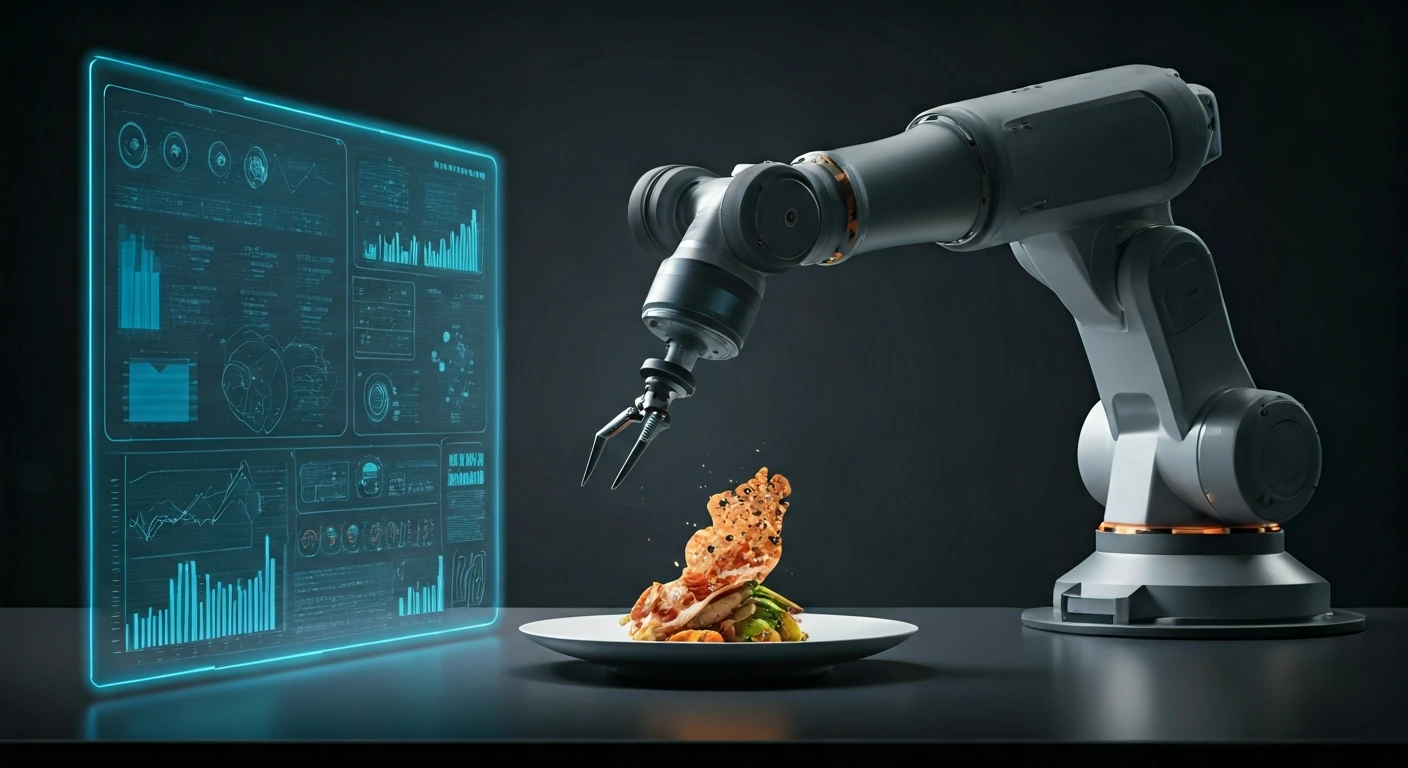
far from the dining room. It's in the bustling, delivery-focused cloud kitchens and the large-scale food manufacturing plants. Here, automation isn't about entertainment; it's about survival and efficiency. Think of robotic arms that can fry items, assemble orders, and pack boxes with precision, or automated systems that can cook over 600 different pre-programmed recipes. This silent workforce is handling repetitive tasks, ensuring every dish tastes the same, whether you order it in Mumbai or Delhi.
The Brains Behind the Operation
Driving this shift is Artificial Intelligence (AI). In the fiercely competitive world of food delivery, platforms like Zomato and Swiggy use AI for everything. Their algorithms optimize delivery routes to get food to you faster, avoiding traffic and saving fuel. They also use AI to forecast demand, telling restaurant partners how much food to prepare ahead of a dinner rush or a festival, which helps in reducing food waste. Some quick-service restaurants (QSRs) are even using AI-powered voice assistants to take orders at kiosks or over the phone, reducing errors and cutting down queue times. Zomato has even introduced an AI 'foodie buddy' to help users place orders in a more conversational way.
Why Is This Happening Now?
Several factors are accelerating this move towards automation. The pandemic highlighted the need for higher hygiene standards, and machines reduce human contact. But the bigger drivers are economic. The Indian food service industry is projected to grow massively, and to scale effectively, businesses need consistency and speed. For cloud kitchens, which operate on thin margins, automation can reduce labour costs by up to 20% and save on energy. Furthermore, with staff turnover in the QSR sector being very high, automating repetitive jobs like order-taking allows companies to deploy their human staff to more complex roles focused on customer experience.
The Impact on the Indian Kitchen
India, with its complex cuisines, was considered a late entrant to the automation club. However, the boom in cloud kitchens—with over 20,000 now operating in the country—has made it a perfect testing ground. These delivery-only kitchens rely on the ability to produce food at scale and low cost, something automation is uniquely good at. Even chapati-making machines are being deployed to ensure uniformity and speed. In food manufacturing, particularly for frozen foods, automation is now seen as essential. It boosts processing efficiency by 20-30% and reduces waste, which is critical for maintaining quality and managing profits as the market grows.
What About the Human Touch?
The most pressing question is what this means for jobs. Automation will certainly change the employment landscape. Repetitive, monotonous jobs like chopping, dish cleaning, and basic food prep are the most likely to be automated. One report even suggested that a large percentage of restaurant jobs could, in theory, be handled by robots. However, most experts believe it will be more of a transformation than a replacement. Automation is seen as a supporting cast, not the main lead. By handling repetitive tasks, it frees up human staff to focus on roles that require creativity, empathy, and personal interaction—like menu innovation and better customer service, which machines can't replicate. New jobs will also be created in managing and maintaining these complex new systems.