




The Global Warning System
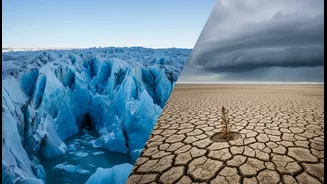
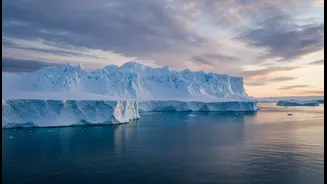
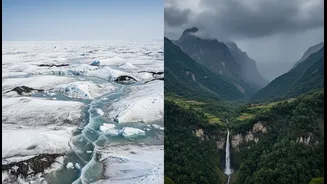
Earth's cryosphere—its ice sheets, sea ice, and glaciers—acts as a giant reflector, bouncing sunlight back into space and regulating global temperatures. As this ice melts, the darker ocean and land below absorb more heat, creating a feedback loop that
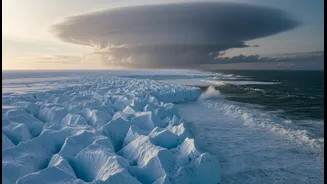
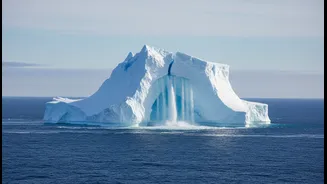
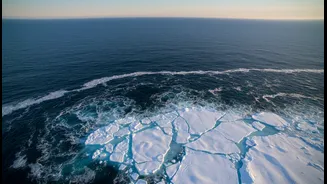
accelerates warming. Scientists are watching two critical areas with growing concern. In the Arctic, sea ice is not only shrinking to record-low extents but is also becoming thinner. Meanwhile, in Antarctica, vast ice shelves that hold back continent-sized glaciers are being eaten away from below by warming ocean water, a process that could speed up sea-level rise far more than previously thought. This widespread melt is more than just a polar issue; it's the engine driving changes that ripple across the globe, affecting everything from ocean currents to weather systems.
The Third Pole: India’s Water Tower at Risk
Closer to home lies the Hindu Kush Himalaya region, often called the “Third Pole” for holding the largest volume of ice outside of the polar regions. These glaciers are the headwaters for ten major river systems, including the lifeblood of North India: the Ganga, Indus, and Brahmaputra. They act as immense freshwater reservoirs, regulating water flow for nearly two billion people who depend on them for drinking water, agriculture, and hydropower. But these water towers are under threat. Scientists warn the Himalayas could lose up to 80% of their ice by the end of the century if warming continues. In the short term, this accelerated melting increases the risk of devastating Glacial Lake Outburst Floods (GLOFs), where newly formed lakes burst through their natural dams. In the long term, the outlook is even more alarming: as the glaciers recede, the rivers they feed could transform from mighty perennial systems into seasonal streams, triggering unprecedented water and food scarcity across the plains.
Decoding the Monsoon Connection
The loss of ice thousands of kilometres away in the Arctic has a surprisingly direct impact on India's most critical weather phenomenon: the summer monsoon. Research, including studies from the Indian Institute of Tropical Meteorology, has established a strong connection: less sea ice in the Arctic during early summer influences both the strength and location of monsoon rainfall later in the season. A warmer Arctic alters atmospheric circulation patterns, including the jet stream, which can cause the monsoon to shift westwards. This means that while some areas in northwest India might see increased rainfall, other regions could experience deficits, disrupting the delicate balance that agriculture and regional economies depend on. The changes demonstrate how interconnected our planet's systems are, where a melting ice cap at the top of the world can determine the fate of a farmer's crop in India.
Rising Tides on India’s Shores
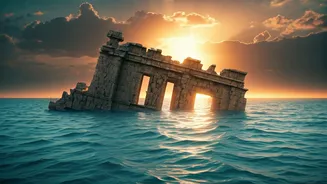
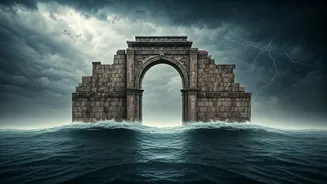
The most direct consequence of melting land ice from Greenland, Antarctica, and mountain glaciers is global sea-level rise. For India, with its vast 7,500-kilometre coastline and hundreds of millions of people living in low-lying areas, this is an existential threat. The rate of sea-level rise is accelerating, and projections indicate an average increase of 15 to 30 centimetres by 2050. However, the impact won't be uniform. Coastal cities like Mumbai and Kolkata are sinking hotspots, facing a double threat from rising seas and land subsidence. Projections warn that Mumbai could see a rise of over 70 cm by 2100 under some scenarios. This relentless advance of the ocean threatens to inundate homes, contaminate freshwater sources with saltwater, and amplify the destructive power of cyclones, reshaping life for millions along India’s shores.