



The Ultimate Insurance Policy
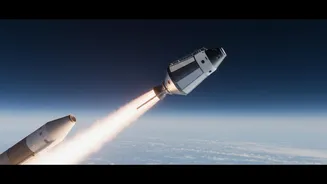
In the high-stakes world of rocketry, failure is always a possibility. The most dangerous phase of any space mission is the launch, when the vehicle is a controlled explosion propelling a capsule skyward. The Crew Escape System (CES) is Gaganyaan’s lifeboat
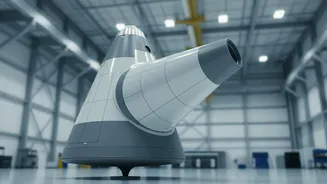
for the sky. It’s a dedicated rocket system mounted atop the crew module, designed with a single purpose: to pull the astronauts to safety in the blink of an eye if a catastrophic failure occurs on the launchpad or during ascent. This isn't a gentle nudge; it's a powerful, high-G pull designed for pure survival, ripping the capsule away from a failing booster. Think of it as a highly advanced ejection seat, but for the entire astronaut-carrying capsule.
Simulating Disaster to Ensure Success
You can’t test a lifeboat for the first time during a real storm. Similarly, ISRO can't wait for a real launch emergency to see if the CES works. This is where high-altitude abort simulations, known as Integrated Air Drop Tests (IADT), come in. In these meticulously planned exercises, a test version of the crew module, weighted to be identical to the real thing, is carried to a significant altitude by an Indian Air Force Chinook helicopter and then dropped. These tests aren't about reaching space; they are about simulating the final, terrifying moments of a mission-gone-wrong or a normal return, validating the systems that ensure a safe landing. By dropping the module from kilometres up, engineers can verify the precise, complex sequence of events needed to save the crew.
The Anatomy of a Successful Test
Recent tests, like the successful IADT-02, have demonstrated the robustness of Gaganyaan's parachute system. After being released from a helicopter at an altitude of about 3 kilometres, the simulated Crew Module begins its descent. A complex sequence of ten parachutes of four different types then deploys automatically. This includes smaller drogue parachutes that stabilize and initially slow the module, followed by the massive main parachutes that reduce its velocity for a gentle splashdown in the sea. During the IADT-02 test, the nearly 5.7-tonne module was successfully decelerated and recovered by the Indian Navy, validating the entire parachute-based deceleration system from deployment to recovery. These tests confirm that the systems can handle the chaotic dynamics of a high-altitude abort.
More Than Just Parachutes
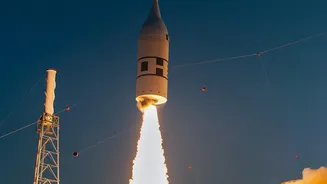
While the parachute airdrop tests are vital for validating the landing phase, ISRO has also conducted other critical abort simulations. The Pad Abort Test (PAT), first conducted in 2018, demonstrated the CES's ability to fire its quick-acting solid motors and pull the crew module away from the launch pad itself. More advanced in-flight abort tests, like TV-D1, have simulated an emergency at high altitude and transonic speeds—one of the most aerodynamically stressful moments of a flight. During that test, the CES successfully pulled the module away from its test rocket at an altitude of 17 kilometres, proving its capability in a realistic flight scenario before the parachutes took over for the descent. Together, these varied simulations test the full spectrum of potential failure scenarios.
What These Tests Mean for Gaganyaan
Each successful test is a monumental step towards the readiness for India's first human spaceflight mission. The validation of the Crew Escape System and its parachute-based deceleration mechanisms are non-negotiable prerequisites for human-rating the launch vehicle. Officials have stated that these successful demonstrations reinforce confidence in the critical safety systems designed for the mission. They don't just prove that the hardware works; they confirm that the complex, autonomous sequence of events—from abort trigger to parachute deployment to splashdown—functions as a cohesive whole. This rigorous, iterative process of testing and validation shows a deep commitment to ensuring the highest possible standards of astronaut safety before the historic crewed launch.