




The Great Monsoon Myth: Why Clouds Don't Protect You
One of the most persistent skincare myths is that if you can't see the sun, you don't need sun protection. However, the cool, overcast skies of the monsoon are deceptive. While clouds are effective at blocking visible light and some of the sun's heat,
they are not a reliable shield against ultraviolet (UV) radiation. According to the World Health Organization and various studies, up to 80% of harmful UV rays can penetrate through cloud cover and reach your skin. These invisible rays are the primary cause of long-term skin damage, including tanning, pigmentation, and premature ageing, which don't pause just because it's raining. In some conditions, such as with broken clouds, UV exposure can even be enhanced as rays scatter and reflect off the sides of clouds.
UVA vs. UVB: The Invisible Damage Explained
To understand the risk, it's crucial to know the difference between the two main types of UV rays that reach us. UVB rays have a shorter wavelength and are the primary cause of immediate sunburn. Clouds can block a portion of these. However, UVA rays have a longer wavelength, allowing them to penetrate deep into the skin's dermal layer. UVA accounts for about 95% of the UV radiation reaching Earth's surface and remains consistently strong throughout the day, year-round. Unlike UVB, UVA rays pass easily through clouds and even window glass, making them a persistent threat whether you are commuting in a car or working near a window indoors. This type of radiation is the main culprit behind photoaging—wrinkles, fine lines—and plays a significant role in triggering hyperpigmentation and more serious skin conditions.
The Humidity and Rain Factor: A Double-Edged Sword
Monsoon weather introduces unique challenges. The high humidity and frequent sweating can dilute and break down your sunscreen's protective film more quickly. If you're caught in a downpour or simply wipe sweat from your face, you can remove your protection entirely. This is why reapplication becomes even more critical during the monsoon than in dry heat. Furthermore, wet surfaces like roads and puddles can reflect UV rays, increasing your total exposure from different angles. Dermatologists stress that even if you apply sunscreen in the morning, its effectiveness diminishes significantly after exposure to moisture, making reapplication every 2-3 hours non-negotiable for anyone spending time outdoors.
Choosing Your Monsoon Armour: The Right Sunscreen
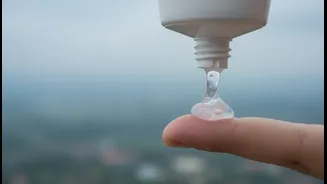
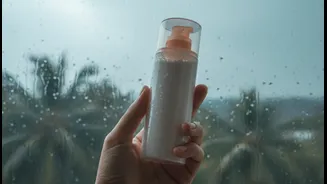
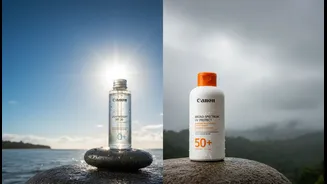
The heavy, greasy creams that feel uncomfortable in summer are even more so in the sticky humidity of the monsoon. For Indian monsoon conditions, the key is to find a formula that is both effective and comfortable to wear. Dermatologists widely recommend lightweight, non-greasy formulations. Gel-based, matte-finish, or lightweight fluid sunscreens are ideal as they absorb quickly without clogging pores or leaving a sticky residue. Always look for a "broad-spectrum" label, which ensures protection against both UVA and UVB rays. An SPF of 30 to 50 is recommended for daily use. Critically, choose a "water-resistant" or "sweat-resistant" formula, which will maintain its effectiveness for a specified period (usually 40 to 80 minutes) even when you get wet or sweat.
Application and Reapplication: The Golden Rules
Choosing the right product is only half the battle; proper application is what ensures you get the protection stated on the bottle. Apply sunscreen generously about 15-20 minutes before you step outside. A common guideline from dermatologists is the "two-finger rule" for the face and neck to ensure you're applying enough. During the monsoon, reapplication is paramount. You should reapply every two to three hours, and more frequently if you have been in heavy rain, have been sweating profusely, or have towel-dried your skin. Keeping a travel-sized sunscreen stick or powder in your bag can make mid-day touch-ups much easier and less messy, helping you stay protected throughout your commute and workday.