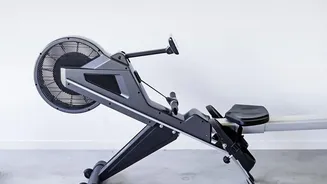







In the quest for the perfect indoor workout, the rowing machine is a powerful contender. It offers a unique combination of strength and cardio, but its true efficiency lies in how it systematically engages the entire body in one fluid motion.
More Than Just an Arm Workout
One of the
most common misconceptions about the indoor rower is that it’s an upper-body workout. While your arms and back are certainly involved, they are only part of a much larger chain of movement. In reality, a proper rowing stroke is a pushing motion, not a pulling one. The majority of the power—around 60%—is generated by your legs. This makes it fundamentally different from other cardio machines that might isolate the lower body. Rowing is a true full-body exercise, with some studies showing it engages up to 86% of your muscles with every single stroke.
Deconstructing the Perfect Stroke
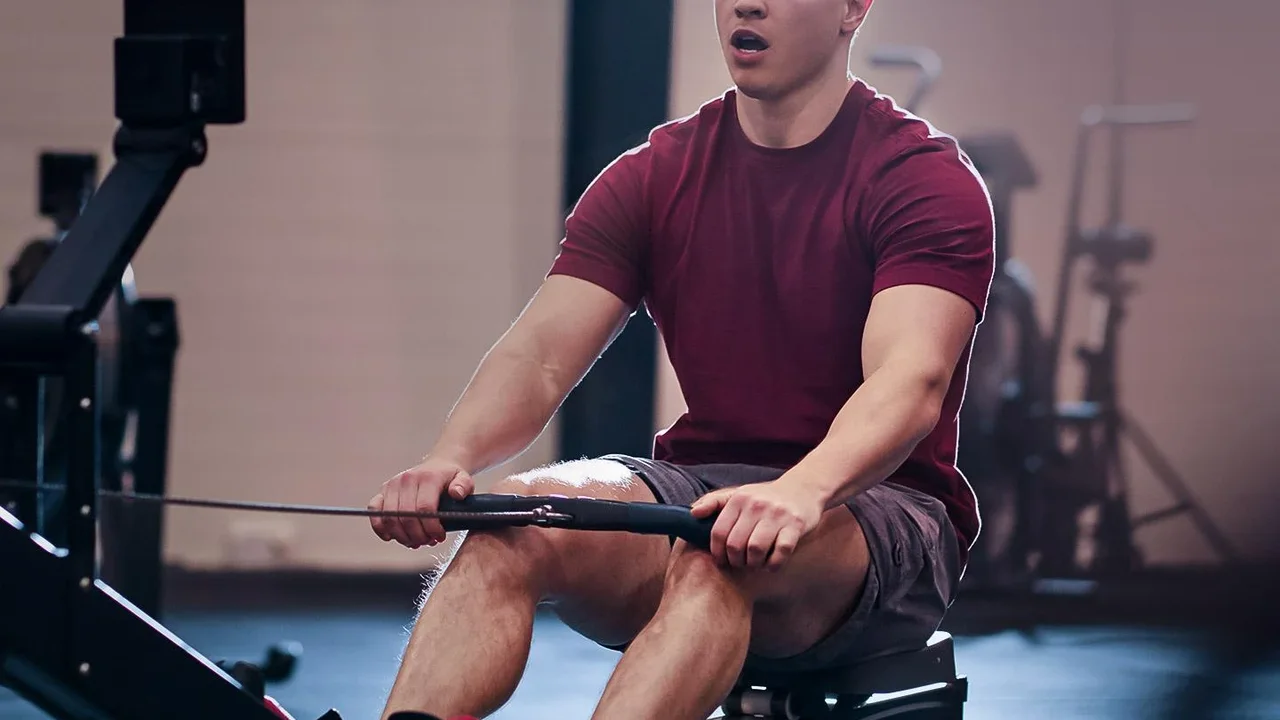
To understand why rowing is so effective, it helps to break the movement down into its four distinct phases: the Catch, the Drive, the Finish, and the Recovery. This sequence is designed to generate maximum power efficiently and safely. The Catch is the starting position. Here, you are compressed at the front of the machine with your shins vertical, your back straight, and your arms extended as you grip the handle. From this loaded position, you initiate the most powerful phase of the stroke: the Drive.
The Power of the Leg Drive
The Drive is where the real work happens. It begins with an explosive push from your legs, engaging your quadriceps, glutes, and calves. It’s crucial that the arms remain straight during the initial part of this phase. Once your legs are about halfway extended, you begin to pivot your torso backward from the hips, engaging your core and back muscles. Only after your legs are fully extended and your body is slightly leaned back do your arms pull the handle toward your lower ribs. This legs-body-arms sequence ensures that the largest and most powerful muscles do the heaviest lifting, preventing strain on the smaller muscles of the arms and lower back.
The Finish and Active Recovery
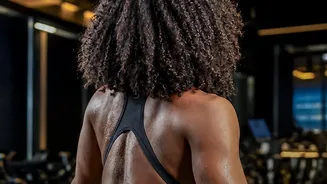
The Finish is the brief moment when your legs are straight, your core is engaged to support a slight backward lean, and the handle is drawn into your chest. This phase engages the lats, rhomboids (upper back), biceps, and shoulders. Following the Finish, the Recovery phase begins. This is the reverse of the drive: arms extend first, then the body pivots forward from the hips, and finally, the knees bend to slide the seat back to the starting Catch position. The recovery should be controlled and take about twice as long as the powerful Drive, allowing your muscles a moment to prepare for the next stroke.
The Cardiovascular and Low Impact Advantage
Engaging so many muscles at once has a profound effect on your cardiovascular system. Your heart has to work hard to pump oxygen rich blood to your legs, core, and upper body simultaneously, which efficiently elevates your heart rate. This makes rowing an exceptional tool for improving heart health, building endurance, and burning calories, with some estimates suggesting you can burn up to 600 calories per hour. Furthermore, rowing is a low impact exercise. Since you are seated, it puts minimal stress on your joints, like your knees and hips, making it an accessible option for people of all fitness levels and a sustainable form of exercise for long term health.