









A Major Expansion of Protected Areas
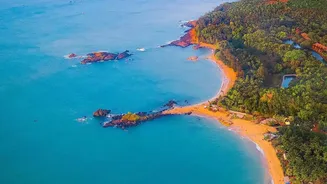
Goa's Forest Department has put forward a significant proposal to designate 24 of the state's beaches as official turtle nesting sites under the Coastal Regulation Zone (CRZ) Notification of 2019. The list includes 10 beaches in North Goa and 14 in South
Goa, covering some of the most popular and commercially active coastlines. While beaches like Morjim, Mandrem, Agonda, and Galgibaga have long been recognised as important nesting habitats, this new proposal seeks to add bustling tourist hotspots like Calangute, Baga, Candolim, and Palolem to the protected list. The move comes amid concerns over a decline in nesting numbers observed in the 2026 season compared to previous years, prompting a push for more robust protective measures.
What CRZ Protection Actually Means
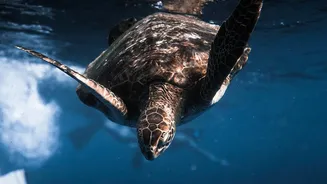
Declaring these beaches as turtle nesting sites under the CRZ framework would classify them as CRZ-I, the most ecologically sensitive category. This designation brings stringent regulations aimed at minimising human disturbance, especially during the nesting season which typically runs from October to May. The new rules could include tighter controls on artificial lighting from beach shacks and resorts, which disorients hatchlings, as well as restrictions on vehicular movement on the sand, and the scheduling of late-night events and parties. The goal is to create a safer environment for the vulnerable Olive Ridley turtles, a Schedule I species under India's Wildlife (Protection) Act, 1972, which affords them the highest degree of legal protection.
The Conservation Imperative
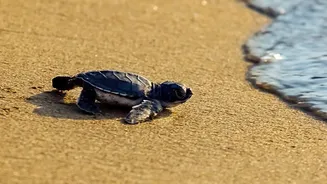
Conservationists and the Forest Department argue that these measures are vital for the survival of the species. Olive Ridley turtles face numerous threats, from predators and flooded nests to human-caused dangers like entanglement in fishing nets, coastal development, and light and noise pollution. Hatchlings, in particular, are extremely vulnerable; guided by the natural light of the horizon, they can become fatally disoriented by artificial lights, wandering inland instead of towards the sea. By formally recognising these 24 beaches as nesting grounds, authorities can implement a detailed environment management plan for each location, ensuring that conservation efforts are consistent and legally enforceable. These plans are to be based on maps prepared by the National Centre for Sustainable Coastal Management.
Concerns from the Coast
The proposal has been met with significant concern from local communities whose livelihoods are deeply intertwined with beach tourism. Shack owners, hoteliers, and traditional fishermen worry that the new regulations could be crippling for their businesses. The Secretary of the Shack Owners Welfare Society, John Lobo, stated that declaring so many beaches as nesting sites is 'not practical' and will affect the entire tourism industry. Fishermen, particularly those using traditional 'rampon' nets, fear their activities will be curtailed. Stakeholders in Canacona, where eight beaches are on the proposed list, have expressed strong opposition, arguing that it will 'kill tourism' in the taluka, where an estimated 70% of livelihoods depend on it. Many feel they are being asked to bear the economic consequences without adequate consultation.
The Search for a Balance
The core of the issue is a classic conflict between environmental protection and economic activity. While no one is openly against protecting the turtles, many business owners believe a middle ground is possible. They argue for a nuanced approach, suggesting that restrictions should be limited to specific, identified nesting patches on a beach rather than imposing a blanket ban on activities across the entire stretch. The debate is not new; legal battles over construction in CRZ-I zones and the impact of tourism on nesting sites have been ongoing in Goa for years. As the Environment Department reviews the forest department’s proposal, the critical task will be to formulate a policy that safeguards these ancient marine visitors without displacing the human communities that call the coast home.