
The Science of Monsoon Cravings
That sudden, intense desire for something hot and fried when it rains isn't just in your head. It’s a biological response. Reduced sunlight during monsoons can cause a dip in serotonin, our 'happy hormone'. In response, our bodies crave carbohydrates
to get a quick mood boost. Cooler, damp weather also triggers a thermogenic demand, where our bodies seek warm, calorie-dense foods to maintain core temperature. Fried foods, with their combination of warmth, crunch, and energy, perfectly answer this call. This craving is further reinforced by years of cultural conditioning and nostalgia, where the sound of rain is deeply linked to the comforting ritual of chai and pakoras.
The Humble, Healthy Hero: Moong Dal Chilla
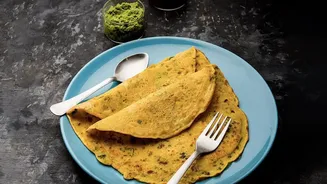
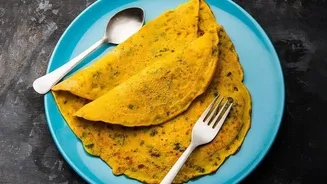
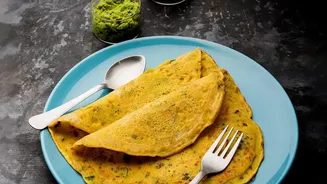
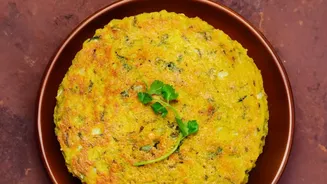
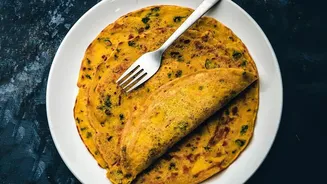
While many monsoon snacks are deep-fried indulgences, the moong dal chilla stands out as a healthier yet equally satisfying option. Known as 'pudla' in some parts of India, this savoury pancake is made from a batter of soaked and ground lentils. Moong dal is a powerhouse of plant-based protein, making the chilla a filling meal that aids muscle repair and keeps you full for longer. It's also rich in dietary fibre, which supports good digestion, and packed with essential minerals like iron, potassium, and magnesium. Naturally gluten-free and low on the glycemic index, it provides a steady release of energy without the spike and crash associated with other snacks.
Recreating the Street-Style Magic
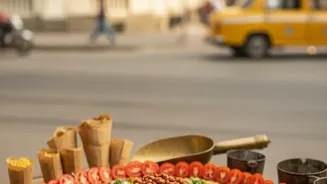
What separates a street-style chilla from a regular homemade one? It's all about the texture and the fillings. Street vendors master the art of spreading the batter incredibly thin on a hot tawa, resulting in a crepe that’s wonderfully crispy at the edges while remaining soft in the center. They often add a pinch of rice flour or semolina to the batter for extra crispness. The batter consistency is key; it should be thick enough to hold its shape but thin enough to pour and spread easily. The final touch is the generous stuffing, typically a flavourful mix of crumbled paneer, chopped onions, tomatoes, and fresh coriander, all folded into the hot chilla right on the pan.
Your At-Home Street-Style Chilla Recipe
Ready to bring the street-food experience home? Here’s a simple guide. Ingredients: For the batter, you'll need 1 cup of yellow moong dal (split and husked), 1-inch piece of ginger, 1-2 green chillies, and salt to taste. For an extra crispy texture, add 2 tablespoons of rice flour. For the filling, prepare a mix of finely chopped onions, tomatoes, fresh coriander, and about 1/2 cup of crumbled paneer. Method: 1. Soak the moong dal in water for at least 3-4 hours, or overnight. 2. Drain the dal and grind it with ginger and green chillies into a smooth, thick batter. Add just enough water to get the blender moving. 3. Transfer the batter to a bowl. Stir in the rice flour (if using) and salt. Let it rest for about 15-20 minutes. 4. Heat a non-stick or cast-iron tawa over medium-high heat and lightly grease it with oil. 5. Pour a ladleful of batter in the center and quickly spread it outwards in a circular motion to form a thin pancake. 6. Drizzle a little oil around the edges and cook for a couple of minutes until the top looks dry and the underside is golden brown. 7. Sprinkle a generous amount of your prepared filling over one half of the chilla. 8. Flip and cook the other side for another minute until golden spots appear. Fold the chilla in half over the filling and press gently.
Perfect Pairings and Pro-Tips
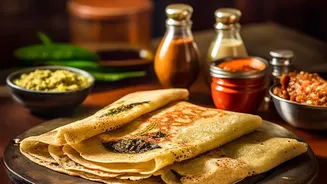
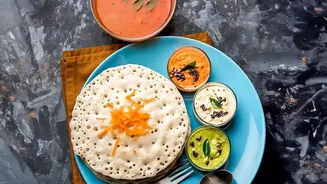
A great chilla is made even better by its accompaniments. Serve your hot chillas immediately with a vibrant green coriander-mint chutney and a sweet-sour tamarind chutney for the authentic street-food experience. Tomato ketchup is also a popular, kid-friendly choice. For flawless chillas every time, keep these tips in mind: - Batter consistency is crucial. If it's too thick, it won't spread thin. If it's too runny, you’ll get soft, flimsy chillas. Adjust with a tablespoon of water or rice flour as needed. - Ensure your pan is properly hot before pouring the batter. A well-heated pan prevents the chilla from sticking and helps it become crispy. - Be patient while cooking the first side. Don’t flip it until the edges start to lift and the base is golden and crisp. This ensures it won’t break.