


Europa's Enigmatic Ocean
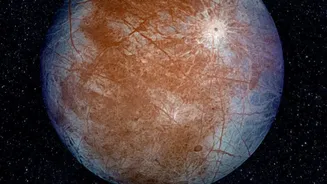
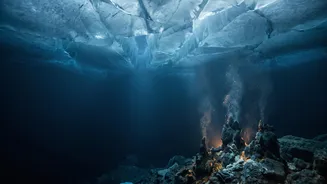
For decades, scientists have been captivated by Europa. It’s one of the most promising places in our solar system to search for extraterrestrial life, primarily because of the strong evidence for a global saltwater ocean. This isn't a small sea; it's
a colossal body of water, possibly 60 to 150 kilometers deep, that is kept liquid by the immense gravitational tug-of-war between Europa and the gas giant Jupiter. This tidal flexing generates heat, preventing the ocean from freezing solid despite the moon's frigid surface. The presence of water, energy, and the potential for the right chemistry makes Europa a top-tier candidate for habitability.
The Great Icy Obstacle
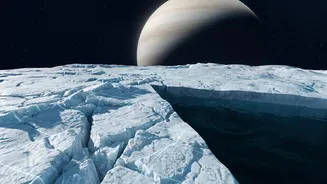
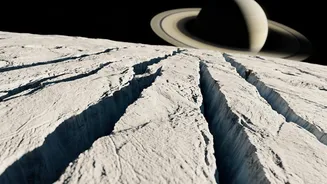
The single greatest challenge to exploring this alien ocean is the massive ice shell that covers it. Estimated to be anywhere from 15 to 25 kilometers thick, this crust is a formidable barrier. It prevents us from directly seeing the ocean or sending a submersible—at least for now. However, this ice shell might not be a static, impenetrable wall. Scientists believe it could be a dynamic environment, with areas where the ice mixes, fractures, and potentially creates pockets of liquid water trapped within the shell itself. These pockets could be crucial, acting as potential pathways for energy and chemicals from the surface to reach the ocean below.
Radar to the Rescue
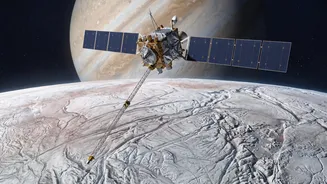
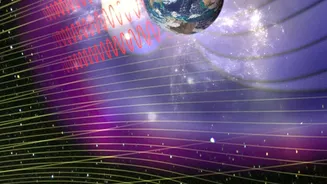
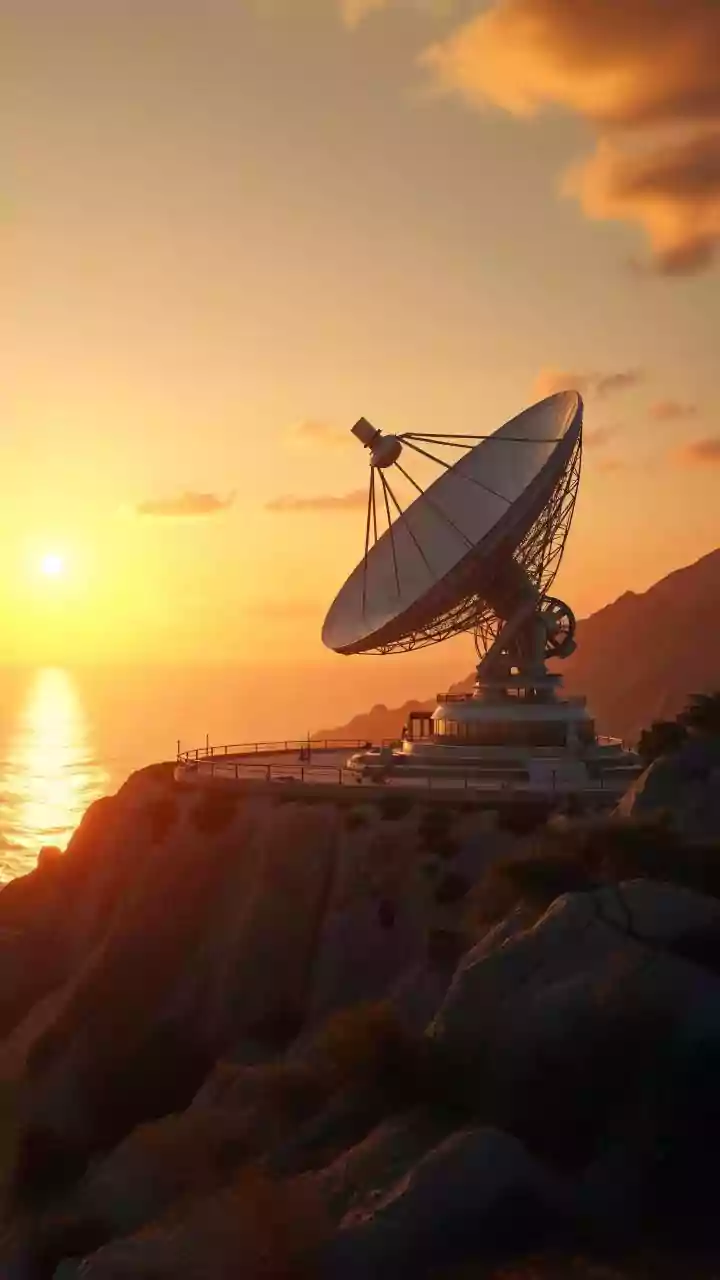
This is where ice-penetrating radar comes in. It’s the one tool that can look directly into Europa’s icy shell without having to land or drill. Onboard NASA's Europa Clipper spacecraft is an instrument called REASON, which stands for Radar for Europa Assessment and Sounding: Ocean to Near-surface. This technology was honed by scientists studying Earth's own ice sheets in Antarctica and Greenland. The concept is elegant: the REASON instrument transmits radio waves at the moon's surface. While some waves bounce off the top layer of ice, lower-frequency waves pass right through it.
Painting a Subsurface Picture
As the radio waves travel down through the ice, they reflect back to the spacecraft whenever they hit a boundary between different materials—for instance, the transition from solid ice to liquid water. Water reflects radio waves about a thousand times more brightly than ice, making it stand out clearly in the data. By measuring the time it takes for these signals to return and how their strength changes, scientists can create a detailed 3D map of the ice shell's internal structure. This allows them to pinpoint the depth of the ocean, measure the ice shell's thickness, and, most excitingly, identify any liquid water cavities or brine pockets trapped within the ice.
More Than Just Finding Water
REASON is a dual-frequency system, using both high-frequency (HF) and very-high-frequency (VHF) radio waves to get a complete picture. The VHF signals are excellent for creating high-resolution maps of shallow features, like those suspected lakes within the shell, while the HF signals can penetrate deeper, potentially all the way to the ice-ocean interface. The instrument is so versatile that it will also map Europa’s surface roughness, characterize its overall shape, and even search for evidence of water plumes erupting into space. Each flyby of Europa will add another layer to this subsurface map, gradually revealing the secrets hidden beneath the ice.