




The Two Faces of Balance
Before comparing, it is crucial to understand that balance isn't a single skill. It is broadly categorised into two types: static and dynamic. Static balance is the ability to hold your body in a fixed posture, like standing on one leg or holding a yoga
pose. Dynamic balance is maintaining equilibrium while in motion, like when walking, running, or changing direction. Both are governed by a complex interplay between your brain and body, involving three key sensory systems: your vision, your vestibular system (the fluid-filled canals in your inner ear that detect head movement), and proprioception—your body's internal sense of its position in space, fed by nerves in your muscles and joints.
The Dancer's Dynamic Poise
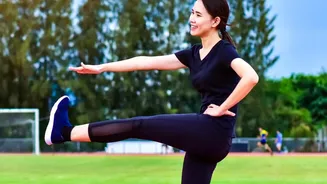
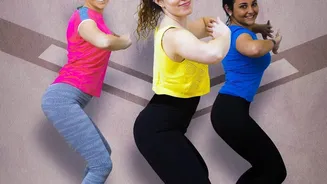
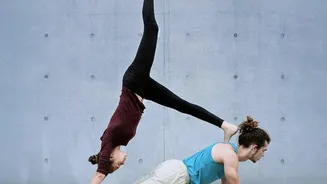
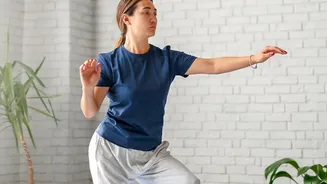
Dancing is a masterclass in dynamic balance. A dancer is constantly shifting their centre of gravity while transitioning through complex movements, often on a minimal base of support like the tips of their toes. Their stability doesn't come from being still, but from making continuous, lightning-fast corrections. This requires exceptional proprioception—an almost subconscious awareness of where every part of the body is at all times. The core muscles in a dancer don't just brace for stability; they provide dynamic control, allowing the pelvis and spine to move with fluidity while maintaining alignment and transferring force. For a dancer, balance is about mastering instability on a stable surface, creating an illusion of effortless control through constant, refined adjustments. Studies have even shown that the brains of dancers adapt over time, becoming less sensitive to the sensation of dizziness.
The Rower's Seated Stability
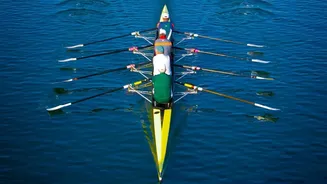
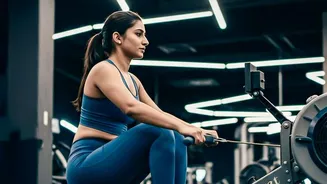
A rower's challenge is almost the inverse of a dancer's. They must create stability while sitting in a very unstable environment: a narrow boat on water. Because the boat itself is prone to rolling, the rower's primary job is to minimise any uncontrolled lateral movement of their own body. Poor posture or a wobbly core will cause the light boat to rock underneath the heavier athlete. Here, the core's main role is to provide a rigid platform, connecting the powerful leg drive to the upper body and oars, ensuring all force is directed into propelling the boat forward. The balance is rhythmic and synchronised, involving the coordinated movement of the entire body through a repetitive stroke cycle. Unlike a dancer who reacts to their own shifting weight, a rower must learn to be a stabilising force against the water, using subtle shifts and consistent handle heights to keep the boat 'on keel'.
Core Function: The Critical Difference
The way each athlete uses their core highlights the fundamental difference in their balance demands. For a dancer, the core must allow for controlled mobility. It facilitates graceful arches, twists, and extensions, stabilising the spine through a wide range of motion. It is a 'smart' core, adapting its support second by second. For a rower, the core is a rock-solid 'functional' anchor. Its primary job is to maintain a strong posture and transfer immense power from the legs to the arms without leaking energy through a flexing spine. A dancer's core enables expressive movement; a rower's core resists extraneous movement to maximise efficiency. One is about controlled dynamism, the other about rigid power transfer.
Training for Two Types of Control
These differing demands naturally lead to different training approaches. Dancers focus on neuromuscular training, enhancing body awareness and the ability to make rapid adjustments to maintain balance through varied movements. Exercises often involve unstable surfaces or closed eyes to heighten proprioceptive feedback. Rowers, while also needing body awareness, concentrate on building immense core endurance and strength to maintain a stable posture for the duration of a race. They practice synchronised movements to perfection, ensuring every crew member moves as one to avoid upsetting the boat's delicate equilibrium. Some elite dancers even incorporate rowing into their fitness routines to build cardiovascular endurance, highlighting how these disciplines can complement each other despite their differences.