
Beyond the Rainbow
Our eyes are incredible tools, but they are limited to a tiny slice of reality called visible light. Just as we cannot hear a dog whistle, we cannot see the vast majority of light that travels through space. This full range of light is known as the electromagnetic
spectrum, and it includes everything from long-wavelength radio waves and infrared radiation to high-energy ultraviolet light, X-rays, and gamma rays. Each type of light carries unique information about the object that emitted it. Multiwavelength astronomy is the practice of combining observations from different parts of this spectrum to assemble a complete picture of a celestial object or phenomenon. Without it, our understanding would be incredibly skewed, as many cosmic processes are completely invisible to the naked eye.
Cosmic Tools for Different Tasks
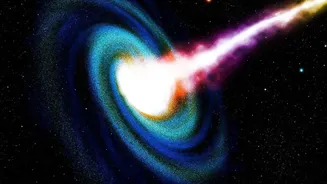
Different wavelengths of light are the keys to unlocking different cosmic secrets. The type of light an object emits is largely determined by its temperature and the physical processes at play. Cool, dense clouds of dust that appear as dark patches in visible light shine brightly in the infrared, allowing astronomers to peer into stellar nurseries where new stars and planets are forming. Warm stars and galaxies are most prominent in visible light. The most violent and energetic events in the universe, however, require a different view. Super-hot gas swirling around a black hole, the shockwave from a supernova explosion, or powerful jets of material blasting out of a galaxy’s core glow intensely in X-rays and gamma rays. Meanwhile, vast clouds of cold hydrogen gas, the raw fuel for future star formation, are traced by radio telescopes.
A Galactic Collision in All Its Light
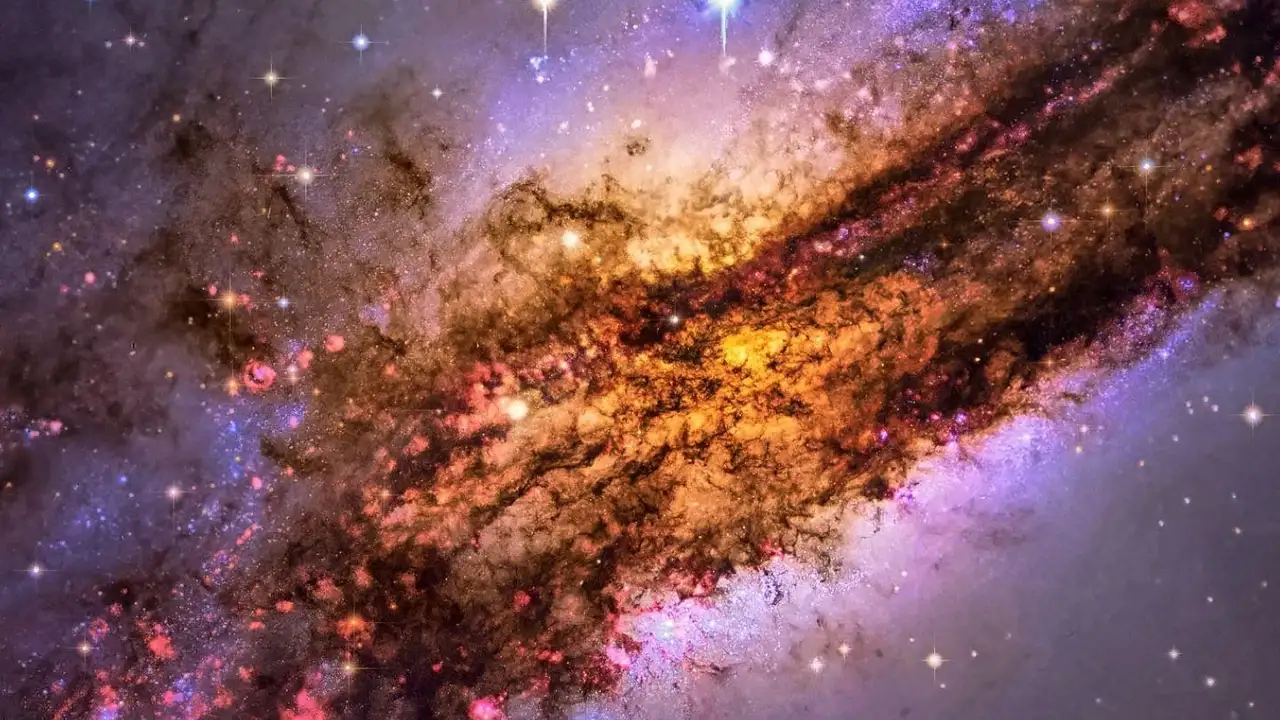
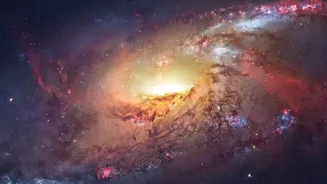
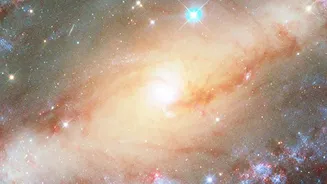
The strange-looking galaxy Centaurus A, located about 12 million light-years away, is a perfect example of why this technique is so powerful. It is the result of a massive collision between two galaxies, and viewing it across the spectrum reveals its dramatic story. In visible light, we see the combined glow of billions of stars, but this view is dominated by a thick, dark lane of dust that slices across the galaxy’s middle. This dust blocks our view, making it look like a quiet, obscured object. However, when the Spitzer Space Telescope viewed it in infrared, that dark dust lane began to glow, revealing the warped structure of a spiral galaxy being consumed. NASA’s Chandra X-ray Observatory added another layer, showing a powerful jet of superheated gas being fired from the galaxy's central supermassive black hole. But the most shocking view came from radio telescopes, which showed that this jet extends for more than a million light-years, far beyond the visible confines of the galaxy itself.
Assembling the Complete Picture
By combining these different views—visible, infrared, X-ray, and radio—astronomers can separate the different components of Centaurus A and understand the processes driving it. They can map the stars, the obscuring dust, the hot gas, and the high-energy jets all at once. This multiwavelength approach is fundamental to modern astrophysics. NASA’s Great Observatories program was a testament to this, deploying a fleet of space telescopes—Hubble (visible), Chandra (X-ray), Spitzer (infrared), and Compton (gamma ray)—to work in concert. This collaboration allows scientists to study everything from how stars are born and die to how massive galaxies evolve over billions of years. Without the ability to see beyond the visible, the true nature of objects like Centaurus A would remain a mystery, its most violent and transformative features completely hidden from view.