








Your Pocket Dermatologist and Stylist
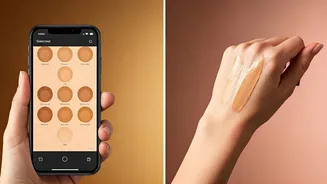
Imagine trying on fifty lipstick shades in a minute without wiping your lips once, or getting a detailed skin analysis while sitting on your sofa. This is the new reality AI beauty tools are bringing to India. At their core, these tools use artificial
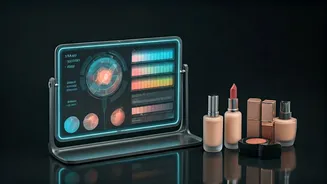
intelligence and augmented reality (AR) to analyse your face through your phone's camera. Major players in the Indian beauty market are rolling out features that offer everything from virtual makeup try-ons to in-depth skin diagnostics. L'Oréal's ModiFace technology, for instance, allows users on platforms like Nykaa to test makeup shades virtually with photo-realistic results. This tech uses an advanced algorithm to track facial features and apply digital makeup, making online shopping a far more confident experience.
The Rise of the Digital Skin-Scan
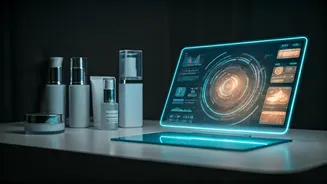
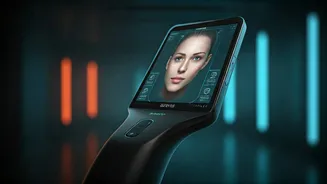
Beyond makeup, AI is making significant inroads into skincare, a sector where Indian consumers are increasingly seeking science-backed solutions. Nykaa's 'Skin Scan' feature, powered by AI trained on over 70,000 medically graded images, is a prime example. Users take a selfie, and the tool assesses up to 15 parameters like dark spots, hydration, acne, and fine lines, presenting a visual map of their skin's health. Based on this analysis, it recommends a personalised routine with specific products, aiming to demystify the often-overwhelming process of building a skincare regimen. This shift caters to a growing demand for data-driven, personalised care that moves beyond generic advice.
New Players Enter the AI Beauty Arena
It's not just established e-commerce giants who are innovating. Reliance's Tira, a relative newcomer, is heavily leveraging technology to carve out its space in India's competitive beauty market. In its physical stores, Tira offers AI-powered 'skin analyzer' tools and 'fragrance finders' to create an interactive and personalised shopping experience. This strategy is part of a larger trend where new ventures are using technology as a key differentiator to attract customers in a market expected to grow at 10% annually through 2027, outpacing both the US and China.
The Challenge of Inclusivity
A crucial question for the Indian market is whether these AI tools are truly inclusive. Early AI models often struggled with accurately representing diverse skin tones and features, a significant issue in a country as varied as India. If an AI is trained primarily on datasets of Caucasian or East Asian faces, its recommendations for Indian users might be flawed. However, newer AI models are showing marked improvement in understanding and generating authentic Indian faces and cultural details. As these technologies evolve, their success will depend on their ability to provide genuinely personalised and accurate advice that respects the wide spectrum of Indian beauty.
The Algorithm vs. The Expert
While AI offers unprecedented convenience and access to data-driven advice, it doesn't replace the nuanced understanding of a human expert. An AI can analyse a photo for fine lines or dark spots, but it cannot assess underlying health conditions or the three-dimensional reality of your skin the way a dermatologist can. Privacy is another growing concern, as facial scans and skin data are highly personal. Users must trust that companies are storing and using this information responsibly. The most effective approach seems to be a collaborative one, where AI tools serve as a powerful first step for discovery and tracking progress, while serious concerns are still addressed by consulting a qualified professional.