





The Great Tariff Compromise
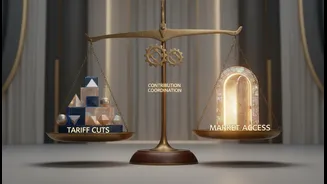
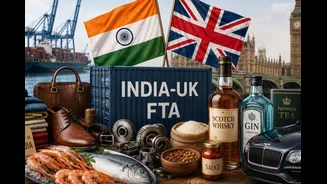
At the heart of any trade deal is the question of tariffs—the taxes imposed on imported goods. For India and the UK, this was a delicate balancing act. The UK sought greater market access for its iconic products, particularly Scotch whisky and automobiles.
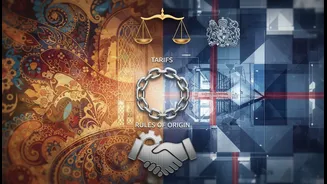
India, in turn, wanted to open the UK market for its key export sectors. The final agreement reflects a significant compromise. Nearly 99% of Indian exports, including textiles, apparel, leather goods, and jewellery, will now enter the UK with zero tariffs. This provides a massive advantage for Indian manufacturers, making their products more competitive against rivals from other countries. In return, India has agreed to a phased reduction of its own high tariffs. For example, duties on fully built UK passenger cars will be reduced significantly over time within specific quotas, making British vehicles more affordable for Indian consumers. This give-and-take on tariffs was essential to getting the deal across the finish line, unlocking new opportunities for businesses in both nations.
Decoding the 'Rules of Origin'
A free trade agreement is only beneficial if it helps the countries who signed it. That’s where 'Rules of Origin' come in. These rules are designed to determine the economic nationality of a product and ensure that only goods substantially produced in either India or the UK receive the deal's benefits. Both sides were keen to prevent a scenario where goods from a third country could be simply repackaged or undergo minor processing in one nation to gain tariff-free access to the other. To prevent this, the agreement lays down strict criteria. For a product to qualify for lower tariffs, it must be 'wholly obtained' or significantly transformed within India or the UK. Activities like simple assembly of parts, relabelling, or basic packaging will not be enough to grant a product 'originating' status. By establishing these clear and robust rules, the pact ensures that the economic advantages are reserved for genuine Indian and British producers, strengthening domestic industries rather than creating loopholes.
A Landmark Win on Social Security
Perhaps one of the most significant victories for India, especially for its massive IT and services sector, is the resolution on social security contributions. Previously, Indian professionals sent to the UK on temporary work assignments often had to contribute to social security systems in both countries—a costly practice known as double contribution. Since the benefits of UK social security typically require about ten years of contributions, most temporary workers never saw a return on their payments. The new pact introduces a Double Contributions Convention (DCC). Under this agreement, Indian professionals on temporary assignments in the UK are exempt from making UK social security contributions for up to five years, provided they continue to pay into India's system. This is a major financial relief for Indian companies and their employees, with estimated annual savings of over $500 million. This provision will make it much easier and cheaper for Indian firms to deploy skilled talent to the UK, boosting the competitiveness of India's services exports.
What It All Means for India
The successful resolution of these three core issues has paved the way for what is being called a 'gold standard' trade pact—India's first with a major developed economy in years. The agreement is far broader than just goods, covering 30 chapters that include services, digital trade, and investment. The government and industry experts expect the deal to significantly boost bilateral trade, with some projections aiming for $100 billion by 2030. For India, it’s a strategic victory that goes beyond economics. It helps Indian businesses integrate more deeply into global value chains and become more familiar with the advanced regulatory standards of developed markets. From farmers and MSMEs to large manufacturing and IT corporations, the benefits are expected to be widespread, fostering job creation and driving economic growth.