


Power to the People: Citizen Science
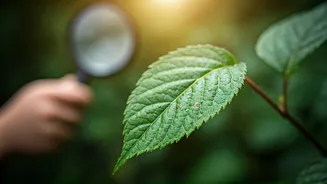
One of the most powerful shifts is the rise of 'citizen science,' where the public actively participates in research. This isn't just a novelty; it's a force multiplier for data collection on a massive scale. Think about projects like eBird, where birdwatchers
across the globe log their sightings, creating an unparalleled dataset that helps scientists track migration patterns, population health, and the effects of climate change. In India, initiatives like SeasonWatch, run by the National Centre for Biological Sciences (NCBS), invite students and nature enthusiasts to monitor the seasonal cycles of trees. By simply observing a local tamarind or mango tree and logging when it flowers or fruits, participants contribute to a nationwide understanding of how ecosystems are responding to environmental shifts. This collaboration doesn't just provide data; it fosters a deeper public connection with the scientific process, turning passive observers into active contributors.
Breaking Down the Knowledge Paywall
For decades, the results of most scientific research have been locked behind expensive paywalls of academic journals, accessible only to those affiliated with wealthy universities. This model created a knowledge divide, leaving students, doctors, independent researchers, and the public in the dark. The Open Access movement is changing that. Platforms like arXiv (for physics and maths) and bioRxiv (for biology) allow researchers to post their findings as 'preprints'—manuscripts available for free before formal peer review. The COVID-19 pandemic spectacularly highlighted their importance, as scientists shared data on the virus in near real-time, accelerating the development of vaccines and treatments at a historic pace. For a student in a small town or a doctor in a rural clinic in India, open access means having the same immediate entry to cutting-edge knowledge as a professor at Harvard. It levels the playing field, fostering innovation everywhere, not just in well-funded centres.
Your New Favourite Science Teacher
The democratisation of research isn't just about access to data; it's also about understanding it. A new generation of science communicators is using social media to translate complex topics for a mass audience. On YouTube, Instagram, and podcasts, physicists, biologists, and doctors break down everything from quantum mechanics to the latest medical breakthroughs into engaging, digestible content. They act as interpreters, bridging the gap between a dense, jargon-filled research paper and the public's curiosity. This is a far cry from the dry, one-way communication of the past. These creators foster communities, answer questions in comment sections, and make science feel like an ongoing conversation that everyone is invited to join. They are not just simplifying science; they are making it culturally relevant and inspiring the next generation of thinkers and innovators.
New Frontiers, New Challenges
This new era of open science is not without its hurdles. Preprints, while accelerating discovery, have not yet undergone the rigorous scrutiny of peer review, creating a risk that flawed or preliminary findings can be misinterpreted and spread as fact, fuelling misinformation. Similarly, data from citizen science projects requires careful validation to ensure its quality and reliability. The very platforms that empower science communication can also be exploited to spread pseudoscience. The challenge, therefore, is not to halt this democratisation but to build a more scientifically literate public. We need to cultivate critical thinking skills so that individuals can distinguish between a credible preprint and a baseless claim, and understand the difference between preliminary data and established scientific consensus. The solution to the problems of open science is more education, not less openness.