








The Promise in a Blood Vial
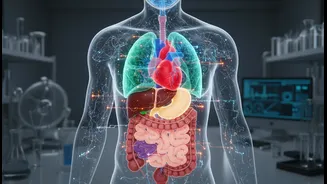
Imagine a simple blood test that goes beyond checking your cholesterol. This one claims to tell you the 'biological age' of your individual organs. Your chronological age is 45, it might say, but your heart is aging like a 55-year-old's, while your liver
remains a youthful 40. This is the seductive premise of organ-age testing, a new frontier in the booming wellness and longevity industry. Companies offer these tests, often directly to consumers, suggesting they can provide an early warning system for disease. By analysing thousands of proteins or other biomarkers in your blood, these tests use algorithms to estimate whether specific organs are aging faster or slower than average. The idea is to empower individuals to make targeted lifestyle changes—to eat better, exercise more, or take specific supplements—to 'turn back the clock' on an aging organ before a real problem develops.
The Science of 'Proteomic Clocks'
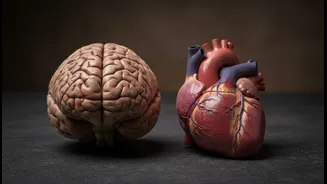
The technology behind many of these tests is rooted in legitimate and exciting scientific research into what are called “proteomic clocks.” Scientists have discovered that organs release distinct protein signatures into the bloodstream. As an organ ages or experiences stress, this signature changes. Researchers, particularly teams from institutions like Stanford University, have used machine learning to analyse blood samples from thousands of people to build models that link the levels of certain proteins to age and disease risk. These studies are powerful research tools. For instance, a recent large-scale study found that an accelerated 'brain age' was linked to a significantly higher risk of developing Alzheimer's disease. Similarly, having a heart that was biologically older than the person's actual age corresponded to a much higher risk of heart failure. This research is invaluable for understanding the aging process on a molecular level.
A Major Dose of Scepticism
This is where the headlines often get ahead of the evidence. While these tests are promising in a research setting, their utility for an individual consumer is highly debatable. Firstly, there is a significant lack of standardisation. Different companies use proprietary algorithms, different sets of proteins, and different reference populations, meaning the same blood sample sent to two different labs could yield wildly different 'organ ages'. One study found that results for a single individual could vary by as much as nine years, creating either false reassurance or unnecessary anxiety. Furthermore, these tests are not approved as diagnostic tools. They provide a statistical correlation, not a medical certainty. An 'old' liver score doesn't mean you have liver disease; it means your protein profile shares similarities with a data set of older individuals. What that means for your personal health journey is still an open and unanswered question.
Headlines and Health Anxiety
The problem is that nuanced scientific findings are easily lost in translation. A headline screaming that a test can 'predict' Alzheimer's disease can be dangerously misleading. This creates a cycle of health anxiety and questionable spending. People may be driven to buy expensive tests that offer little actionable information beyond generic health advice like 'eat a balanced diet' and 'exercise more'—wisdom we already possess. Experts caution that these tests are not clinically validated for individual medical guidance. No major clinical guidelines recommend their use, and there is no proof yet that making lifestyle changes based on a test result actually leads to a longer or healthier life. Until long-term studies can prove that these tests lead to better health outcomes, they remain an investigational wellness tool, not a medical necessity.
The Right Perspective
So, where does that leave us? Organ-age tests are not a scam, but they are a technology in its infancy, being marketed as if it's a fully mature product. For scientists, they are a phenomenal research tool, helping to unlock the very secrets of how we age. For the average person, however, they should be viewed with informed curiosity, not as a definitive health report card. They might provide a nudge to improve your lifestyle, but they cannot and should not replace regular check-ups and advice from a qualified doctor. The most reliable path to healthy aging doesn't require a special test. It relies on the well-established pillars of good health: a nutritious diet, regular physical activity, sufficient sleep, stress management, and avoiding smoking. These principles may not generate splashy headlines, but they have the one thing that truly matters: proven results.