




Seeing Through the Cosmic Dust
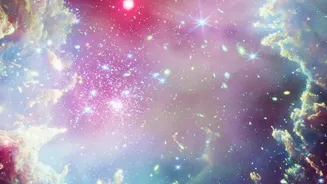
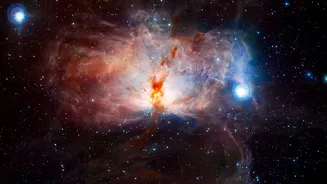
The places where stars are born, called stellar nurseries, are thick, cold clouds of gas and dust. To visible-light telescopes like Hubble, these regions are mostly opaque, hiding the action within. This is where the JWST's magic comes in. By observing
in infrared light, it can pierce through these dusty cocoons, much like an X-ray lets a doctor see inside the human body. This unique capability allows astronomers to observe the very first stages of star formation in real time, something that was previously impossible. The images are not just beautiful; they are a direct look into the processes that shaped our own cosmic neighbourhood billions of years ago.
Spotting the Baby Stars
At the heart of star formation is the protostar, a young, hot, and puffy clump of gas that is still gathering mass from its parent cloud. JWST has delivered incredibly detailed views of these stellar embryos. For example, its observations of a protostar called L1527 revealed an hourglass shape formed by material ejected by the growing star. Hidden at the center is a dark line—a protoplanetary disk seen edge-on that is feeding the star. In other nurseries, like the Rho Ophiuchi cloud complex, Webb has captured dramatic red jets of molecular hydrogen shooting out from stars as they burst through their dusty envelopes for the first time. These ejections are a key part of the star-building process, and Webb’s sensitivity allows scientists to study them in unprecedented detail.
Blueprints for Future Planets
As a protostar gathers mass, the remaining material forms a swirling, flat whirlpool around it known as a protoplanetary disk. This disk is where planets are born. It’s a chaotic mix of gas and dust where tiny grains begin to stick together, eventually growing into pebbles, rocks, and finally, full-fledged planets. JWST can do more than just see these disks; its instruments can analyze their chemical composition. Scientists have been able to detect water vapor and complex organic molecules within these planet-forming regions. Webb has even confirmed that icy pebbles can drift from the outer, colder parts of a disk toward the inner region, releasing water vapor as they warm up. This provides crucial evidence for how water, a key ingredient for life as we know it, is delivered to new planets.
Revisiting Iconic Cosmic Landscapes
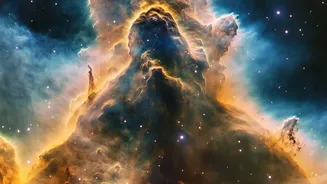
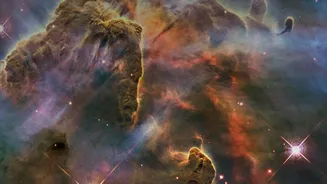
JWST has also turned its powerful gaze on famous cosmic landmarks first imaged by Hubble, revealing them in a new light. The iconic Pillars of Creation, part of the Eagle Nebula, appear far more detailed and complex through Webb's infrared eyes. While Hubble showed the grand, dusty structure, Webb peers inside to reveal bright red, newly formed stars that were previously hidden. These young stars, only a few hundred thousand years old, are seen actively shaping their environment by shooting out jets that create wavy, lava-like patterns on the pillars' edges. By precisely counting these new stars and analyzing the surrounding gas, researchers can revamp their models of how stars burst forth from these environments over millions of years.
Our Own Cosmic Story
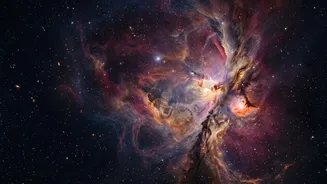
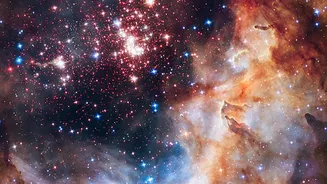
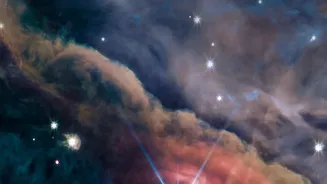
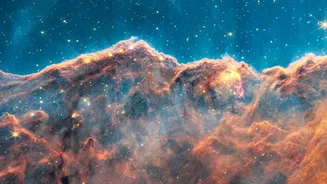
Every image of a distant stellar nursery is also a glimpse into our own past. The processes JWST is observing in places like the Carina Nebula and the Orion Nebula are thought to be the same ones that led to the formation of our Sun about 4.6 billion years ago. By studying how protoplanetary disks evolve and how materials like crystalline silicates are transported from a star's hot inner disk to its cold outer regions, scientists can better explain mysteries in our own solar system, such as why comets in the frigid Oort Cloud contain minerals that must have formed in intense heat. In essence, Webb acts as a time machine, allowing us to witness the beginning of other stars' stories to better understand the start of our own.