




The Universe's Coolest Experiment
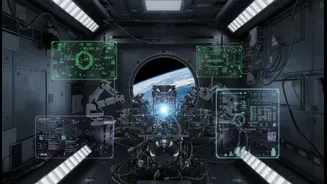
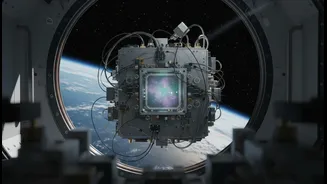
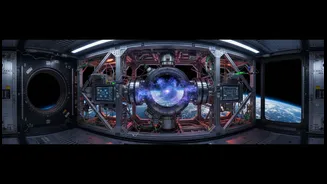
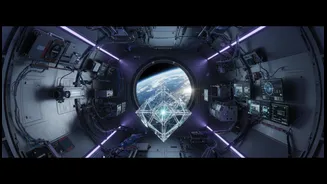
NASA's Cold Atom Laboratory (CAL), first installed on the International Space Station (ISS) in 2018, is a facility dedicated to exploring the strange and wonderful world of quantum physics. Its primary mission is to cool clouds of atoms down to temperatures
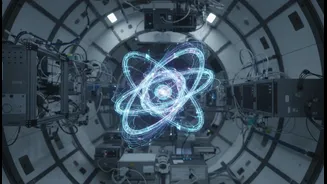
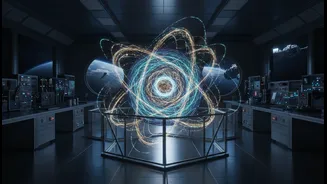
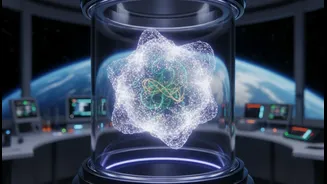
just a fraction of a degree above absolute zero, which is minus 273.15 degrees Celsius. At these extreme temperatures, familiar physics gives way to quantum mechanics. Atoms slow to a near standstill and begin to behave not as individual particles, but as a single, collective wave. This exotic state of matter, first predicted by Albert Einstein and Satyendra Nath Bose, is known as a Bose-Einstein Condensate (BEC), sometimes called the fifth state of matter. In a BEC, the bizarre rules of the quantum world become visible on a macroscopic scale, allowing scientists to study phenomena that are otherwise impossible to observe directly.
Why Space is the Ultimate Laboratory
While scientists have been creating BECs in labs on Earth since 1995, gravity is a constant problem. The magnetic and laser traps used to hold and cool the atoms must fight against gravity's relentless pull, which limits how long the fragile condensates can be observed before they fall apart. On the ISS, however, the microgravity environment changes everything. Without the strong pull of gravity, the traps can be much weaker. This allows the atom clouds to expand and cool to even lower temperatures than on Earth, remaining stable for much longer periods—up to ten seconds or more. This extended observation time is crucial, giving scientists a clearer, longer look into the fundamental behaviors of quantum matter. The Cold Atom Lab, operated remotely from NASA's Jet Propulsion Laboratory, is the first facility to produce and study BECs in Earth orbit.
A Major Quantum Upgrade
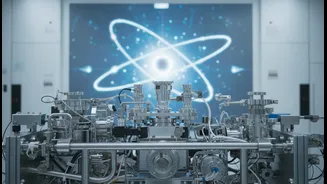
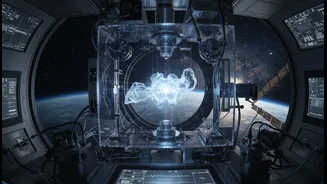
In April 2026, astronauts installed the fourth major upgrade to the CAL, significantly boosting its capabilities. The new hardware, activated in the following months, includes a redesigned magnetic trap that gives scientists more control over the shape of the quantum gas clouds. This allows them to probe new properties of the atoms. Engineers also improved the atom sources, the metal strips of rubidium or potassium that are heated to create the initial gas cloud for each experiment. These enhancements, combined with better measurement tools, push the boundaries of quantum research even further. They allow for the creation of larger, more complex quantum states, effectively giving researchers a more powerful and versatile toolkit to explore the quantum realm.
The Promise of Precision Sensing
The research isn't just about fundamental physics; it's about pioneering a new generation of technology. The study of ultra-cold atoms is directly linked to the field of quantum sensing, which uses the unique properties of quantum mechanics to make incredibly precise measurements. These sensors could detect tiny fluctuations in gravity, time, and magnetic fields with a sensitivity far beyond today's instruments. Potential applications are vast. Imagine GPS-free navigation systems that work anywhere, including deep space or underwater; medical devices that can image brain activity in unprecedented detail; or new ways to map underground water reserves and mineral deposits on Earth and other planets. By mastering the manipulation of these atom-based sensors in space, NASA is laying the groundwork for technologies that could be used for navigating the lunar surface or searching for dark energy.
A 'Quantum 2.0' Revolution
The first quantum revolution in the 20th century gave us lasers, microchips, and MRI machines. Scientists at NASA believe this work aboard the space station is part of a "Quantum 2.0" revolution—a shift from simply using quantum effects to directly manipulating large quantum states. The upgraded Cold Atom Lab is more than just an experiment; it's a technology demonstrator, proving that complex quantum instruments can operate reliably in space. Each discovery and technical improvement helps mature the designs for future instruments, like matter-wave interferometers that could one day be used for fundamental physics missions and ultra-precise gravity sensing of Earth and the Moon. By pushing the limits of what's possible in the coldest of laboratories, NASA is not just exploring the universe, but also building the tools that will redefine our place within it.