





You don't need a remote mountaintop to enjoy the cosmos. Your own balcony can be a gateway to the stars. With a few smart choices, you can turn even a small urban space into a prime location for your personal stargazing sessions.
Conquer the Glow of the City
Light pollution is the
urban stargazer’s biggest challenge, but it’s not insurmountable. The first step is to create a pocket of darkness. Choose the part of your balcony that is most shielded from direct streetlights or bright signs from neighbouring buildings. Sometimes simply moving to the corner furthest from a lamp post can make a world of difference. You can enhance this by hanging dark, non-reflective curtains or screens on the sides of your balcony to block out ambient light. Also, turn off all the lights in your own home that face the balcony. Every little bit of darkness helps your eyes adapt and allows fainter objects to emerge from the background glow.
Know Your Sky View
The orientation of your balcony determines your slice of the celestial pie. A south-facing balcony offers a view of the ecliptic plane, the path that the Moon and planets travel across the sky. North-facing balconies in the northern hemisphere provide a consistent view of circumpolar stars like those in the Big Dipper. Take some time to observe what parts of the sky are blocked by buildings or trees at different times of the night. This will help you plan what you can realistically see and when. Use a stargazing app on your phone to identify constellations and planets that will be passing through your specific window to the universe.
Gear Up: Comfort and Clarity
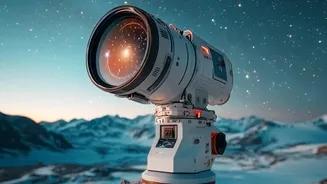
You don’t need a massive, expensive telescope to start. In fact, a good pair of binoculars is often a better first choice for a balcony. They are easy to handle, offer a wide field of view perfect for scanning the sky, and are great for looking at the Moon, star clusters, and the brightest planets like Jupiter and Saturn. If you do opt for a telescope, a compact refractor or a tabletop Dobsonian model is often best for small spaces. Equally important is your comfort. Stargazing involves a lot of patient looking. A comfortable, reclining chair is essential to avoid neck strain. Keep blankets nearby for chilly nights and a flask of a warm drink to make the experience a cozy ritual.
What You Can Actually See
While light pollution washes out faint galaxies, many spectacular objects shine brightly enough to cut through the city haze. The Moon is a stunning target at any phase, with its craters and seas easily visible through binoculars. The brightest planets—Venus, Mars, Jupiter, and Saturn—are also prime urban targets. Jupiter's four largest moons and Saturn's rings can be spotted with even a modest telescope. Bright star clusters like the Pleiades and prominent constellations like Orion are also visible, offering plenty to marvel at without leaving your home.
Timing Is Everything
The best time to stargaze from the city is often later at night, after midnight, when some commercial and residential lights may be turned off, slightly reducing overall light pollution. Paying attention to the weather is crucial; a clear, cloudless night is a must. Also, be mindful of the Moon's phase. A bright full moon acts like a natural streetlight, washing out fainter stars. The darkest skies are found during the new moon phase, making it the ideal time to hunt for less obvious objects. Planning your sessions around celestial events like meteor showers or planetary conjunctions can also lead to spectacular views.