



The Sun's Turbulent Peak
The sun is currently in a period of heightened activity known as solar maximum. This is the peak of its roughly 11-year solar cycle, a time when the sun's magnetic fields become tangled and more dynamic. This increased activity is most visibly marked
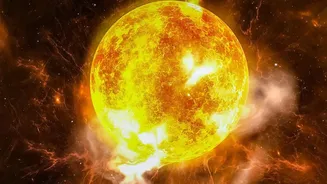
by the appearance of sunspots, which are temporary dark, cool patches on the sun's surface caused by intense magnetic fields. While scientists had initially predicted a relatively weak Solar Cycle 25, the current cycle has proven to be more active than expected. According to NASA and NOAA, the sun entered its solar maximum phase in late 2024, a period of high activity that can last for more than a year and is expected to continue through 2025 and into 2026.
Cosmic Explosions: Flares and CMEs
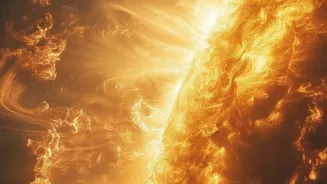
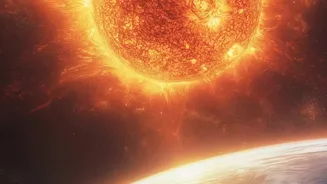
Sunspots themselves are not the direct cause of earthly effects, but they are indicators of the powerful forces at play. The twisted magnetic fields around these spots can suddenly snap and realign, unleashing massive bursts of energy. These explosions take two main forms: solar flares and coronal mass ejections (CMEs). A solar flare is an intense burst of radiation that travels at the speed of light, reaching Earth in about eight minutes. CMEs are even more dramatic; they are giant clouds of plasma and magnetic fields that are hurled from the sun into space, traveling at millions of kilometers per hour. While not all CMEs are aimed at Earth, those that are can have significant consequences.
A Celestial Light Show: The Aurora
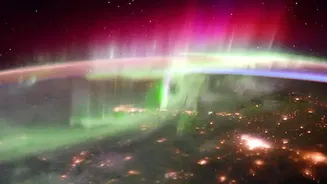
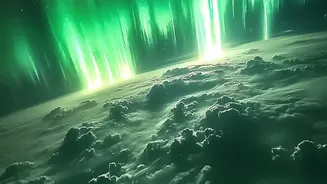
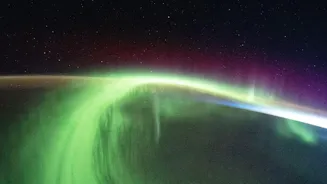
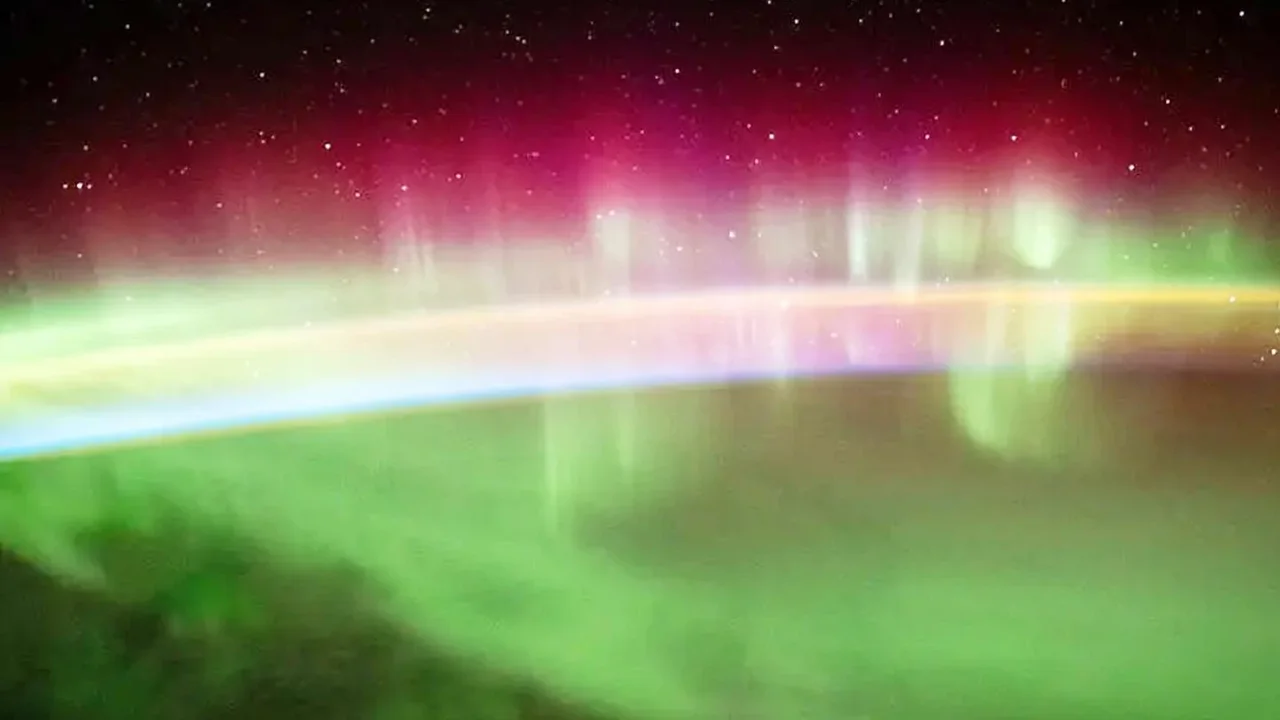
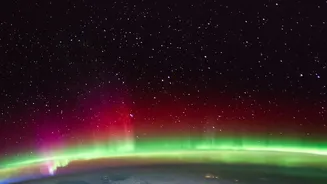
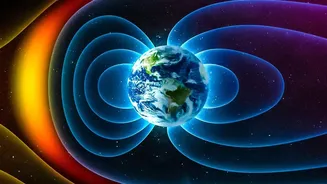
One of the most beautiful effects of solar maximum is the creation of stunning auroras, the Northern and Southern Lights. When a CME or high-speed solar wind reaches Earth, its charged particles interact with our planet's protective magnetic field, the magnetosphere. This field funnels the particles towards the North and South Poles. As these energetic particles collide with atoms and molecules of oxygen and nitrogen in our upper atmosphere, they transfer energy, causing the atmospheric gases to glow in vibrant colors like green, pink, and red. During solar maximum, the increased frequency and intensity of CMEs mean that these auroral displays become more frequent, brighter, and can be seen at lower latitudes than usual.
Technology Under Threat
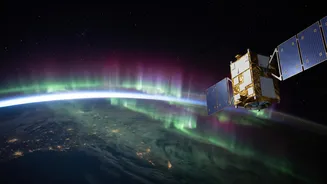
The same solar events that create beautiful auroras can wreak havoc on our modern technological infrastructure. When a strong CME slams into Earth's magnetosphere, it can induce powerful electrical currents. These currents can overload power grids, potentially causing widespread blackouts. Satellites in orbit are particularly vulnerable. The influx of solar particles can damage sensitive electronics and disrupt communications. Furthermore, the storm heats and expands Earth's upper atmosphere, increasing atmospheric drag on satellites in low Earth orbit. This can cause them to slow down, alter their orbits, and increase the risk of collisions. GPS signals can also be scrambled, leading to positioning errors for everything from aviation to smartphone apps.
Living With a More Active Sun
As we navigate the peak of Solar Cycle 25, space weather forecasting becomes increasingly important. Agencies like NOAA's Space Weather Prediction Center constantly monitor the sun to provide advance warning of potentially disruptive solar storms. These forecasts allow satellite operators, power grid managers, and airlines to take protective measures, such as temporarily shutting down systems or rerouting flights away from the poles where radiation is most intense. For most people on the ground, the direct impact of a solar storm will be minimal. However, our increasing reliance on space-based technology makes our society more susceptible to the sun's whims. The current solar maximum serves as a powerful reminder of the sun's immense power and its profound connection to our daily lives.