

The Traditional Kiwi Dilemma
For years, growing kiwis at home came with a significant catch: the plants are dioecious. This means they have separate male and female plants, and you need at least one of each for the female vine to produce fruit. A male vine produces pollen but no
fruit, while a female vine produces fruit only if pollinated. For successful pollination, the male plant needs to be located near the female—often within 50 feet—and one male is typically planted for every six to eight female vines in commercial settings. For the home gardener, this means dedicating a substantial amount of precious garden space and a sturdy trellis system to two vigorous, sprawling vines, one of which will never even yield a single fruit.
A One-Plant Solution
Self-fertile kiwi vines elegantly solve this two-plant problem. These varieties can produce fruit from a single plant, making them perfect for smaller gardens, patios, or anyone who wants a simpler setup. Technically, many of these are 'parthenocarpic', meaning they can set fruit without fertilization, while others have flowers with functional male and female parts. The outcome is the same: you only need to plant, trellis, and care for one vine to get a harvest. While a nearby male plant of the same species can sometimes increase the yield and fruit size even on self-fertile types, it is not a requirement for fruit production. This makes growing kiwis accessible to gardeners who previously thought they didn't have the room.
Popular Self-Fertile Varieties to Try
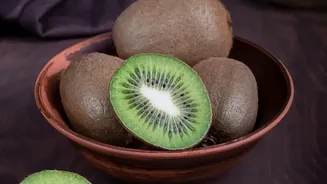
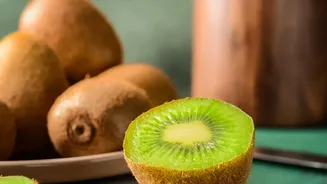
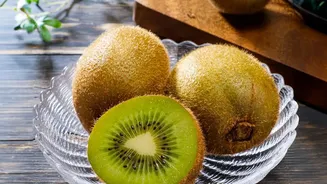
Two names dominate the world of self-fertile kiwis for home gardeners: 'Issai' and 'Jenny'. 'Issai' is a hardy kiwi (Actinidia arguta) that produces small, grape-sized fruits with smooth, edible skin. It is known for being less vigorous than other hardy types, making it more manageable in compact spaces and even suitable for large containers. 'Jenny' is a fuzzy kiwi (Actinidia deliciosa), the type more familiar from grocery stores. It is one of the few truly self-fertile fuzzy kiwis and produces medium-sized fruits. While its fruit may be smaller than the commercial 'Hayward' variety, 'Jenny' allows gardeners to grow the classic fuzzy kiwi with just a single plant.
Planting for Success
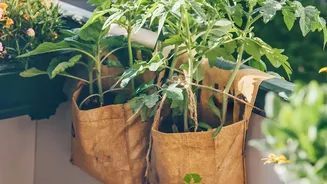
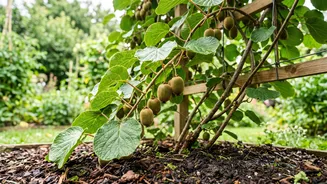
Even though you only need one plant, giving your self-fertile kiwi the right start is crucial. These are vigorous, climbing vines that require a sturdy support structure like a pergola, strong fence, or T-bar trellis, which should be installed at planting time. Choose a sunny, sheltered spot protected from strong winds and late spring frosts, which can damage new shoots. Kiwis thrive in fertile, well-drained, slightly acidic soil. Amending your soil with compost or well-rotted manure will help provide the rich conditions they love. If growing in a container, choose a very large one—at least 100 litres—to accommodate the extensive root system.
Care and Harvest
Once established, kiwi vines are relatively low-maintenance but do require some attention. Consistent watering is important, especially during dry summer months, as kiwi roots are sensitive to drought. A layer of mulch can help retain soil moisture. Pruning is essential to manage growth and encourage fruiting. This is typically done twice a year: a major pruning in winter to remove old wood and shape the vine, and a summer pruning to control vigorous growth. Be patient, as it may take three to four years for a new vine to begin producing fruit. The reward for your patience will be a bountiful harvest of delicious, homegrown kiwis from a single, space-saving vine.