





The Great Squeeze
Walk into a new apartment in Mumbai, Bengaluru, or Delhi, and you'll notice a clear trend: spaces are getting tighter. This isn't just a feeling; it's a global shift driven by the biggest wave of urbanisation in history. As millions move to cities, property
prices climb, and available living space shrinks. Compounded by the rise of remote work, our homes must now be more than just homes. They are offices, gyms, social hubs, and private sanctuaries all at once. This shift has turned multifunctional design from a niche trend into a mainstream necessity. The challenge is no longer about finding more space, but about using the space we have more intelligently.
Rethinking Your Four Walls
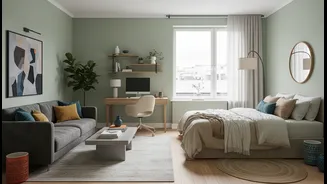
The key to mastering a small space is to stop thinking of it as one room. Instead, view it as a collection of zones. Interior designers use a technique called 'zoning' to create distinct areas for different activities without building walls. This can be done subtly using furniture, rugs, or even lighting. A well-placed sofa can separate a living area from a sleeping nook. A large rug can anchor your lounge space, visually separating it from your workspace. The goal is to create clear, functional zones that serve your daily needs while maintaining a sense of openness and flow. Before buying anything, the first step is to declutter. Less stuff instantly creates more space and a sense of calm.
Zone 1: The Living & Social Space
Your living area is for relaxing and hosting. To make it work in a small footprint, choose furniture with care. Opt for pieces with exposed legs, which create a feeling of openness by allowing light to flow underneath. A compact, well-proportioned sofa is better than an oversized one that dominates the room. Instead of a bulky coffee table, consider a set of nesting tables that can be pulled out when guests arrive and tucked away after. Mirrors are another powerful tool; placing a large mirror opposite a window bounces natural light around, making the entire room feel brighter and more expansive.
Zone 2: The Commute-Free Corner
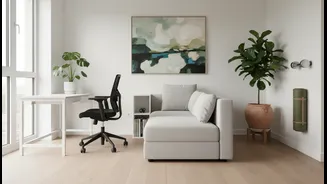
A dedicated workspace is crucial for focus, but it shouldn't take over your home. The best small-space offices are the ones that can disappear. A wall-mounted, foldable desk provides a stable surface for work and then folds up flat against the wall when you're done, visually separating your professional and personal time. If you have a small, awkward corner, a slim console table can be transformed into a functional work nook without blocking walkways. To reduce clutter, use vertical storage like wall-mounted shelves to keep stationery and documents off your desk, preserving precious surface area.
Zone 3: The Restful Retreat
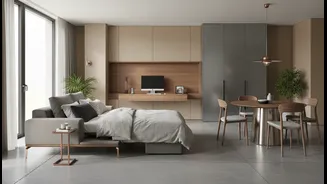
Creating a sense of privacy for your sleeping area is perhaps the most important challenge. One effective strategy is to use a physical, but not solid, divider. An open bookshelf or a curtain can create a psychological boundary without blocking light. Furniture choice is also key. A bed with built-in hydraulic storage can hide away extra bedding, seasonal clothes, and luggage, often replacing the need for an extra cupboard. If space is extremely tight, a modern, high-quality sofa-cum-bed is a hardworking option that transforms a living room by day into a comfortable bedroom by night.
Zone 4: The Dining & Hobby Hub
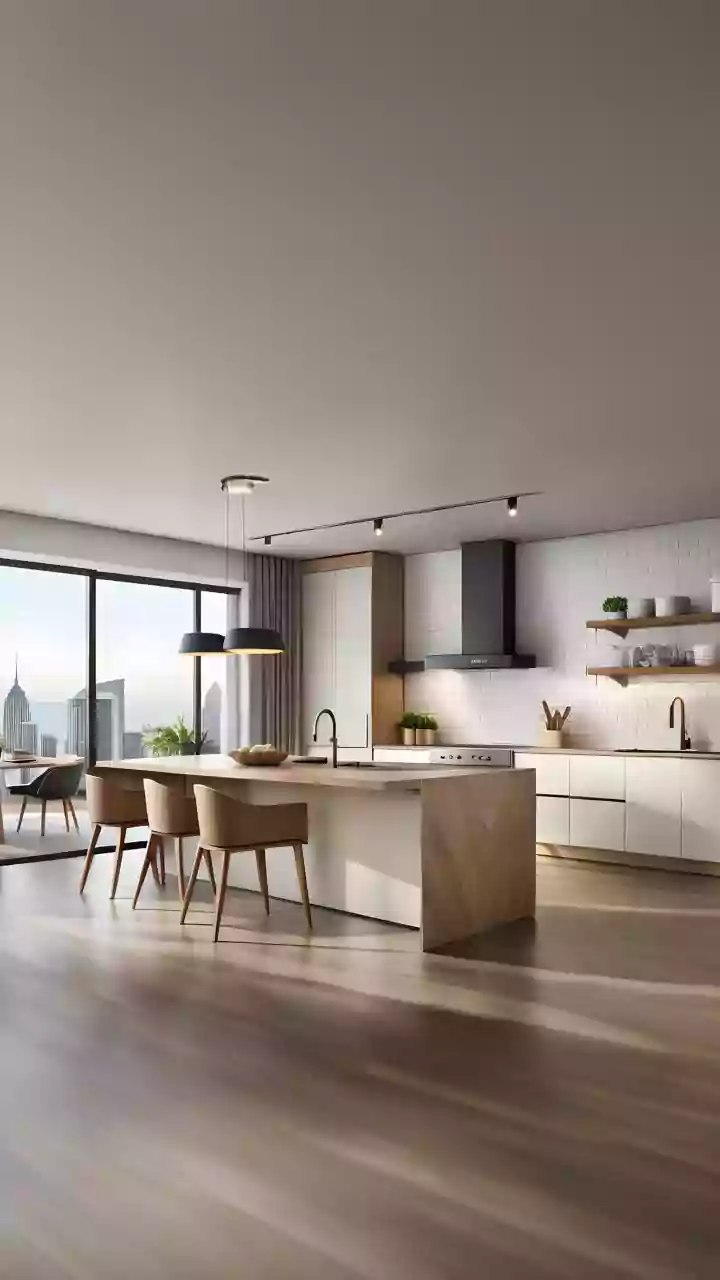
A permanent six-seater dining table is a luxury few compact apartments can afford. Thankfully, adaptable options exist. An extendable dining table stays compact for daily use and expands for family meals, while a wall-mounted, drop-leaf table folds away completely when not needed. For hobbies or extra storage, think multi-purpose. An ottoman with hidden storage can serve as extra seating for guests while discreetly holding books, craft supplies, or other items that create clutter. By choosing furniture that serves at least two purposes, you ensure every piece in your home is earning its keep.